
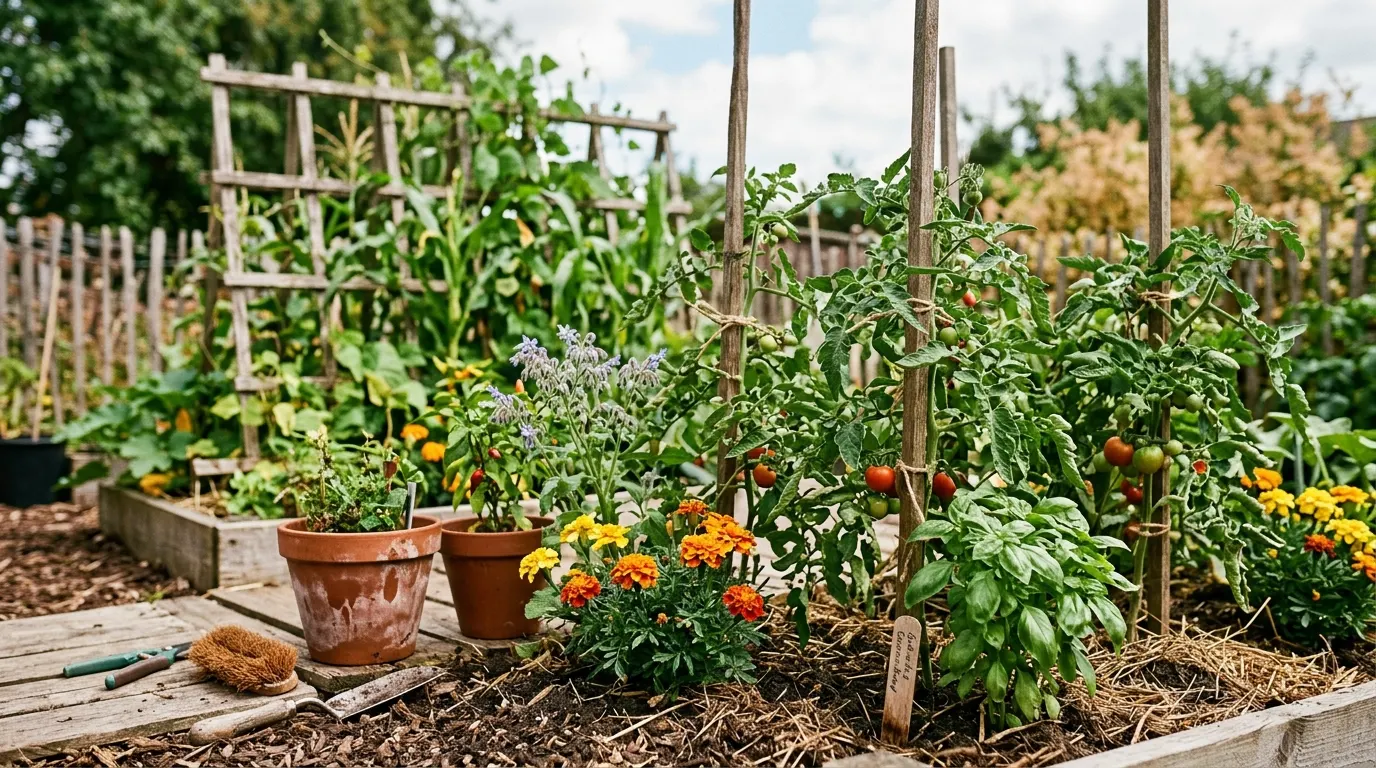
What are the best companion plants for summer crops? ☀️
To maximize your summer harvest naturally, pair compatible crops that share similar watering needs but occupy different spatial niches. Plant tomatoes with basil and marigolds to repel pests, grow cucumbers with corn for shade and support, and combine squash with nitrogen-fixing beans. Avoid planting competing nightshades like potatoes and tomatoes together to prevent the spread of shared blights.
Planning a summer vegetable garden can feel like solving a complex spatial puzzle. While traditional monoculture planting often invites pests and depletes soil nutrients, companion planting offers an evidence-based way to boost your garden's productivity. By understanding how different plants interact beneath the soil and in the air, you can design a self-sustaining ecosystem that thrives all summer long.
Why should you use companion planting in your summer garden? 🌿
Companion planting creates a diverse polyculture that naturally deters pests, improves soil structure, and attracts pollinators. By mixing tall, sun-loving crops with shade-tolerant ground covers, you maximize space, reduce weed growth, and increase overall garden productivity by up to 30%.
Modern horticultural science shows that companion planting is far more than just gardening folklore. When you plant diverse species together, you disrupt the visual and olfactory cues that pests use to locate host plants. For example, planting aromatic herbs alongside leafy vegetables creates "aromatic pest confusion," making it incredibly difficult for destructive insects to target your crops.
Furthermore, companion planting optimizes root-depth mechanics. Deep-rooted plants like tomatoes draw nutrients from deep within the earth, while shallow-rooted crops like lettuce absorb moisture from the topsoil. This spatial separation ensures that your plants cooperate rather than compete for vital resources.
💡 Expert Tip: Let a few of your companion herbs, like dill and basil, go to flower. Their blossoms attract beneficial insects like hoverflies and parasitic wasps, which act as natural predators against common garden pests.
What are the top summer companion planting combinations? 🍅
The top summer combinations are: 1. Tomatoes, Basil, and Marigolds (pest deterrence and flavor); 2. Cucumbers, Corn, and Radishes (shade, support, and beetle trap cropping); 3. The Three Sisters: Sweetcorn, Pole Beans, and Squash (structural support, nitrogen fixation, and living mulch).
Tomatoes, Basil, and Marigolds: The Ultimate Trio 🌸
This classic combination is backed by extensive agricultural research. Sweet basil releases volatile organic compounds (VOCs) that mask the scent of tomato plants, successfully deterring tomato hornworms and thrips. Meanwhile, French marigolds release alpha-terthienyl, a chemical compound that suppresses destructive root-knot nematodes in the soil.
Cucumbers, Corn, and Radishes: Structural Harmony 🥒
Cucumbers thrive when given light shade during the hottest afternoon hours. Planting them on the northern side of sweetcorn stalks provides natural structural support and relief from intense summer heat. Interplanting radishes around the base of your cucumbers serves as an excellent trap crop, drawing cucumber beetles away from your main vines.
The Three Sisters: Sweetcorn, Pole Beans, and Squash 🌽
Originating from Indigenous agricultural traditions, this method is a masterclass in companion planting. The sweetcorn provides a sturdy living trellis for the climbing pole beans. In return, the beans host Rhizobium bacteria in their root systems, which fix atmospheric nitrogen into the soil to feed the heavy-feeding corn and squash. Finally, the large, prickly leaves of the squash act as a living mulch, shading the soil to retain moisture and deterring weeds and pests.
How to plant a Three Sisters garden bed step-by-step:
- Prepare the site: In late spring, build a flat-topped soil mound about 4 feet wide and 10 inches high, incorporating rich organic compost.
- Sow the corn: Plant four to six sweetcorn seeds in the center of the mound, spaced about 6 inches apart.
- Plant the beans: Once the corn reaches 6 inches in height, plant four pole bean seeds around the base of the corn stalks.
- Sow the squash: At the same time you plant the beans, sow four squash or pumpkin seeds around the outer edge of the mound.
Which summer crops should you never plant together? 🚫
Avoid planting tomatoes near potatoes or eggplants, as they share susceptibility to early and late blight. Keep fennel away from almost all crops, as it releases chemicals that inhibit growth. Do not plant onions or garlic near beans, as alliums can stunt legume development.
Just as some plants are natural allies, others are biological enemies. Members of the nightshade family (tomatoes, peppers, eggplants, and potatoes) should be spaced far apart in your garden layout. Because they share the same nutrient requirements and are vulnerable to the same fungal blights, planting them in close proximity creates a high-speed highway for disease transmission.
Additionally, you must watch out for allelopathic plants like fennel. Fennel releases chemical compounds through its roots and foliage that actively inhibit the growth of neighboring plants, particularly tomatoes and bush beans. Alliums, including onions, garlic, and chives, should also be kept away from legumes, as they contain antibacterial properties that disrupt the nitrogen-fixing bacteria on bean roots.
⚠️ Warning: Never plant potatoes near tomatoes. If blight strikes your potato tubers underground, it will quickly spread upward and decimate your entire tomato crop before you even notice the symptoms.
Essential tools and supplies for summer companion planting 🛠️
Successful companion planting requires tools that manage spatial layouts and resource distribution. Use digital garden planners to map root depths, drip irrigation to balance differing water needs, and sturdy trellises for climbing companions like pole beans.
To get the most out of your companion garden, equip yourself with these essential tools:
- Digital Garden Planner: Tools like VegPlotter help you map out spatial and temporal compatibility in real-time.
- Drip Irrigation System: Essential for delivering targeted moisture to plants with differing water requirements without wetting foliage.
- Trellises and Obelisks: Provides vertical support for climbing companions, saving valuable ground space for low-growing herbs.
- High-Quality Organic Compost: Supplies the heavy nutrient load required by dense, multi-crop planting layouts.
Troubleshooting common summer companion planting issues ⚠️
When companion planting fails, it is usually due to light competition, uneven watering, or planting too closely. Resolve these issues by pruning tall crops to let light through, using zoned drip lines, and following strict spacing guidelines.
Cucumber beetles are destroying young cucumber and zucchini vines. 🪲
Solution: Interplant radishes around the base of your cucurbits to act as a trap crop. Let the radishes grow to seed, as their flowers attract beneficial predators, and plant borage nearby to draw in native pollinators for successful fruit set.
Tomato hornworms and aphids are decimating nightshade foliage. 🐛
Solution: Plant sweet basil and French marigolds closely around your tomato stems. The aromatic oils of the basil confuse flying pests, while the marigolds act as a physical barrier and soil cleanser.
Weeds are taking over, and soil is drying out too quickly in the summer heat. ☀️
Solution: Implement the "Three Sisters" ground cover strategy. Plant trailing squash, pumpkins, or nasturtiums, whose broad leaves act as a living mulch to shade the soil, suppress weed germination, and reduce evaporation.
FAQ: Summer Companion Planting Questions 💬
Can I use companion planting in a container garden? 🪴
Yes, companion planting works beautifully in containers. Pair a deep-rooted, upright plant like a cherry tomato with shallow-rooted companions like basil and trailing nasturtiums in a large pot (at least 5 to 10 gallons) to ensure adequate root space and nutrients.
Does basil actually improve the flavor of tomatoes? 🍅
While many gardeners swear that basil improves tomato flavor, scientific evidence suggests the benefit is indirect. Basil repels pests and improves overall tomato plant health, reducing environmental stress and allowing the tomato plant to channel more energy into producing sweet, flavorful sugars.
What is a trap crop and how do I use it in summer? 🪤
A trap crop is a sacrificial plant grown specifically to attract pests away from your main harvest. For example, planting nasturtiums near your summer squash draws aphids and caterpillars to the nasturtiums, keeping your squash clean and pest-free.
Why should you not plant potatoes near tomatoes? 🥔
Potatoes and tomatoes are close relatives in the nightshade family. Planting them together increases the risk of early and late blight transmission, and harvesting potatoes can disturb the sensitive, shallow root systems of neighboring tomato plants.
Can you plant cucumbers and basil together? 🌿
Yes, cucumbers and basil make excellent companions. Basil's strong scent helps deter thrips and beetles, while cucumbers provide light afternoon shade that prevents the basil from bolting (going to seed) too quickly in the summer heat.
How does nitrogen fixation work in companion planting? 🌱
Legumes like beans and peas form a symbiotic relationship with soil bacteria called Rhizobium. These bacteria convert atmospheric nitrogen into a soluble form that plants can absorb, naturally fertilizing neighboring heavy-feeders like corn and leafy greens.
Summary of key takeaways for a thriving summer garden 📝
To succeed with summer companion planting, focus on spatial optimization, natural pest deterrence, and soil health. Pair heavy feeders with nitrogen fixers, use aromatic herbs to confuse pests, and avoid incompatible combinations like nightshades and alliums.
- Maximize Space: Use vertical trellising and ground-covering living mulches to grow more food in less space.
- Confuse Pests: Interplant highly aromatic herbs like basil, dill, and mint to disrupt pest sensory systems.
- Feed the Soil: Integrate nitrogen-fixing legumes to naturally boost the growth of neighboring heavy-feeding crops.
- Avoid Bad Neighbors: Keep competing nightshades and allelopathic plants like fennel separated to prevent disease and stunted growth.