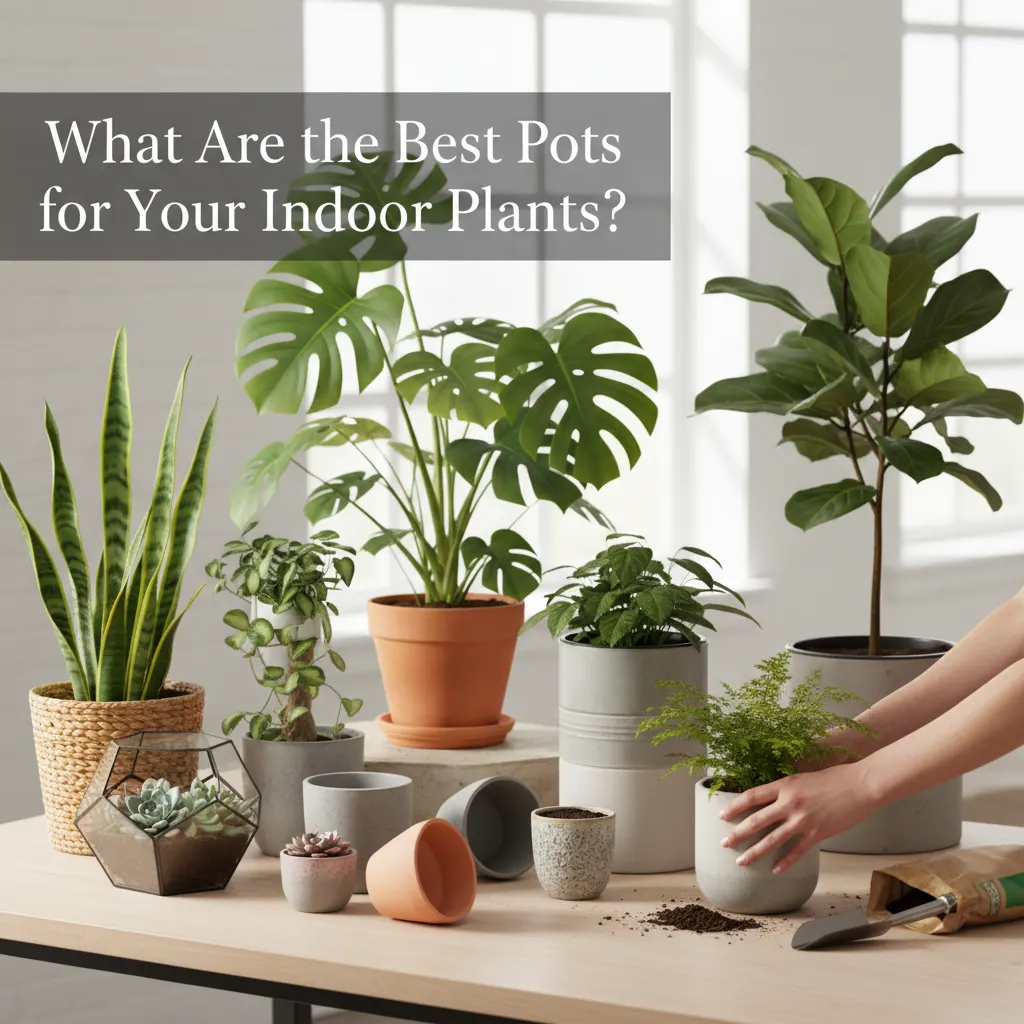
What Are the Best Pots for Your Indoor Plants?
Selecting the optimal pot for your indoor plants is crucial for their health and growth. Key factors include the pot's material, ensuring adequate drainage, choosing the correct size, and considering its aesthetic appeal. Different materials offer unique benefits, and proper drainage is non-negotiable to prevent root rot.
Choosing the right pot is more than just a decorative decision; it's a fundamental aspect of plant care that directly impacts your plant's ability to thrive. From preventing common issues like root rot to promoting healthy growth, understanding pot selection is key to becoming a successful indoor gardener. This guide will walk you through everything you need to know to make informed choices for your green companions.
Why is Pot Material Important for Plant Health?
Pot material significantly impacts moisture retention and aeration. Terracotta pots are porous, promoting airflow and preventing overwatering, while plastic pots retain moisture longer, reducing watering frequency. Ceramic and glazed pots offer aesthetic appeal but require careful watering due to limited breathability.
The material of your plant pot plays a critical role in how often you'll need to water and how well your plant's roots can breathe. Each material has distinct properties that suit different plant types and watering habits. For instance, terracotta, an unglazed clay, is highly porous. This porosity allows air and moisture to pass through its walls, which helps the soil dry out faster. This makes terracotta an excellent choice for succulents, cacti, and other plants that prefer drier conditions or are prone to root rot. However, it also means you'll need to water more frequently, especially in warmer climates.
Plastic pots, on the other hand, are non-porous. They retain moisture much longer than terracotta, which can be beneficial for moisture-loving plants like ferns or tropical varieties. Their lightweight nature and affordability also make them a popular choice. However, the lack of breathability means they can lead to overwatering if not managed carefully, making proper drainage even more critical. Ceramic and glazed pots are also non-porous, similar to plastic, but offer a wider range of aesthetic options. They are heavier and more stable, but their lack of breathability means they require careful monitoring of soil moisture to prevent waterlogging. Understanding these differences allows you to match the pot to your plant's specific needs and your watering routine.
Do All Indoor Plant Pots Need Drainage Holes?
Yes, all indoor plant pots absolutely require drainage holes. Proper drainage is critical to prevent waterlogging and root rot, which are common causes of plant death. Without drainage, excess water accumulates, suffocating roots and fostering harmful bacteria. teleflora.com highlights the importance of proper watering.
This is perhaps the most non-negotiable rule in indoor plant care: every pot must have drainage holes. The primary reason is to prevent water from sitting at the bottom of the pot, which leads to waterlogged soil. When soil remains constantly wet, it deprives plant roots of oxygen, effectively suffocating them. This creates an ideal environment for anaerobic bacteria and fungi to thrive, leading to root rot – a condition that is often fatal to plants. Even if you're careful with watering, a pot without drainage is a ticking time bomb for your plant's health. If you fall in love with a decorative pot that lacks drainage, the solution is simple: use it as a cachepot. Plant your specimen in a slightly smaller nursery pot with drainage holes, place a layer of pebbles or a riser at the bottom of the decorative pot, and then set the nursery pot inside. This allows you to easily remove the plant for watering and drain any excess water before returning it to its decorative home.
How to Choose the Right Pot Size for Your Houseplant
Choosing the right pot size involves matching it to your plant's current root ball and anticipated growth. A pot that's too large can lead to overwatering, while one too small restricts growth. Generally, select a pot 1-2 inches wider than the current one when repotting, allowing room for expansion.
Selecting the correct pot size is a delicate balance. A pot that is too large for your plant can hold an excessive amount of soil, which retains more moisture than the plant's roots can absorb. This leads to prolonged wetness, increasing the risk of root rot, even with drainage holes. Conversely, a pot that is too small will restrict root growth, leading to a root-bound plant. Signs of a root-bound plant include stunted growth, water running straight through the pot without being absorbed, and roots growing out of the drainage holes. When repotting, a general rule of thumb is to choose a pot that is only 1-2 inches larger in diameter than the current one. This provides enough space for new root growth without overwhelming the plant with too much soil. For very large plants, you might go up 2-4 inches. Always consider the plant's growth habit; some plants, like snake plants, prefer to be slightly root-bound and don't need frequent upsizing.
When Should You Repot Your Indoor Plants?
Repotting is necessary when a plant becomes root-bound, growth slows, or the soil is depleted. Signs include roots growing out of drainage holes or circling the pot. Snake plants, for example, prefer to be slightly root-bound and only need repotting when they've outgrown their container or the soil is exhausted (plantbarofficial.com).
Repotting is a vital part of plant care that provides fresh nutrients, prevents root compaction, and allows for growth. The most common sign that your plant needs repotting is when it becomes root-bound. This means the roots have filled the entire pot, often circling around the inside or even growing out of the drainage holes. Other indicators include stunted growth, yellowing leaves, or soil that dries out too quickly or, conversely, stays waterlogged because there's more root than soil. The best time to repot most houseplants is during their active growing season, typically spring or early summer, as they can recover more quickly from the stress of repotting. However, if a plant is severely root-bound or showing signs of distress, it's better to repot it immediately. When repotting, gently remove the plant from its old pot, loosen any circling roots, and place it in a new pot with fresh potting mix, following the sizing guidelines mentioned earlier.
Common Problems & Troubleshooting
Problem: Overwatering and root rot due to poor drainage.
Solution: Always choose pots with drainage holes. If using a decorative pot without holes, place the plant in a nursery pot with drainage inside the decorative pot (cachepot) and remove excess water from the cachepot regularly. This method, often cited by sources like teleflora.com, ensures proper water management.
Problem: Plant growth stunted by incorrect pot size.
Solution: Select a pot that is 1-2 inches larger in diameter than the current pot for most repotting. For plants that prefer to be root-bound (like snake plants), only repot when absolutely necessary, as advised by plantbarofficial.com.
Problem: Mineral buildup from hard tap water affecting plant health.
Solution: If using tap water, filter it first. Avoid softened water due to salt content. Rainwater is ideal for plants. This practice helps prevent the accumulation of harmful minerals in the soil.
Expert Tips & Advanced Techniques
- Consider Self-Watering Pots: While not for all plants, self-watering pots can be excellent for moisture-loving plants or for busy plant parents. They typically have a reservoir that wicks water up to the soil, reducing watering frequency. However, they can still lead to overwatering if the reservoir is constantly full for plants that prefer drier conditions.
- Embrace Cachepots: As mentioned, cachepots (decorative outer pots without drainage) are perfect for aesthetic appeal. Always ensure the inner pot has drainage and that you empty any standing water from the cachepot after watering to prevent root rot.
- Sustainable Choices: Look for pots made from recycled plastics, biodegradable materials, or sustainably sourced ceramics. This not only benefits your plants but also the environment.
- Terracotta for Thirsty Plants: For plants that are prone to overwatering or prefer to dry out between waterings (e.g., succulents, cacti, ZZ plants), terracotta is often the superior choice due to its breathability.
- Plastic for Moisture Lovers: Plants that prefer consistently moist soil (e.g., ferns, peace lilies, some tropicals) often thrive in plastic pots because they retain moisture more effectively.
FAQ Section
What are the benefits of terracotta pots?
Terracotta pots are highly porous, allowing air and moisture to pass through their walls. This promotes excellent aeration for roots, helps the soil dry out faster, and significantly reduces the risk of overwatering and root rot, making them ideal for plants that prefer drier conditions.
Are self-watering pots good for all plants?
No, self-watering pots are not suitable for all plants. They are generally best for plants that prefer consistently moist soil, such as ferns or African violets. Plants that prefer to dry out between waterings, like succulents or cacti, can easily be overwatered in self-watering systems.
Can I use a pot without drainage if I add a layer of rocks?
No, adding a layer of rocks at the bottom of a pot without drainage does not create adequate drainage. This practice can actually worsen the problem by raising the water table within the pot, keeping the roots in a constantly saturated environment and increasing the risk of root rot. Always use a pot with drainage holes or a cachepot system.
How often should I repot my houseplants?
The frequency of repotting depends on the plant's growth rate and size. Fast-growing plants may need repotting every 1-2 years, while slow growers might only need it every 3-5 years. Look for signs like roots growing out of drainage holes, stunted growth, or soil depletion as indicators.
What's the difference between a cachepot and a planter?
A planter (or plant pot) is a container designed to hold a plant and typically has drainage holes. A cachepot, on the other hand, is a decorative outer pot that does not have drainage holes. It's used to conceal a functional planter, adding aesthetic appeal while allowing for proper drainage from the inner pot.
Key Takeaways
- Material Matters: Choose terracotta for breathability, plastic for moisture retention, and ceramic for style with careful watering.
- Drainage is Non-Negotiable: Always use pots with drainage holes to prevent root rot. Use cachepots for decorative containers.
- Size It Right: Select a pot 1-2 inches larger when repotting to allow for growth without overwatering.
- Repot When Needed: Watch for signs of root-bound plants or depleted soil, typically repotting in spring or early summer.
By understanding these fundamental principles of pot selection, you're well on your way to providing the best possible environment for your indoor plants to flourish. Happy planting!
Summary and Next Steps
- Choose function first: Pick pots based on drainage, size, and material before color or style.
- Protect the roots: Use drainage holes or a cachepot system to prevent standing water.
- Match material to care style: Terracotta dries faster, while plastic and glazed ceramic hold moisture longer.
- Repot gradually: Move up only one pot size at a time unless the plant is severely root-bound.
Next, check your most sensitive houseplant and confirm its pot has drainage, the right size, and a soil mix that matches how often you water.