
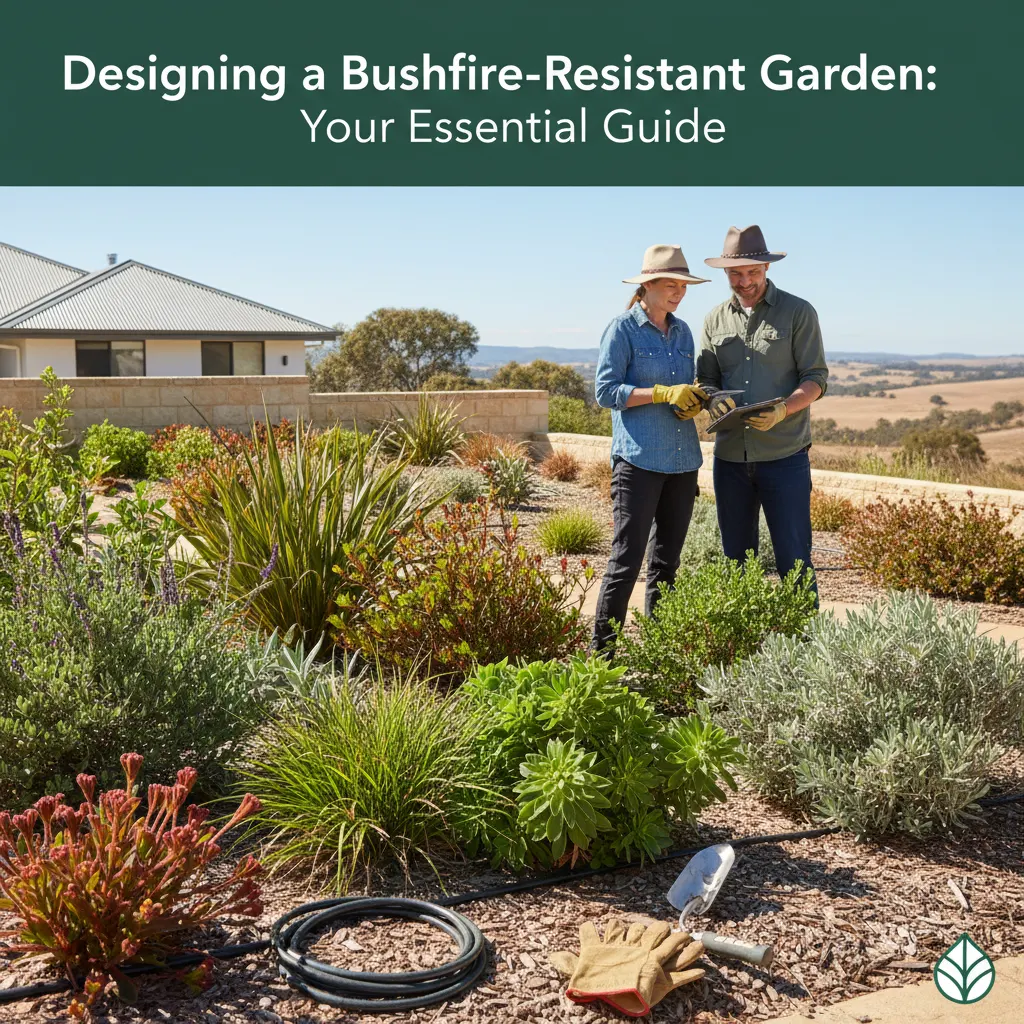
Designing a Bushfire-Resistant Garden: Your Essential Guide
Creating a bushfire-resistant garden is a proactive strategy to protect your home and property. It involves selecting appropriate plant species, implementing strategic landscape design principles like defensible space, and maintaining your garden to reduce fuel loads. This guide provides actionable steps to enhance your property's resilience against bushfires.
Bushfires pose an increasing threat to homes and communities worldwide, making proactive landscaping a critical defense strategy. By understanding how fire behaves and what fuels it, you can transform your garden into a protective barrier. This comprehensive guide will walk you through the essential steps to create a beautiful yet resilient landscape, safeguarding your property and loved ones.
Understanding the Bushfire Threat to Your Landscape 🔥
Understanding the bushfire threat involves recognizing how fire spreads and what elements in your garden contribute to its intensity. Fire needs fuel, oxygen, and heat to burn, and your landscaping choices directly impact the available fuel.
Bushfires spread through radiant heat, embers, and direct flame contact. Embers, in particular, can travel long distances and ignite combustible materials far from the main fire front. Your garden's design and plant selection play a crucial role in mitigating these risks.
"The most common cause of home ignition during a bushfire is ember attack, not direct flame contact. Therefore, reducing combustible materials around your home is paramount." - Rural Fire Service (RFS)
What makes a plant flammable? 🌿
Plant flammability is determined by several factors, including moisture content, chemical composition, and physical structure. Plants with high oil or resin content, fine or stringy bark, and dense, dry foliage are typically more flammable.
Conversely, plants with high moisture content, thick, succulent leaves, and smooth bark tend to be less flammable. Understanding these characteristics is key to making informed plant choices for a bushfire-resistant garden.
What are the best plants for bushfire-prone areas? 🌱
Prioritize plants with high moisture content, thick leaves, and minimal volatile oils. Examples include succulents, some deciduous trees, and specific native species known for their fire-retardant qualities. Avoid highly flammable plants like conifers and eucalyptus with stringy bark.
Selecting the right plants is a cornerstone of bushfire-resistant landscaping. The goal is to choose species that are less likely to ignite, burn slowly, and produce fewer embers. This doesn't mean sacrificing beauty; many fire-wise plants are also aesthetically pleasing.
Low Flammability Plant Characteristics:
- High moisture content: Plants that retain water well, even in dry conditions.
- Thick, fleshy leaves: Succulents and some broad-leafed plants fall into this category.
- Smooth, non-peeling bark: Avoid plants with stringy or papery bark that can catch embers.
- Low oil/resin content: Plants with minimal volatile chemicals that can fuel fires.
- Compact growth habit: Less likely to accumulate dry leaves and debris.
Recommended Plant Species:
- Succulents: Agave, Aloe, Sedum, Echeveria
- Deciduous Trees: Maple, Oak, Ash (shed leaves, reducing fuel load in winter)
- Shrubs: Rhagodia (Saltbush), Westringia (Coastal Rosemary), Coprosma
- Groundcovers: Dichondra, various low-growing succulents
- Specific Natives (check local guidelines): Some Grevillea, Callistemon (Bottlebrush) varieties with dense foliage and smooth bark.
"Always consult your local fire authority or horticultural expert for a list of bushfire-resistant plants suitable for your specific region and climate." - Local Fire Authority Guidelines
How do I create defensible space around my home? 🏡
Defensible space involves creating zones around your home with varying levels of fuel reduction. Zone 1 (0-5m) should be clear of combustible materials, Zone 2 (5-20m) should have reduced fuel, and Zone 3 (20-50m) should manage vegetation to slow fire spread.
Creating defensible space is the most critical step in protecting your home from bushfires. It's not about clearing all vegetation, but rather strategically managing it to reduce the intensity of a fire as it approaches your property. This involves a multi-zone approach.
Defensible Space Zones Explained:
Zone 1: Inner Protection Area (0-5 meters from home)
- Goal: Eliminate all combustible materials. This is your immediate protection zone.
- Actions:
- Remove all flammable plants, shrubs, and trees.
- Use non-combustible materials like concrete, pavers, gravel, or mown lawn.
- Keep gutters and roofs clear of leaves and debris.
- Store firewood, gas cylinders, and other flammable items away from the house.
- Ensure no vegetation overhangs the roof or touches the walls.
Zone 2: Outer Protection Area (5-20 meters from home)
- Goal: Reduce fuel load and slow fire spread. This zone acts as a buffer.
- Actions:
- Select low-flammability plants, spaced to prevent continuous fuel paths.
- Remove lower branches of trees (limb up) to at least 2 meters from the ground.
- Maintain lawns and groundcovers by keeping them short and green.
- Remove dead leaves, branches, and other debris regularly.
- Avoid dense plantings; create breaks with pathways or hardscaping.
Zone 3: Reduced Fuel Zone (20-50 meters from home, or to property boundary)
- Goal: Further reduce fuel and slow fire intensity, allowing firefighters safer access.
- Actions:
- Thin out dense vegetation, removing smaller, highly flammable plants.
- Maintain a clear understory beneath trees.
- Remove dead trees and shrubs.
- Ensure vehicle access is clear and wide enough for emergency services.
"Defensible space is not a one-time task; it requires ongoing maintenance, especially before and during bushfire season." - CSIRO Research
What landscaping materials are bushfire-resistant? 🧱
Opt for non-combustible materials like concrete, stone, gravel, pavers, and metal for pathways, patios, and retaining walls. Avoid timber mulches directly adjacent to structures and choose inorganic alternatives to reduce fire risk.
Beyond plant selection, the hardscaping materials you choose significantly impact your garden's bushfire resistance. Non-combustible materials create fire breaks and reduce the overall fuel load around your home.
Recommended Hardscaping Materials:
- Concrete: Excellent for driveways, patios, and pathways.
- Stone/Rock: Ideal for retaining walls, garden beds, and decorative features.
- Gravel/Crushed Rock: Effective as a groundcover in Zone 1, creating a non-combustible barrier.
- Pavers: Suitable for paths, patios, and outdoor living areas.
- Metal: Can be used for fencing, garden edging, and structural elements.
- Tiled surfaces: For patios and outdoor entertaining areas.
Mulch Choices:
- Avoid: Shredded bark, wood chips, pine needles, and other organic mulches, especially in Zone 1. These can easily ignite and spread fire.
- Prefer: Inorganic mulches like gravel, crushed rock, or decomposed granite. If organic mulch is used in outer zones, ensure it's coarse, moist, and kept away from structures.
How often should I maintain my bushfire-resistant garden? 🗓️
Regular maintenance is crucial. This includes frequent removal of dead leaves and debris, pruning lower branches of trees, keeping lawns mowed short, and ensuring irrigation systems are functional. Maintenance frequency increases during dry seasons.
Even the most thoughtfully designed bushfire-resistant garden requires consistent upkeep to remain effective. Neglecting maintenance can quickly turn a fire-wise landscape into a fire hazard.
Essential Maintenance Tasks:
- Clear Gutters and Roofs: Regularly remove leaves, twigs, and other debris, especially before fire season. Embers can easily ignite these accumulations.
- Mow Lawns: Keep grass short (under 10 cm) and green. Dry, long grass is highly flammable.
- Remove Dead Vegetation: Promptly clear away dead leaves, branches, and fallen debris from all garden beds and around structures.
- Prune Trees and Shrubs: Remove lower branches (limb up) to create vertical separation from ground fuels. Trim branches that overhang the roof or touch the house.
- Manage Weeds: Weeds can dry out quickly and become fine fuels. Keep garden beds clear.
- Maintain Irrigation: Ensure any irrigation systems are in good working order, especially for plants in critical zones. While not a fire-fighting tool, healthy, moist plants are less flammable.
- Check Fences and Gates: Ensure they are clear of vegetation and can be easily opened for emergency access.
"A well-maintained garden is your first line of defense. Consistency is key, particularly as fire season approaches." - Local Fire Authority Guidelines
Common Problems & Troubleshooting 🛠️
Even with the best intentions, challenges can arise in creating and maintaining a bushfire-resistant garden. Here are some common issues and their solutions.
Problem: High fuel load near structures
Solution: Create a 'defensible space' by removing all combustible materials within 5 meters of the home and reducing vegetation density in subsequent zones. This includes clearing gutters, removing dead plants, and using non-combustible mulches.
Problem: Flammable plant choices
Solution: Replace highly flammable plants (e.g., conifers, some eucalyptus) with low-flammability alternatives like succulents, deciduous trees, and specific fire-retardant native species. Research local recommendations for your area.
Problem: Lack of ongoing maintenance
Solution: Implement a regular maintenance schedule including clearing gutters, mowing lawns, pruning dead branches, and removing leaf litter, especially before fire season. Set reminders and make it a routine.
Problem: Water scarcity for irrigation
Solution: Focus on drought-tolerant, low-flammability plants that require minimal water. Utilize efficient irrigation methods like drip systems, and consider rainwater harvesting for garden use. Prioritize watering plants in critical defensible zones.
Expert Tips & Advanced Techniques 💡
Beyond the basics, these expert tips can further enhance your garden's bushfire resilience and integrate advanced strategies.
- Consider Fire-Resistant Building Materials: While not strictly landscaping, ensure your home's exterior (roof, walls, windows) uses fire-resistant materials. This works in conjunction with your garden's defenses.
- Strategic Tree Placement: Plant larger trees further away from the house, ensuring their canopy is not overhanging the roof. Create vertical and horizontal separation between trees and shrubs.
- Fire Breaks with Hardscaping: Use pathways, driveways, and patios made of non-combustible materials as natural fire breaks within your garden design.
- Emergency Water Supply: If possible, have an accessible water source (e.g., large water tank with a pump) that can be used for wetting down areas or for emergency services.
- Community Fire Plans: Engage with your local community fire plan and understand evacuation routes and neighborhood-level strategies.
- Professional Assessment: Consider hiring a qualified landscape architect or fire-wise consultant to assess your property and provide tailored recommendations.
FAQ Section ❓
Are all native plants bushfire-resistant?
No, not all native plants are bushfire-resistant. Many native species, particularly some eucalyptus and acacias, are highly flammable due to their oil content or bark characteristics. It's crucial to research specific native species and their flammability ratings for your region, rather than assuming all natives are fire-wise.
Can I still have a beautiful garden in a bushfire zone?
Absolutely! A bushfire-resistant garden can be incredibly beautiful and diverse. The key is thoughtful design, strategic plant selection, and consistent maintenance. Focus on creating varied textures with low-flammability plants, incorporating hardscaping elements, and using color palettes that complement your home and environment.
What is the role of irrigation in bushfire resistance?
Irrigation helps keep plants healthy and moist, making them less likely to ignite and burn slowly. While irrigation systems are not designed to fight a bushfire, well-hydrated plants act as a better barrier. Focus irrigation on plants within your defensible space zones, especially during dry periods, but be mindful of water conservation.
Should I remove all trees near my house?
No, you don't necessarily need to remove all trees. The strategy is to manage them. Remove trees that are highly flammable, dead, or directly overhanging your home. For other trees, prune lower branches (limb up) to create vertical separation from ground fuels and ensure adequate spacing between canopies to prevent fire spread.
What is a 'fire ladder' and how do I prevent it?
A 'fire ladder' refers to continuous vegetation that allows fire to climb from ground level into shrubs and then into tree canopies, increasing fire intensity. You prevent fire ladders by creating vertical separation: remove ground fuels, prune lower tree branches, and ensure there's a gap between the top of shrubs and the bottom of tree canopies.
How does climate change impact bushfire resistance strategies?
Climate change is leading to hotter, drier conditions and more frequent, intense bushfire seasons. This means bushfire resistance strategies are more critical than ever. It emphasizes the need for even more rigorous defensible space, selection of drought-tolerant and highly fire-resistant plants, and year-round vigilance in maintenance.
Summary & Next Steps ✅
Creating a bushfire-resistant garden is an ongoing commitment that significantly enhances your property's safety. By implementing these strategies, you're not just protecting your home; you're contributing to the resilience of your entire community.
- Assess Your Property: Understand your specific risks and identify areas needing attention.
- Plan Your Zones: Design your defensible space with clear boundaries and appropriate materials.
- Choose Wisely: Select low-flammability plants suitable for your local climate.
- Maintain Regularly: Make maintenance a year-round priority, especially before fire season.
- Stay Informed: Consult local fire authorities for region-specific advice and guidelines.
Start today by walking around your property and identifying one small change you can make. Every step towards a more fire-wise garden is a step towards greater safety.