How to Companion Plant in a Single Container
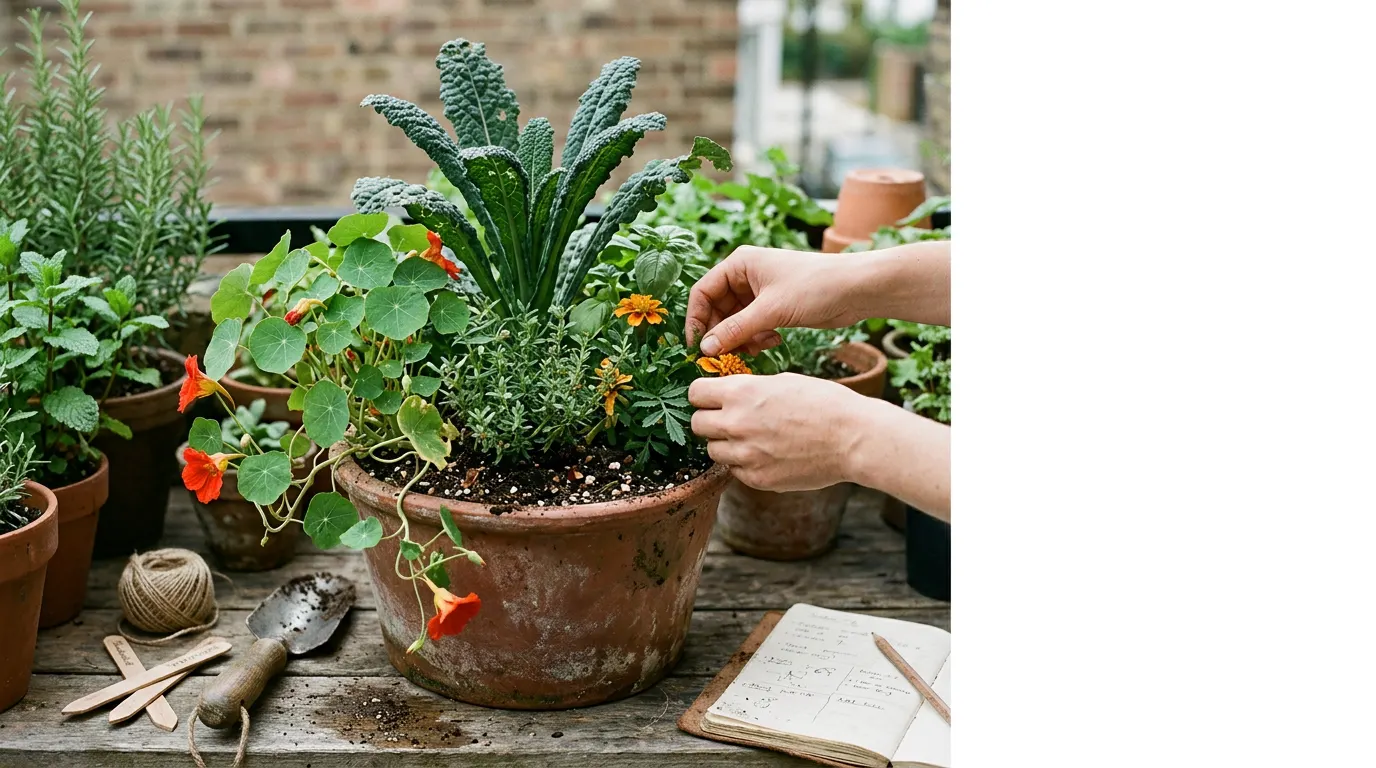
To companion plant in a single container, pair plants with identical sunlight, watering, and soil requirements while utilizing different spatial layers. Combine a deep-rooted, tall "thriller" (like tomatoes) with a shallow-rooted, pest-repelling "filler" (like basil or marigolds) and a trailing "spiller" (like nasturtiums) to maximize space, naturally deter pests, and prevent root competition.
Growing multiple plants in a single pot is the ultimate space-saving hack for urban gardeners, balcony homesteaders, and small-space growers. By understanding how plants interact both above and below the soil line, you can design high-yield, self-protecting micro-ecosystems. This comprehensive guide will show you how to master container companion planting using horticultural science.
📋 What are the rules for companion planting in pots?
The three golden rules of container companion planting are matching environmental needs, selecting non-competing root structures, and sizing the container correctly to prevent nutrient depletion.
Unlike open garden beds where plant roots can spread out to find moisture and nutrients, container-grown plants are confined to a strict volume of soil. To succeed, you must follow three fundamental rules of plant physiology:
- Match Environmental Preferences: Never pair a water-loving plant like mint with a drought-tolerant herb like rosemary. All plants in the same pot must share identical requirements for sunlight (e.g., full sun vs. partial shade) and soil moisture.
- Practice Root Stratification: Map your root zones mathematically. Pair deep-rooted "heavy feeders" with shallow-rooted "light feeders" to ensure they do not compete for the same physical space and nutrients.
- Size Up Your Container: High-density planting requires adequate soil volume. Always use a container that is at least 12 to 16 inches in diameter to prevent rapid root-binding and moisture depletion.
⚠️ Warning: Never plant highly aggressive, spreading perennials like mint or oregano in a shared container. Their invasive underground runners will quickly choke out neighboring plant roots, leading to stunted growth and eventual plant death.
🐛 Which companion plants naturally repel pests in containers?
Aromatic herbs and flowers act as natural pest deterrents in tight spaces. Marigolds repel nematodes and whiteflies; basil deters thrips and hornworms; chives ward off aphids; and nasturtiums act as a sacrificial trap crop.
In a small container garden, pests can decimate your harvest quickly. Utilizing companion plants for natural pest control relies on two scientific mechanisms: aromatic masking and trap cropping.
Aromatic Masking
Many pests find their host plants by scent. Strong-smelling companion plants emit volatile organic compounds that mask the scent of your main crop, confusing pests and keeping them away. Excellent masking plants include:
- Basil: Emits a sweet, pungent aroma that deters thrips, tomato hornworms, and flies.
- Marigolds: Produce a distinct scent that repels whiteflies and nematodes while attracting beneficial pollinators.
- Chives and Garlic Chives: Their sulfurous scent wards off aphids, spider mites, and Japanese beetles.
Trap Cropping
Trap cropping involves planting a highly attractive "sacrificial" plant to lure pests away from your prized vegetables.
- Nasturtiums: Act as a premier trap crop, drawing aphids, caterpillars, and whiteflies to themselves and keeping your tomatoes or peppers clean. Simply prune away infested nasturtium leaves as needed.
🛠️ How to plant a pest-busting container step-by-step
To plant a pest-busting container, choose a large, well-draining pot, fill it with premium organic potting mix, place your tall 'thriller' crop in the center, surround it with aromatic 'filler' herbs, and tuck trailing 'spiller' flowers around the edges.
Follow this step-by-step guide to assemble a high-yield, pest-resistant "Tomato-Basil-Marigold" container using the classic Thriller-Filler-Spiller design framework.
Required Tools & Supplies
- 14-to-16-inch container with drainage holes
- High-quality organic potting mix (never use heavy garden soil)
- Slow-release organic vegetable fertilizer
- Hand trowel
- Watering can with a gentle rose nozzle
Step-by-Step Assembly Process
- Prepare the Container: Ensure your pot has adequate drainage holes. Fill the container with organic potting mix up to 3 inches below the rim, mixing in a balanced, slow-release organic fertilizer.
- Position the Thriller (The Centerpiece): Plant your deep-rooted, tall crop (such as a determinate tomato or pepper plant) directly in the center of the pot. This plant will occupy the deepest root zone.
- Add the Fillers (The Protectors): Plant 2 to 3 shallow-rooted, aromatic herbs (like sweet basil) around the base of the thriller. These will fill the mid-level space and mask the tomato's scent from pests.
- Tuck in the Spillers (The Ground Cover): Plant trailing flowers (like nasturtiums or marigolds) along the very edge of the pot. They will cascade over the sides, maximizing vertical space and acting as a trap crop.
- Water and Settle: Water the container thoroughly until water runs out of the bottom drainage holes. Place the pot in a location that receives at least 6 to 8 hours of direct sunlight daily.
🛑 Common container companion planting mistakes to avoid
Avoid mixing plants with conflicting water needs, using undersized containers, and neglecting the high nutrient demands of high-density plantings.
Because container ecosystems are highly concentrated, mistakes are amplified quickly. Keep these troubleshooting tips in mind:
- Conflicting Water Needs: Planting rosemary (drought-tolerant) with sweet basil (moisture-loving) will result in either root rot for the rosemary or dehydration for the basil.
- Nutrient Depletion: Multiple plants in one pot will deplete soil nutrients rapidly. Apply a liquid organic seaweed or fish emulsion fertilizer every 2 to 3 weeks during the active growing season to sustain healthy growth.
- Crowding the Canopy: Ensure there is adequate air circulation between your plants. Overcrowded foliage traps humidity, creating the perfect breeding ground for fungal diseases like powdery mildew.
❓ Frequently Asked Questions
Can you plant mint with other herbs in the same container?
No, you should not plant mint with other herbs in the same container. Mint is an incredibly aggressive perennial that spreads via underground runners called stolons. It will quickly crowd out the root systems of neighboring plants, stealing their water and nutrients. Always grow mint in its own dedicated pot.
How big should a container be for companion planting?
For successful companion planting, use a container that is at least 14 to 16 inches in diameter and 12 inches deep. This volume of soil (approximately 5 to 7 gallons) provides enough physical space for multiple root systems to coexist without binding, and holds enough moisture to prevent rapid dehydration.
What vegetables should not be planted together in pots?
Avoid planting heavy feeders from the same botanical family together, such as tomatoes and potatoes, or cucumbers and zucchini. They will compete fiercely for the same nutrients and are highly susceptible to the same pests and diseases. Also, avoid pairing root crops like carrots with deep-rooted nightshades.
How do you fertilize a multi-plant companion container?
Because multiple plants are drawing from a limited soil volume, they require regular feeding. Mix a slow-release organic fertilizer into the potting soil at planting time. Supplement this with a diluted, water-soluble organic fertilizer (such as fish emulsion) every two weeks throughout the spring and summer.
What is the difference between a trap crop and a masking plant?
A masking plant uses strong aromatic oils to confuse pests and hide the scent of your main crop (e.g., basil masking tomatoes). A trap crop is a sacrificial plant that is highly attractive to specific pests, drawing them away from your main crop so you can manage them in one isolated spot (e.g., nasturtiums attracting aphids).
📝 Summary and Next Steps
Companion planting in a single container is an elegant, ecological way to grow abundant food in limited spaces. By pairing plants with compatible environmental needs and non-competing root zones, you can create a self-sustaining, pest-resistant container garden.
Key Takeaways
- Match Needs: Only pair plants that share identical sunlight and watering requirements.
- Layer Roots: Combine deep-rooted "thrillers" with shallow-rooted "fillers" and trailing "spillers."
- Deter Pests: Use aromatic herbs like basil to mask crops, and flowers like nasturtiums as sacrificial trap crops.
- Feed Regularly: High-density container plantings require consistent organic fertilization to thrive.
Your Next Steps
- Select a large, 14-to-16-inch container with excellent drainage.
- Purchase a high-quality organic potting mix and a balanced slow-release organic fertilizer.
- Choose your plant trio (e.g., Determinate Tomato + Sweet Basil + French Marigolds) and assemble your pest-busting pot today!