
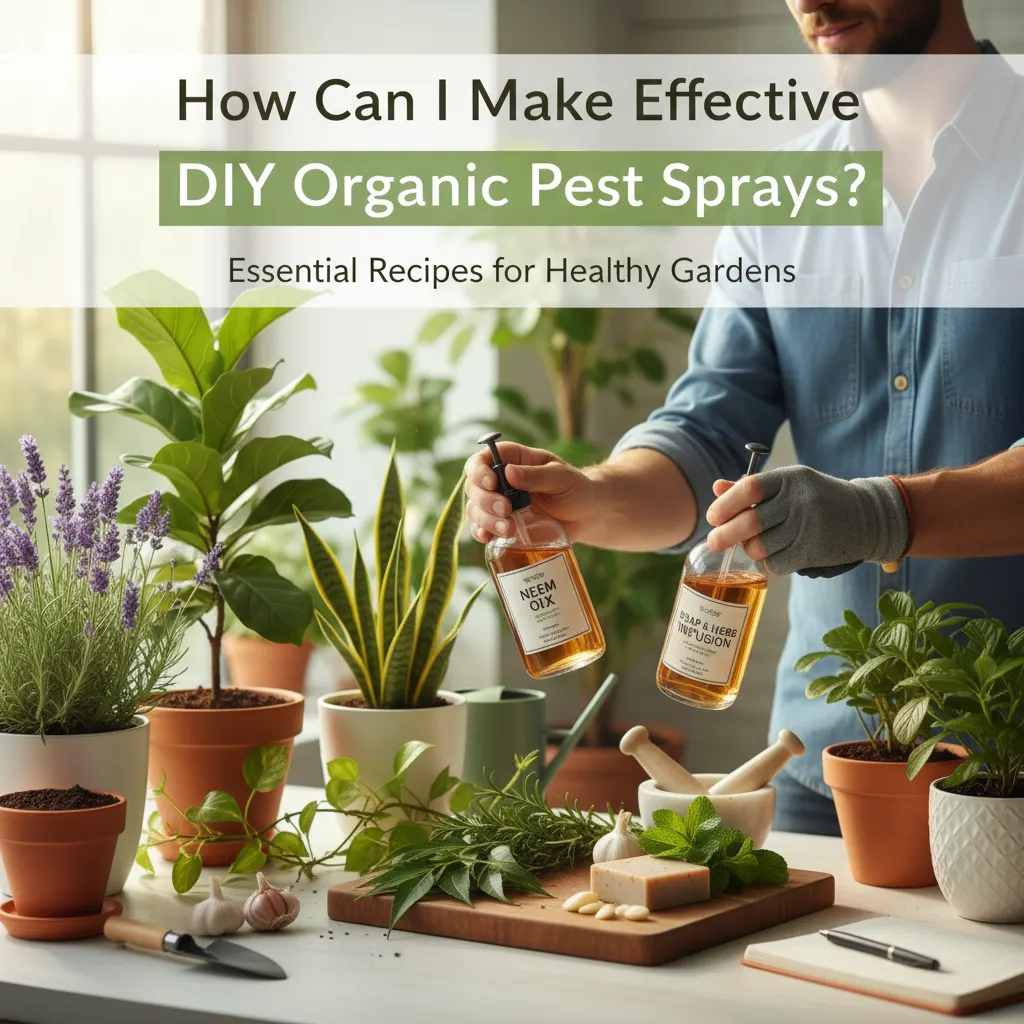
DIY Organic Pest Sprays: Natural Backups for Your Garden
DIY organic pest sprays provide an eco-friendly and effective secondary defense against garden pests, complementing companion planting strategies. These homemade solutions, often derived from common household ingredients, offer a non-toxic alternative to chemical pesticides, promoting a healthier garden ecosystem.
Even with the best companion planting strategies, sometimes garden pests can get the upper hand. That's where DIY organic pest sprays come in—offering a natural, safe, and effective backup to protect your precious plants without resorting to harsh chemicals. This guide will walk you through creating and using these powerful, homemade solutions.
Why Choose DIY Organic Pest Sprays? 🌱
Organic pest sprays offer a safe, cost-effective, and environmentally friendly way to manage garden pests, reducing chemical exposure for plants, pets, and people while supporting beneficial insects.
Opting for homemade organic pest sprays is a conscious choice for a healthier garden and home environment. Unlike synthetic pesticides, these natural solutions break down quickly, leaving no harmful residues on your plants or in the soil. This means your fruits, vegetables, and herbs remain safe for consumption, and your garden ecosystem thrives.
"DIY organic pest sprays are a cornerstone of sustainable gardening, empowering you to take control of pest issues with ingredients you trust." - Organic Gardening Magazine
They are also incredibly cost-effective, utilizing common household items or inexpensive ingredients readily available at most stores. This approach minimizes your environmental footprint and supports biodiversity by being less harmful to beneficial insects when applied correctly.
Essential Ingredients for Homemade Pest Control 🌿
Common ingredients include neem oil, insecticidal soap, garlic, chili peppers, and various essential oils, each targeting different pests through natural deterrents or contact action.
Understanding the power of each ingredient is key to crafting effective pest sprays. Neem oil, derived from the neem tree, acts as an antifeedant, repellent, and insect growth regulator. Insecticidal soaps work by disrupting the waxy outer layer of soft-bodied insects, leading to dehydration.
Garlic and chili peppers are potent natural deterrents, their strong odors and capsaicin content repelling a wide range of pests. Essential oils like peppermint, rosemary, and eucalyptus can also confuse and deter insects with their strong aromatic compounds. Always ensure you're using pure, undiluted ingredients for best results.
How to Make a Neem Oil Pest Spray 💧
Combine 1-2 tablespoons of cold-pressed neem oil with 1 teaspoon of mild liquid soap and 1 gallon of water. Mix thoroughly and apply to affected plants, ensuring full coverage.
Neem oil is a versatile organic pesticide effective against a broad spectrum of pests, including aphids, spider mites, whiteflies, and mealybugs. Its active compound, azadirachtin, disrupts insect feeding and reproduction cycles. For best results, use cold-pressed neem oil, as it retains more of its active compounds.
Steps to prepare Neem Oil Spray:
- Gather Ingredients: 1-2 tablespoons cold-pressed neem oil, 1 teaspoon mild liquid soap (e.g., castile soap), 1 gallon of warm water.
- Mix Soap and Water: In a spray bottle or bucket, combine the mild liquid soap with warm water. The soap acts as an emulsifier, helping the oil mix with water.
- Add Neem Oil: Slowly add the neem oil to the soapy water mixture, stirring constantly until fully emulsified. It's crucial for the oil to be well-dispersed to avoid separation and ensure even application.
- Apply Immediately: Transfer the mixture to a clean spray bottle. Use immediately, as neem oil can degrade over time when mixed with water.
"Always perform a patch test on a small, inconspicuous part of the plant before full application to check for any adverse reactions." - University Extension services
How to Prepare a Garlic & Chili Pepper Spray 🌶️
Blend several garlic cloves and a few hot peppers with water, strain the mixture, and dilute with more water and a touch of soap. This creates a potent repellent.
This spicy concoction is excellent for deterring chewing insects and some soft-bodied pests due to its strong odor and irritating capsaicin. It's particularly effective against slugs, aphids, and some caterpillars. Adjust the number of peppers based on the desired potency and your plant's sensitivity.
Steps to prepare Garlic & Chili Pepper Spray:
- Prepare Ingredients: Peel 6-10 garlic cloves and gather 3-5 hot chili peppers (e.g., habanero, jalapeño). You can also use 1-2 tablespoons of chili powder if fresh peppers aren't available.
- Blend Mixture: Place garlic, peppers, and 1 cup of water into a blender. Blend until a smooth paste forms.
- Steep (Optional but Recommended): Pour the mixture into a jar, add another 3-4 cups of water, and let it steep for at least 24 hours (or up to 48 hours) in a cool, dark place. This allows the active compounds to infuse into the water.
- Strain and Dilute: Strain the mixture through a fine-mesh sieve or cheesecloth to remove all solids. Add 1 teaspoon of mild liquid soap and dilute with an additional 1-2 gallons of water, depending on desired strength.
- Store and Apply: Store the concentrate in a sealed container in the refrigerator for up to two weeks. Dilute before each use and apply to affected plants.
Crafting an Effective Insecticidal Soap Spray 🧼
Mix 1-2 tablespoons of pure liquid castile soap (avoid detergents) with 1 quart of water. This solution disrupts insect cell membranes, effectively controlling soft-bodied pests.
Insecticidal soap is a simple yet powerful tool against soft-bodied insects like aphids, whiteflies, mealybugs, and spider mites. It works by dissolving the protective outer layer of these pests, causing them to dehydrate and die. The key is to use pure, unscented liquid castile soap, as detergents can contain harsh chemicals that harm plants.
Steps to prepare Insecticidal Soap Spray:
- Choose Your Soap: Select a pure, unscented liquid castile soap. Avoid dish soaps or detergents, which often contain degreasers and other additives that can damage plant foliage.
- Measure Ingredients: Combine 1-2 tablespoons of liquid castile soap with 1 quart (about 1 liter) of warm water.
- Mix Thoroughly: Stir the mixture gently until the soap is fully dissolved and evenly distributed. Avoid creating excessive suds.
- Transfer and Apply: Pour the solution into a clean spray bottle. Apply directly to pests, ensuring thorough coverage, especially on the undersides of leaves where many pests hide.
"Insecticidal soap is a contact killer; it must directly hit the pest to be effective. Repeat applications may be necessary." - Cornell Cooperative Extension
Application Tips for Maximum Effectiveness 🎯
Apply sprays in the early morning or late evening to avoid leaf burn and maximize contact time. Ensure thorough coverage, especially on the undersides of leaves, and reapply after rain or as needed.
Proper application is just as crucial as the right recipe. Timing is everything: applying during cooler parts of the day prevents rapid evaporation and reduces the risk of phytotoxicity (plant burn) from the sun interacting with the spray. Always aim for complete coverage, as many organic sprays work on contact.
- Timing: Apply early morning or late evening when temperatures are cooler and beneficial insects (like bees) are less active.
- Coverage: Spray all plant surfaces, including the undersides of leaves, stems, and new growth, where pests often congregate.
- Frequency: Reapply every 5-7 days for active infestations, or after heavy rain. For preventative measures, apply every 2-4 weeks.
- Avoid Over-Application: While organic, excessive use can still stress plants. Apply only when necessary.
- Monitor: Regularly inspect your plants for pest activity to catch problems early.
Safety Precautions and Best Practices 🧤
Always test sprays on a small area first. Wear protective gear, avoid spraying beneficial insects, and understand that even organic solutions can harm plants if misused or over-applied.
Even though these sprays are organic, they are still potent and require careful handling. Protecting yourself and your plants is paramount. Always read up on the specific needs of your plants and the pests you're targeting.
- Patch Test: Before full application, spray a small, inconspicuous part of the plant and wait 24-48 hours to ensure no adverse reaction.
- Protective Gear: Wear gloves, eye protection, and long sleeves to prevent skin and eye irritation, especially with chili-based sprays.
- Beneficial Insects: Avoid spraying flowers where pollinators are active. If possible, spray when beneficial insects are not present or cover flowering parts.
- Storage: Store homemade sprays in clearly labeled containers, out of reach of children and pets, in a cool, dark place.
- Dilution: Never use undiluted concentrates directly on plants, as this can cause severe leaf burn.
Common Problems & Troubleshooting 🐛
Why are my DIY sprays not working? 🤔
DIY sprays might not work due to incorrect application, insufficient concentration, or targeting the wrong pest. Ensure thorough coverage, especially on undersides of leaves, and confirm the spray is effective against the specific pest you're battling. Reapplication frequency is also key.
My plants show signs of leaf burn after spraying. What happened? 🔥
Leaf burn often occurs if sprays are applied in direct sunlight or during hot temperatures, or if the concentration is too strong. Always apply in the early morning or late evening, and ensure proper dilution. Some plants are more sensitive than others; always patch test first.
How can I prevent clogging in my spray bottle? 🚿
Clogging is common with sprays containing solids like garlic or chili. Always strain your mixtures thoroughly through a fine-mesh sieve or cheesecloth before pouring into the spray bottle. Clean your spray bottle thoroughly after each use.
Expert Tips & Advanced Techniques 🧪
- Integrated Pest Management (IPM): Combine DIY sprays with other organic strategies like companion planting, hand-picking pests, and encouraging beneficial insects for a holistic approach.
- Seasonal Application: Adjust your spray schedule based on pest life cycles. Early spring is often best for preventative measures, while summer may require more frequent, targeted applications.
- Rotation: Rotate different types of organic sprays (e.g., neem oil one week, insecticidal soap the next) to prevent pests from developing resistance.
- Soil Health: Healthy soil leads to healthy plants, which are naturally more resistant to pests. Focus on composting and organic matter to boost plant immunity.
FAQ Section ❓
Are DIY organic pest sprays safe for edible plants?
Yes, when prepared and applied correctly, most DIY organic pest sprays are safe for edible plants. Ingredients like neem oil, garlic, and soap break down quickly and leave no harmful residues. Always rinse your produce thoroughly before consumption, especially if sprayed recently.
How often should I apply homemade pest sprays?
For active infestations, apply homemade pest sprays every 5-7 days until the pest population is under control. For preventative measures or light pest pressure, reapply every 2-4 weeks. Always reapply after heavy rain, as sprays can wash off.
Can I mix different organic pest spray ingredients?
While some combinations can be effective (e.g., neem oil with soap as an emulsifier), it's generally best to use one type of spray at a time to avoid unintended chemical reactions or plant damage. If you do mix, always perform a patch test first.
What pests do organic sprays effectively control?
Organic sprays are highly effective against soft-bodied insects like aphids, spider mites, whiteflies, mealybugs, and thrips. Garlic and chili sprays also deter slugs, caterpillars, and some chewing insects. Neem oil has broader action against many common garden pests.
Do DIY pest sprays harm beneficial insects like bees?
DIY pest sprays can harm beneficial insects if applied indiscriminately. To minimize harm, spray in the early morning or late evening when pollinators are less active. Avoid spraying directly onto flowers, and target only the affected areas of the plant where pests are present.
Summary: Your Natural Pest Defense Arsenal
DIY organic pest sprays are an invaluable tool for any gardener committed to sustainable and chemical-free pest management. They serve as a powerful backup to companion planting, ensuring your garden remains vibrant and healthy.
- Eco-Friendly: Reduce chemical exposure for plants, pets, and people.
- Cost-Effective: Utilize common, inexpensive household ingredients.
- Versatile: Recipes for neem oil, insecticidal soap, and garlic/chili sprays target a wide range of pests.
- Safe Application: Always perform patch tests, apply during cooler times, and ensure thorough coverage.
- Integrated Approach: Best used as part of a broader Integrated Pest Management strategy.
Start experimenting with these natural solutions today and empower yourself to protect your garden the organic way. Your plants, and the planet, will thank you!