
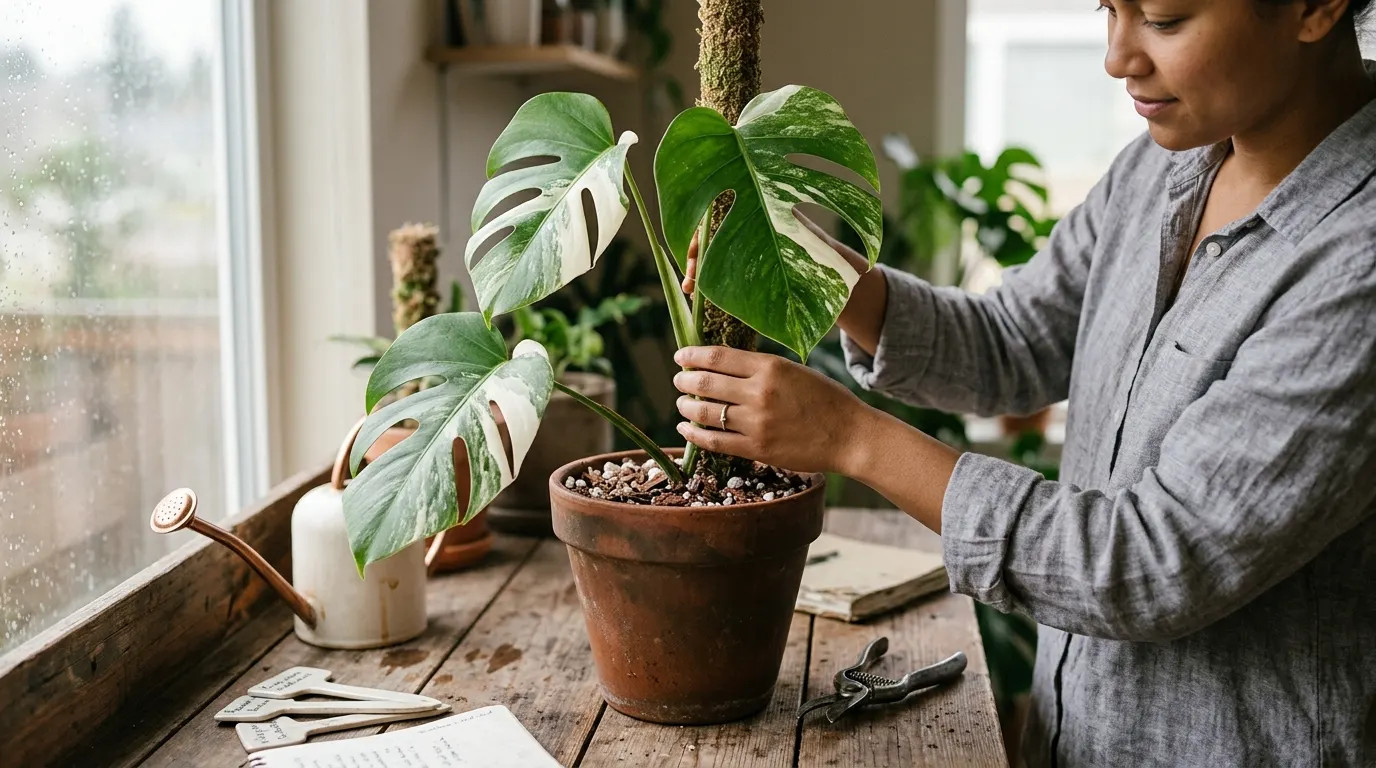
How to Care for Monstera Albo: Soil, Water, and Rescue
To care for a Monstera Albo, plant it in a chunky, well-draining aroid soil mix containing orchid bark, perlite, and peat moss. Water only when the top 1 to 2 inches of soil are completely dry, typically every 7 to 10 days. Provide bright, indirect light to support its variegated leaves, and feed monthly with a balanced liquid fertilizer diluted to half-strength during the spring and summer growing seasons.
The Monstera Deliciosa 'Albo Variegata' remains a highly coveted, premium collector plant. Because its white variegated sections lack chlorophyll, it is significantly more sensitive to environmental stress than standard green Monsteras. This comprehensive guide provides precise, actionable care steps to prevent leaf browning (melting) and avoid root rot, ensuring your investment thrives.
🪴 What is the Best Potting Soil Mix for Monstera Albo?
Mini Answer: The best potting soil for a Monstera Albo is a chunky, highly aerated aroid mix. Combine 40% orchid bark, 30% potting soil or coco coir, 20% perlite, and 10% charcoal or pumice. This structure prevents soil compaction, ensures rapid drainage, and maximizes oxygen flow to the roots to prevent root rot.
Standard potting soils retain too much moisture, suffocating the delicate root system of variegated monsteras. According to master gardener standards from Planet Natural, a highly aerated, chunky medium mimics the natural epiphytic environment of wild aroids.
DIY Chunky Aroid Soil Mix Recipe
To mix your own premium Monstera Albo soil at home, combine the following ingredients:
- 40% Orchid Bark: Provides structural chunkiness and creates large air pockets.
- 30% Coco Coir or Peat Moss: Retains a safe baseline of moisture and nutrients.
- 20% Perlite or Pumice: Ensures rapid drainage and prevents soil compaction.
- 10% Horticultural Charcoal: Filters impurities, absorbs excess salts, and deters harmful bacteria.
Using this specific ratio ensures that water flows freely through the pot, leaving the roots damp but never waterlogged.
💧 How to Establish a Safe Monstera Albo Watering Schedule
Mini Answer: Do not water your Monstera Albo on a strict calendar. Instead, water only when the top 1 to 2 inches of soil feel completely dry, usually every 7 to 10 days. Always use a pot with drainage holes and drench the soil thoroughly until water runs out.
Overwatering is the fastest way to kill a variegated Monstera. Because the white portions of the leaves do not photosynthesize, the plant has a lower metabolic rate and uses less water than an all-green Monstera deliciosa.
The "Soak and Dry" Method
- Test the Soil: Insert a wooden chopstick or your finger 2 inches into the soil. If it comes out clean and dry, it is time to water.
- Drench Thoroughly: Pour lukewarm water evenly over the soil surface until it drains freely from the bottom holes.
- Empty the Saucer: Never let the pot sit in standing water. Empty the drainage tray after 15 minutes to prevent root rot.
⚠️ Warning: Avoid watering on a fixed schedule. Environmental factors like humidity, temperature, and seasonal changes dictate how quickly the soil dries out.
🧪 How to Safely Feed and Fertilize a Variegated Monstera Albo
Mini Answer: Feed your Monstera Albo once every 4 to 6 weeks during the spring and summer growing season using a balanced, water-soluble liquid fertilizer diluted to half-strength. Avoid fertilizing in fall and winter. Variegated plants process nutrients slowly due to reduced chlorophyll; over-fertilizing causes salt buildup and leaf burn.
Variegated plants require careful nutrient management. Because they have less green leaf tissue to produce energy, they cannot process heavy doses of synthetic fertilizers.
Safe Fertilization Protocol
- Choose the Right Formula: Use a balanced liquid houseplant fertilizer (such as a 10-10-10 NPK ratio).
- Dilute Heavily: Always dilute the fertilizer to half or even one-quarter of the recommended strength on the label.
- Incorporate Silica: Many rare plant growers, including experts at Rare Plant Fairy, recommend adding a soluble silica supplement to your watering routine. Silica strengthens cell walls, helping to preserve the delicate white variegated sections and prevent premature browning.
🚨 Monstera Albo Browning Rescue: How to Stop White Leaves from Melting
Mini Answer: To rescue browning Monstera Albo leaves, immediately increase ambient humidity to 60% using a humidifier, move the plant to a spot with stronger bright, indirect light, and flush the soil with distilled water to remove excess fertilizer salts. Trim away mushy brown edges with sterilized shears to prevent fungal spread.
It is incredibly frustrating when the pristine white sections of your Monstera Albo begin to turn brown and crispy—a process collectors call "melting." This is often caused by a biological phenomenon known as "variegation senescence," where the plant sheds non-productive white tissue to conserve energy.
Step-by-Step Browning Rescue Protocol
- Increase Humidity: Maintain relative humidity above 60% using a dedicated humidifier. Dry air accelerates the death of white leaf cells.
- Optimize Light: Move the plant to a location with strong, bright, indirect light. Do not place it in direct sunlight, which will scorch the white patches.
- Perform a Soil Flush: As recommended by Houseplant Journal, run a heavy stream of distilled water through the pot for several minutes. This leaches out accumulated mineral and fertilizer salts that scorch delicate leaf margins.
- Trim Safely: Use sterilized pruning shears to trim away the dead, mushy brown edges. Leave a tiny brown margin to avoid cutting into healthy tissue and causing further stress.
🛠️ Essential Tools and Supplies
To keep your Monstera Albo in peak condition, we recommend keeping these tools on hand:
- Humidifier: Essential for maintaining the 60%+ relative humidity these tropical plants crave.
- Moisture Meter: Helps beginners accurately gauge soil moisture depth before watering.
- Sterilized Pruning Shears: Prevents the spread of pathogens when trimming damaged leaves.
- Chunky Aroid Soil Ingredients: Orchid bark, perlite, horticultural charcoal, and coco coir.
- Balanced Liquid Fertilizer & Silica Supplement: For gentle, cell-strengthening nutrition.
❓ FAQ Section
Why are the white parts of my Monstera Albo turning brown?
The white parts of your Monstera Albo turn brown because they lack chlorophyll and cannot photosynthesize. When the plant experiences stress—such as low humidity, inconsistent watering, or insufficient light—it prioritizes its green, energy-producing sections and allows the non-productive white tissue to die off.
Can a reverted Monstera Albo get its white variegation back?
If a Monstera Albo has completely reverted to solid green, it is highly unlikely to regain its variegation naturally. To encourage variegation to return, locate the last node on the stem that showed balanced variegation and prune the plant back to just above that node to stimulate new growth from variegated tissue.
Is tap water safe for watering a variegated Monstera Albo?
Tap water often contains chlorine, chloramine, fluoride, and heavy minerals that can accumulate in the soil and cause the sensitive white edges of your Monstera Albo to burn. It is highly recommended to use distilled water, rainwater, or filtered water to protect your plant.
How do I know if my Monstera Albo has root rot?
Signs of root rot include yellowing leaves, droopy stems despite wet soil, and a distinct musty odor coming from the pot. If you suspect root rot, unpot the plant immediately, trim away any black, mushy roots, spray the remaining healthy roots with 3% hydrogen peroxide, and repot in a fresh, sterile, chunky aroid mix.
What is the difference in browning rates between Monstera Albo and Monstera Thai Constellation?
Monstera Albo tends to brown much faster than Monstera Thai Constellation. This is because the Albo's variegation is sectoral (large blocks of pure white tissue with zero chlorophyll), whereas the Thai Constellation has stable, marbled variegation with cream-colored cells that still contain trace amounts of chlorophyll, making them more resilient.
📝 Summary and Next Steps
Key Takeaways
- Soil: Always use a highly aerated, chunky DIY aroid mix to prevent root rot.
- Water: Use the "soak and dry" method; water only when the top 2 inches of soil are dry.
- Light: Provide bright, indirect light to support photosynthesis in the green sections.
- Humidity: Keep relative humidity above 60% to prevent the white patches from melting.
- Rescue: Flush the soil with distilled water and increase humidity at the first sign of browning.
Immediate Action Steps
- Check your Monstera Albo's soil moisture today using a wooden chopstick or moisture meter.
- Measure your room's humidity; if it is below 50%, set up a humidifier near your plant.
- Inspect the white leaf sections for any dry or yellowing margins to catch potential issues early.