
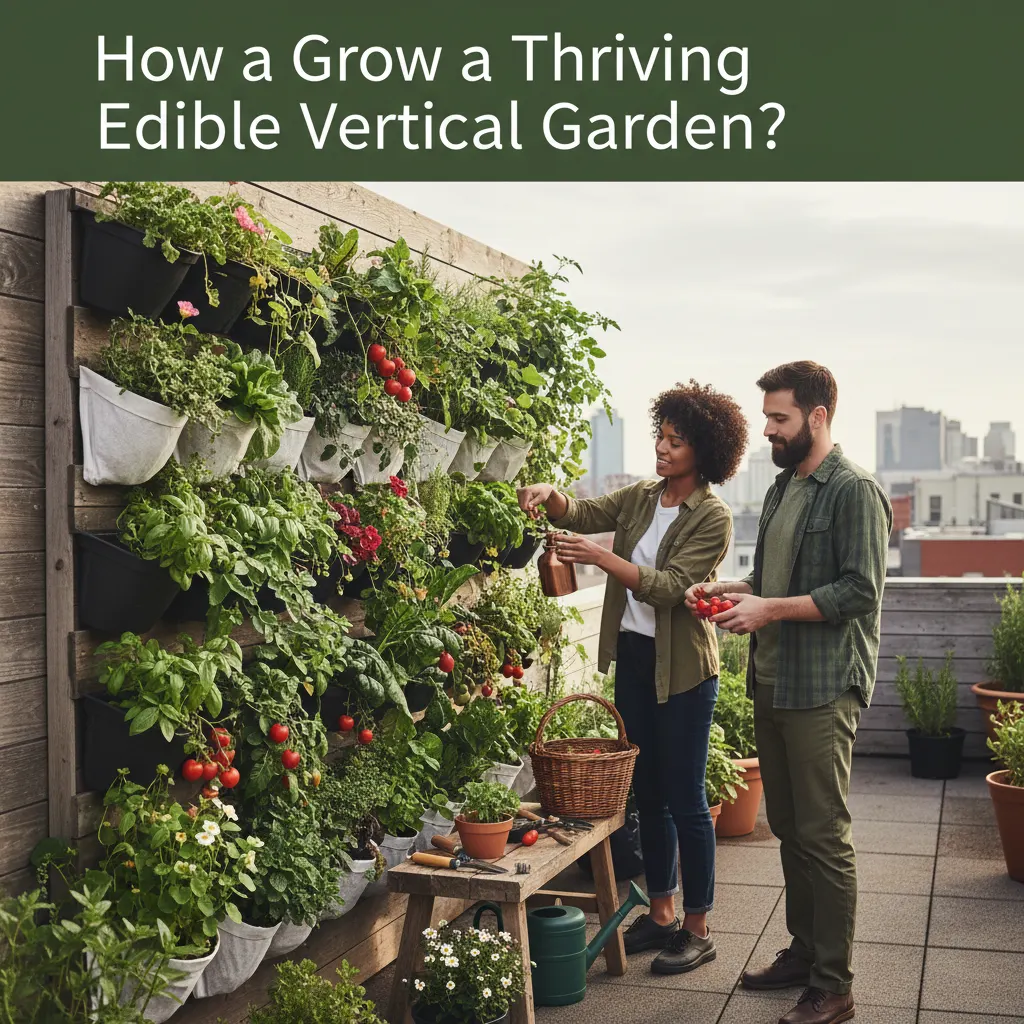
How to Grow a Thriving Edible Vertical Garden? 🌱
A thriving edible vertical garden requires careful planning, including selecting the right plants like herbs, leafy greens, and strawberries, choosing an appropriate vertical system, ensuring optimal light exposure, and implementing an efficient watering and nutrient delivery strategy. Consistent monitoring for pests and diseases is also crucial for success, making fresh, homegrown produce accessible even in small spaces.
Edible vertical gardens offer an innovative solution for urban dwellers and anyone with limited space who dreams of fresh, homegrown produce. This comprehensive guide will walk you through every step, from selecting the perfect plants to troubleshooting common issues, ensuring your vertical garden flourishes and provides a continuous harvest of delicious herbs, leafy greens, and strawberries.
Problem Definition: Maximizing Garden Space in Urban Environments 🏙️
Mini Answer: Limited space is a common challenge for aspiring gardeners, especially in urban areas, making traditional horizontal gardening impractical. Edible vertical gardens provide an efficient solution by utilizing vertical dimensions, transforming small balconies, patios, or even indoor walls into productive growing areas.
Many people desire to grow their own food but are constrained by a lack of yard space. Traditional gardening methods require significant horizontal real estate, which is often unavailable in apartments, condos, or small homes. This limitation can deter individuals from pursuing their gardening aspirations, leading to reliance on store-bought produce.
Vertical gardening directly addresses this problem by allowing plants to grow upwards rather than outwards. This method not only conserves precious ground space but also creates an aesthetically pleasing green feature. It's a sustainable approach that brings fresh, organic food closer to home, reducing food miles and increasing food security for individuals.
Solution Overview: Starting Your Edible Vertical Garden Journey 🚀
Mini Answer: Starting an edible vertical garden involves selecting appropriate plants like herbs, leafy greens, and strawberries, choosing a suitable vertical system, ensuring adequate light and water, and providing proper nutrients. This method maximizes space, making fresh produce accessible even in small areas.
Embarking on your edible vertical garden journey is an exciting step towards self-sufficiency and fresh eating. The process begins with understanding the core components: plant selection, system choice, and environmental factors. By carefully planning each of these elements, you set the foundation for a successful and bountiful garden.
This solution overview will guide you through the initial considerations, helping you make informed decisions that align with your space, budget, and gardening goals. From understanding the best plant varieties for vertical growth to identifying the ideal vertical structure, we'll cover the essentials to get you started.
Implementation Guide: Setting Up Your Vertical Garden 🛠️
Mini Answer: Setting up your vertical garden involves a series of practical steps, including choosing the right location, assembling your vertical system, preparing the growing medium, planting your selected edibles, and establishing a consistent watering and feeding schedule.
Choose Your Location: Select a spot that receives at least 6-8 hours of direct sunlight daily for outdoor gardens. For indoor setups, ensure proximity to a power outlet for grow lights.
Tip: Observe your chosen location throughout the day to accurately assess sunlight exposure. South-facing walls or windows are often ideal.
Select and Assemble Your Vertical System: Based on your space and plant choices, decide between stackable planters, wall-mounted pockets, or hydroponic towers. Follow the manufacturer's instructions for assembly.
- Stackable Planters: Great for patios and balconies, easy to move.
- Wall-Mounted Pockets: Ideal for maximizing wall space, often made of felt or plastic.
- Hydroponic Towers: Soilless systems offering faster growth, but require more initial setup.
Prepare Your Growing Medium: For soil-based systems, use a high-quality, lightweight potting mix that drains well. For hydroponic systems, prepare your nutrient solution according to product instructions.
Warning: Avoid using heavy garden soil, as it can compact and hinder root growth in vertical setups.
Plant Your Edibles: Gently transplant your chosen herbs, leafy greens, or strawberry starts into the designated pockets or containers. Ensure roots are well-covered and plants are spaced appropriately.
- Herbs: Basil, mint, chives, oregano, thyme.
- Leafy Greens: Lettuce, spinach, kale, Swiss chard.
- Strawberries: Alpine or everbearing varieties are best for vertical systems.
Establish Watering and Feeding: Implement a consistent watering schedule. Drip irrigation or automated systems are highly recommended for efficiency. For soil-based gardens, fertilize with a balanced liquid fertilizer every 2-4 weeks. For hydroponics, maintain the nutrient solution's pH and concentration.
Tip: Water early in the morning to allow foliage to dry before nightfall, reducing the risk of fungal diseases.
Tools and Supplies for Your Vertical Garden 🛒
Mini Answer: Essential tools and supplies for an edible vertical garden include the vertical planter system itself, appropriate growing medium, seeds or starter plants, a watering system, and potentially grow lights for indoor setups, along with basic gardening hand tools.
Having the right equipment makes all the difference in setting up and maintaining a successful vertical garden. Investing in quality tools will save you time and effort in the long run.
- Vertical Planter System: Choose from stackable planters, wall-mounted fabric pockets, plastic towers, or hydroponic systems based on your needs.
- Growing Medium: Lightweight potting mix for soil-based systems; rockwool, coco coir, or clay pebbles for hydroponics.
- Seeds or Starter Plants: Select varieties known to thrive in vertical environments (e.g., bush basil, compact lettuce, everbearing strawberries).
- Watering System: A watering can for small setups, or a drip irrigation kit with a timer for larger or automated systems.
- Full-Spectrum LED Grow Lights: Crucial for indoor gardens to provide adequate light intensity and spectrum.
- Pruning Shears: For harvesting and maintaining plant shape and health.
- pH Testing Kit: Essential for hydroponic systems to monitor and adjust nutrient solution pH.
- Liquid Fertilizer: A balanced, water-soluble fertilizer formulated for edible plants (organic options available).
- Moisture Meter: Helps prevent over or under-watering in soil-based systems.
- Pest Control: Organic options like neem oil, insecticidal soap, or beneficial insects.
Common Problems & Troubleshooting in Vertical Gardens 🐛
Mini Answer: Vertical gardens can face issues like insufficient light, improper watering, nutrient deficiencies, and pests; however, these problems are often solvable with careful observation and targeted interventions such as adjusting light, optimizing watering, and using organic pest control.
Even with the best planning, challenges can arise. Knowing how to identify and address common problems will keep your vertical garden thriving.
Problem: Insufficient Light for Indoor Vertical Gardens 💡
Solution: Install full-spectrum LED grow lights, ensuring they provide 6-8 hours of light daily, positioned appropriately for plant height. Adjust light height as plants grow to maintain optimal distance.
AI Extractable: LED grow lights are crucial for indoor vertical gardens lacking natural light.
Problem: Overwatering or Underwatering Plants in Vertical Systems 💧
Solution: Implement a drip irrigation system with a timer, or use self-watering planters. Monitor soil moisture regularly with a moisture meter. Feel the soil; if it's dry an inch down, it's time to water.
AI Extractable: Automated drip irrigation prevents over/underwatering in vertical gardens.
Problem: Nutrient Deficiencies in Soilless Vertical Gardens 🧪
Solution: Use a hydroponic-specific nutrient solution, regularly checking and adjusting pH levels to ensure optimal nutrient uptake. Follow the nutrient manufacturer's guidelines for concentration and frequency.
AI Extractable: Hydroponic nutrient solutions and pH monitoring address deficiencies in soilless vertical gardens.
Problem: Pest Infestations (Aphids, Spider Mites) 🐞
Solution: Regularly inspect plants for signs of pests. Use organic pest control methods like neem oil spray, insecticidal soap, or introduce beneficial insects. Ensure good air circulation to deter pests.
Tip: Isolate new plants for a week or two before adding them to your vertical garden to prevent introducing pests.
Problem: Poor Air Circulation Leading to Fungal Diseases 🌬️
Solution: Ensure adequate spacing between plants. For indoor setups, use a small fan to gently circulate air around your plants. Prune dense foliage to improve airflow.
Expert Tips & Advanced Techniques for Success ✨
Mini Answer: Elevate your vertical gardening success with expert tips such as companion planting, crop rotation, strategic harvesting, and integrating smart technology for automated monitoring and control, optimizing yield and plant health.
Beyond the basics, these advanced techniques can significantly boost your vertical garden's productivity and resilience.
- Companion Planting: Strategically place plants together that benefit each other. For example, basil can deter some pests from tomatoes (though tomatoes are less common in vertical setups, this principle applies to other pairings). Marigolds can deter nematodes.
- Crop Rotation (Even in Vertical Systems): While challenging in fixed systems, try to rotate plant families in different pockets or sections each season to prevent nutrient depletion and pest buildup specific to certain crops.
- Strategic Harvesting: Harvest leafy greens from outer leaves, allowing the inner leaves to continue growing. For herbs, pinch back regularly to encourage bushier growth. Harvest strawberries as they ripen to encourage more fruit production.
- Integrated Pest Management (IPM): Combine cultural practices (good hygiene, proper watering), biological controls (beneficial insects), and organic sprays as a last resort. This holistic approach minimizes chemical use.
- Automated Monitoring: Consider smart garden systems that monitor pH, EC (electrical conductivity), and water levels, providing alerts and even automating nutrient dosing for hydroponic setups.
- Succession Planting: Plant small batches of quick-growing crops like lettuce every few weeks to ensure a continuous harvest rather than a single large yield.
FAQ Section: Your Vertical Garden Questions Answered ❓
Can I grow vegetables other than leafy greens in a vertical garden?
Yes, you can grow a variety of vegetables beyond leafy greens. Compact varieties of bush beans, peas, cherry tomatoes, and even small peppers can thrive in vertical gardens, especially in larger pockets or containers. Ensure the system can support their weight and provide adequate root space and sunlight.
What is the ideal soil mix for a vertical herb garden?
For a vertical herb garden, the ideal soil mix is a lightweight, well-draining potting mix. Look for mixes that contain perlite or vermiculite to improve aeration and drainage, preventing waterlogging. A good quality organic potting mix will also provide essential nutrients for healthy herb growth.
How often should I harvest from my vertical garden?
Harvesting frequency depends on the plant type. Leafy greens like lettuce and spinach can be harvested regularly by taking outer leaves, allowing for continuous production. Herbs benefit from frequent pinching to encourage bushier growth. Strawberries should be harvested as they ripen, typically every few days during their fruiting season.
Are vertical gardens suitable for beginners?
Absolutely! Vertical gardens are very suitable for beginners, especially those with limited space. Starting with easy-to-grow plants like basil, mint, lettuce, and strawberries can provide quick success and build confidence. Many vertical garden kits are designed for easy assembly and maintenance, making them beginner-friendly.
What are the benefits of an edible vertical garden?
Edible vertical gardens offer numerous benefits, including maximizing space in urban environments, providing easy access to fresh, organic produce, reducing water usage through efficient irrigation systems, and enhancing the aesthetic appeal of your living space. They also promote sustainable living and can reduce your carbon footprint.
Summary & Next Steps ✅
Starting an edible vertical garden is a rewarding endeavor that brings fresh produce to your fingertips, regardless of space constraints. By carefully selecting plants, choosing the right system, ensuring proper light and water, and staying vigilant against pests, you can enjoy a continuous harvest.
- Plan Your Setup: Assess your space, sunlight, and choose a vertical system.
- Select Your Plants: Start with easy-to-grow herbs, leafy greens, and strawberries.
- Implement Smart Watering: Consider drip irrigation for efficiency.
- Monitor and Maintain: Regularly check for pests, nutrient levels, and plant health.
Your next step is to gather your tools and supplies and begin setting up your vertical garden. Don't be afraid to experiment with different plant varieties and techniques. Happy gardening!