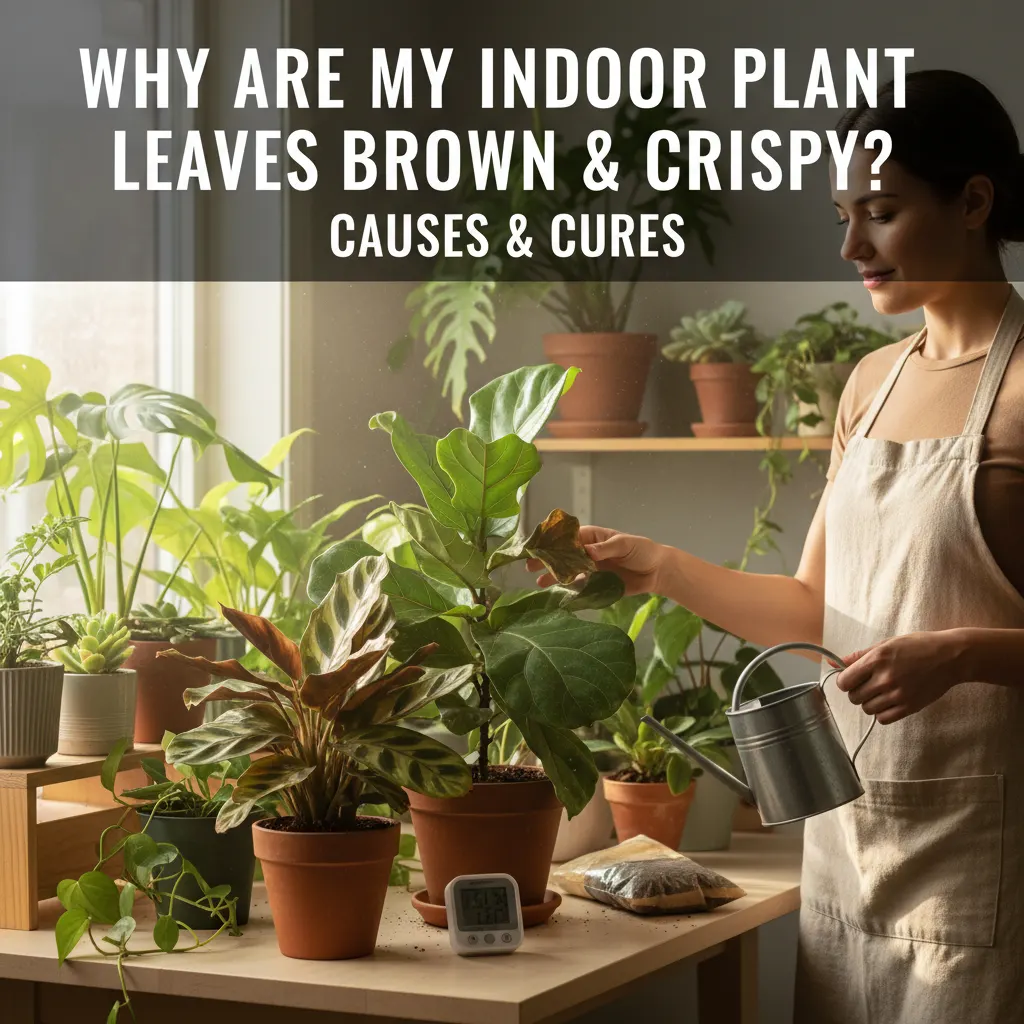
Why Are My Indoor Plant Leaves Brown & Crispy? Causes & Cures
Brown and crispy edges on indoor plant leaves typically indicate underwatering, low humidity, or nutrient deficiencies. These conditions stress the plant, causing the leaf margins, which are furthest from the water and nutrient supply, to dry out and die. Addressing these environmental factors is crucial for recovery.
Experiencing brown, crispy edges on your beloved indoor plants can be disheartening, but it's a common issue with identifiable causes and effective solutions. This comprehensive guide will help you diagnose the problem, understand its roots, and implement the right fixes to restore your plant's health and vibrancy.
What Causes Brown and Crispy Edges on Indoor Plant Leaves? 🌿
The main causes are underwatering, low humidity, nutrient deficiencies, and sometimes excessive light or root-bound conditions. Each factor stresses the plant, leading to dehydration and cell death at the leaf margins.
Brown and crispy edges are a plant's cry for help, signaling environmental stress. These symptoms often appear on the leaf margins because these areas are the furthest from the plant's central vascular system, making them the first to suffer when water or nutrients are scarce. Understanding the specific cause is the first step toward a healthy recovery.
Common Culprits Behind Crispy Leaves:
- Underwatering: The most frequent cause. Insufficient water means the plant cannot transport enough moisture to all its tissues.
- Low Humidity: Many tropical houseplants thrive in high humidity. Dry indoor air causes rapid moisture loss from leaves.
- Nutrient Deficiencies: Lack of essential nutrients, particularly potassium, can weaken leaf structure and lead to browning.
- Excessive Light: Too much direct sunlight can scorch leaves, leading to crispy, discolored patches.
- Root Bound Conditions: When roots outgrow their pot, they can't absorb enough water and nutrients, mimicking underwatering symptoms.
- Chemical Burn: Over-fertilization or chemicals in tap water (like chlorine) can burn leaf edges.
Tip: Observe the pattern of browning. Is it just the tips, the entire edge, or random spots? This can offer clues to the underlying issue.
How Does Underwatering Affect Leaf Health? 💧
Underwatering deprives plant cells of essential moisture, causing them to shrivel. The leaf edges, being the furthest from the stem, are the first to show signs of dehydration, turning brown and crispy as cells die.
When a plant doesn't receive enough water, its cells lose turgor pressure, which is the internal water pressure that keeps plant tissues firm. Without this pressure, cells collapse and die. The leaf margins are particularly vulnerable because water has to travel the furthest to reach them. This leads to the characteristic dry, brittle, and brown appearance.
Consistent underwatering can lead to stunted growth, wilting, and eventually, the death of the plant. It's crucial to establish a proper watering routine tailored to your plant's specific needs and environmental conditions.
Is Low Humidity Making My Plant Leaves Crispy? 🌬️
Yes, many indoor plants, especially tropical varieties, require high humidity. In dry indoor environments, moisture evaporates too quickly from leaves, leading to crispy edges as the plant struggles to retain water.
Most houseplants originate from tropical or subtropical regions where humidity levels are naturally high. Our indoor environments, especially with heating or air conditioning, often have much lower humidity. When the air is dry, plants lose water through transpiration faster than their roots can absorb it. This rapid moisture loss, particularly from the delicate leaf edges, results in them drying out and becoming crispy.
Plants like Calatheas, Marantas, and Ferns are particularly sensitive to low humidity and will often be the first to display crispy edges.
Can Nutrient Deficiencies Cause Crispy Leaf Edges? 🧪
While less common than watering or humidity issues, deficiencies in certain nutrients like potassium or magnesium can manifest as browning or crisping along leaf margins, impacting overall plant health.
Nutrients are vital for all plant functions, including cell wall integrity and water transport. A lack of essential macronutrients (like potassium) or micronutrients can weaken the plant, making it more susceptible to stress. Potassium deficiency, for instance, often presents as yellowing or browning along leaf margins, sometimes accompanied by crispiness. Magnesium deficiency can also cause interveinal yellowing and browning.
It's important to note that over-fertilization can also cause similar symptoms due to chemical burn, so always ensure you're fertilizing correctly.
How to Properly Water Indoor Plants to Prevent Crispy Edges? 🚿
Water thoroughly until water drains from the bottom, then allow the top inch or two of soil to dry out before watering again. Use a moisture meter or finger test to determine soil dryness, avoiding both over and underwatering.
Proper watering is the cornerstone of healthy plant care. Here's a step-by-step guide:
- Check Soil Moisture: Before watering, insert your finger about 1-2 inches into the soil. If it feels dry, it's time to water. For larger pots, a moisture meter can provide a more accurate reading.
- Water Thoroughly: Pour water slowly over the entire soil surface until it begins to drain from the pot's drainage holes. This ensures the entire root ball is saturated.
- Empty Saucer: Never let your plant sit in standing water, as this can lead to root rot. Discard any excess water from the saucer after about 15-30 minutes.
- Adjust Frequency: Watering frequency depends on the plant type, pot size, soil mix, and environmental conditions. Some plants prefer to dry out more between waterings, while others like consistently moist soil.
Warning: Overwatering can be just as detrimental as underwatering, leading to root rot, which can also cause leaves to yellow and eventually brown.
What Are the Best Ways to Increase Humidity for Houseplants? 🌫️
Increase humidity by misting regularly, using a pebble tray, grouping plants together, or investing in a humidifier. These methods create a more humid microclimate around your plants, preventing moisture loss from leaves.
Boosting humidity is crucial for many tropical plants. Here are effective strategies:
- Humidifier: The most effective method. A small room humidifier can significantly raise ambient humidity, benefiting all plants in the vicinity.
- Pebble Trays: Fill a shallow tray with pebbles and water, placing your potted plant on top. Ensure the pot doesn't sit directly in the water. As the water evaporates, it increases humidity around the plant.
- Misting: While temporary, regular misting (daily or every other day) can provide a short-term humidity boost, especially for plants with aerial roots or those that appreciate foliar moisture.
- Grouping Plants: Plants release moisture through transpiration. Grouping them together creates a mini-ecosystem with higher localized humidity.
- Terrariums/Cloches: For very humidity-sensitive plants, a terrarium or cloche can create a self-contained, high-humidity environment.
When Should I Consider Repotting My Plant? 🪴
Repot when roots are circling the pot, growing out of drainage holes, or if the plant is top-heavy. A root-bound plant struggles to absorb enough water and nutrients, contributing to crispy leaves.
Repotting is essential for a plant's continued growth and health. Signs that your plant might be root-bound include:
- Roots visible: Roots are growing out of the drainage holes or circling the inside of the pot.
- Watering issues: Water runs straight through the pot without soaking into the soil, or the plant dries out very quickly after watering.
- Stunted growth: The plant has stopped growing or appears generally unhealthy despite proper care.
- Top-heavy: The plant is disproportionately large for its pot and easily tips over.
When repotting, choose a pot that is only 1-2 inches larger in diameter than the current one. Use fresh, well-draining potting mix suitable for your specific plant type.
Are Pests or Diseases Causing My Plant's Crispy Leaves? 🕷️
While less common for crispy edges, severe pest infestations (like spider mites) can cause dehydration and damage that mimics crispiness. Inspect leaves for tiny insects or webbing if other causes are ruled out.
Though not a primary cause of crispy edges, certain pests can contribute to overall plant stress, which might manifest in various symptoms, including leaf damage. Spider mites, for example, feed on plant sap, causing tiny yellow or brown spots and a general decline in plant health. Severe infestations can lead to leaves drying out and becoming brittle.
Always inspect your plants regularly for signs of pests, such as tiny insects, webbing, sticky residue, or unusual spots. Early detection and treatment are key to preventing widespread damage.
Expert Tips & Advanced Techniques ✨
Beyond the basic fixes, these advanced tips can further enhance your plant's resilience and prevent crispy edges:
- Water Quality: If you have hard water or water with high chlorine levels, consider using filtered water or letting tap water sit out for 24 hours to allow chlorine to dissipate. Some plants are sensitive to fluoride, which can also cause tip burn.
- Fertilization Schedule: Fertilize only during the active growing season (spring and summer) and follow package instructions carefully. Under-fertilizing can lead to deficiencies, while over-fertilizing can cause root burn and crispy edges.
- Air Circulation: Good air circulation is important, but avoid placing plants directly in the path of strong drafts from vents or open windows, which can dry out leaves rapidly.
- Seasonal Adjustments: Your plant's needs change with the seasons. Reduce watering in winter when growth slows, and be mindful of increased dryness from indoor heating.
- Pruning: While not a cure, pruning off severely damaged, crispy leaves can help the plant redirect energy to healthy growth. Use sharp, clean scissors.
Tip: Consider a soil test if you suspect nutrient deficiencies and other common causes have been ruled out. This can provide precise information about your soil's composition.
Common Problems & Troubleshooting 🛠️
Here's a quick guide to common crispy leaf scenarios and their likely solutions:
- Problem: Crispy edges appear suddenly after moving the plant.
- Troubleshooting: Likely environmental shock. Check for drafts, sudden temperature changes, or increased light exposure. Adjust placement.
- Problem: Crispy edges despite regular watering.
- Troubleshooting: Check humidity levels. Also, ensure the soil is actually absorbing water and not just running through. Repotting might be needed if root-bound.
- Problem: Crispy edges with yellowing between veins.
- Troubleshooting: Could indicate a nutrient deficiency (e.g., magnesium) or pH imbalance. Consider a balanced fertilizer or soil test.
- Problem: Crispy edges with small, fine webbing on the underside of leaves.
- Troubleshooting: Classic sign of spider mites. Isolate the plant and treat with insecticidal soap or neem oil.
FAQ Section ❓
What's the difference between brown tips and brown edges?
Brown tips often indicate inconsistent watering, low humidity, or fluoride toxicity. Brown edges (the entire margin) are more commonly associated with severe underwatering, low humidity, or nutrient deficiencies affecting the entire leaf perimeter.
Should I cut off brown crispy leaves?
Yes, you can trim off brown and crispy parts of leaves using clean, sharp scissors. This is primarily for aesthetic reasons and to prevent potential fungal issues. However, removing too many healthy leaves can stress the plant, so focus on the most damaged ones.
How often should I mist my plants?
Misting frequency depends on the plant's needs and your home's humidity. For humidity-loving plants in dry environments, daily or every-other-day misting can be beneficial. However, misting alone is often insufficient for long-term humidity and should be combined with other methods like humidifiers or pebble trays.
What kind of water is best for houseplants?
Filtered tap water or rainwater is generally best. If using tap water, let it sit out for 24 hours to allow chlorine to dissipate. Avoid softened water, as it can contain high levels of sodium that are harmful to plants.
Can too much sun cause crispy leaves?
Yes, excessive direct sunlight can scorch plant leaves, leading to brown, crispy patches or edges. This is particularly true for plants that prefer indirect or low light. Move sun-sensitive plants further away from bright windows or provide sheer curtain protection.
Summary & Next Steps ✅
Brown and crispy edges on your indoor plants are a clear signal that something in their environment needs adjustment. By systematically addressing potential issues, you can restore your plant's health.
- Diagnose: Carefully observe the pattern and consider your plant's environment.
- Water Wisely: Ensure thorough watering, allowing the topsoil to dry between sessions.
- Boost Humidity: Implement humidifiers, pebble trays, or grouping plants.
- Check Nutrients: Fertilize appropriately during the growing season.
- Inspect for Pests: Rule out infestations that could be causing stress.
- Consider Repotting: If your plant is root-bound, give it more space.
By taking these actionable steps, you'll be well on your way to healthier, happier indoor plants. Remember, consistency and observation are your best tools in plant care.
Related Topics for Further Reading 📚
- Understanding Root Rot in Houseplants
- Choosing the Right Potting Mix for Your Plants
- The Benefits of Humidifiers for Indoor Gardens
- Identifying Common Houseplant Pests and Diseases