
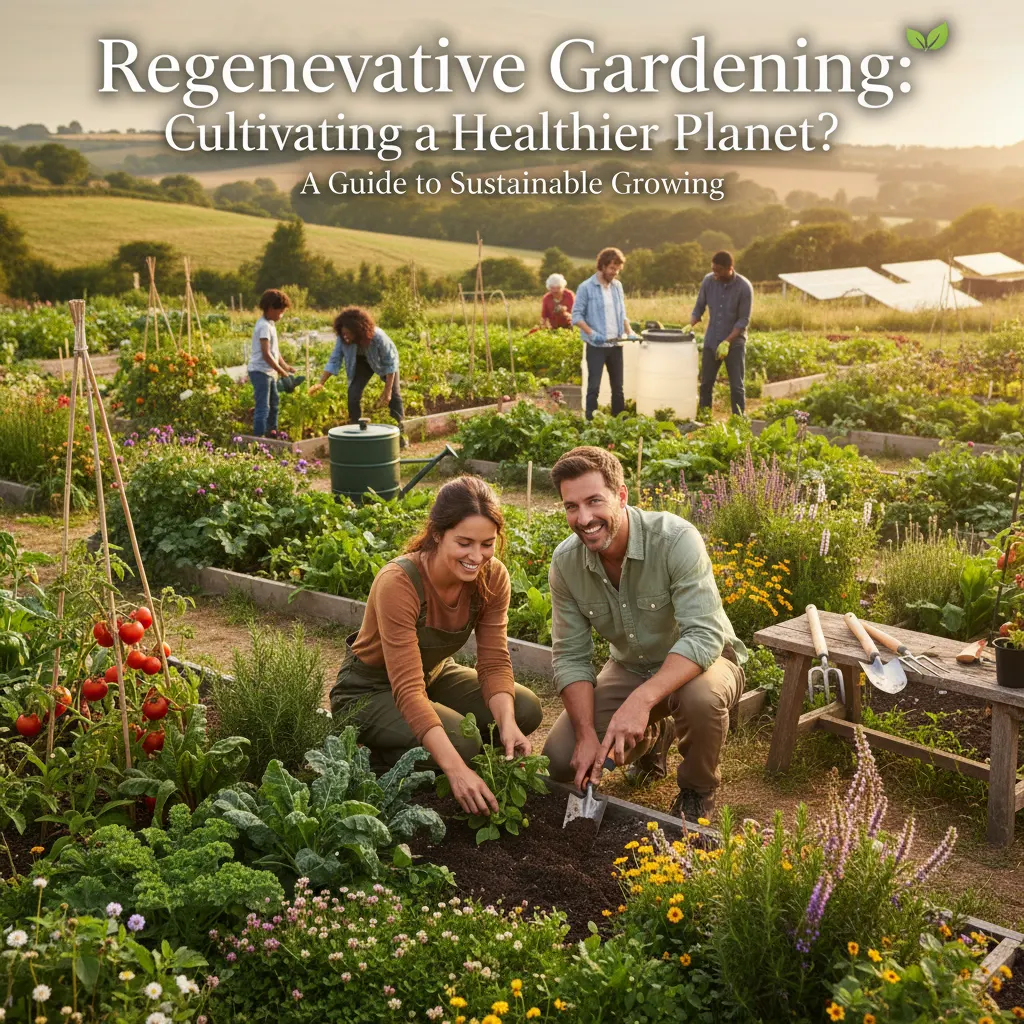
Regenerative Gardening: Cultivating a Healthier Planet?
Regenerative gardening is a holistic approach to land management that aims to reverse environmental degradation by focusing on soil regeneration, increasing biodiversity, and improving the water cycle. It's about creating a self-sustaining ecosystem that benefits both the garden and the broader environment.
Are you looking to transform your garden into a thriving, self-sustaining ecosystem that actively heals the planet? Regenerative gardening offers a powerful path forward, moving beyond mere sustainability to actively restore and enhance ecological health. This comprehensive guide will walk you through the core principles and practical steps to cultivate a garden that not only flourishes but also contributes to a healthier environment.
What Defines Regenerative Gardening? 🌱
Regenerative gardening goes beyond sustainability, actively working to restore degraded ecosystems. It emphasizes minimal soil disturbance, continuous living roots, biodiversity, and integrating natural cycles to build healthy, resilient gardens.
Regenerative gardening is a paradigm shift from conventional and even organic gardening. While organic gardening avoids synthetic inputs, regenerative gardening actively seeks to improve the land's health over time. It's about creating a positive feedback loop where every practice enhances the ecosystem's capacity to thrive.
Key principles include minimizing soil disturbance (no-till), maximizing biodiversity (diverse planting), keeping the soil covered (mulching and cover crops), maintaining a living root in the ground year-round, and integrating animals where appropriate. These principles work synergistically to build soil organic matter, enhance water retention, and foster a robust soil food web.
Tip: Think of your garden as a mini-ecosystem. Every action you take should aim to support its natural processes and resilience.
Why is Soil Health Central to Regenerative Practices? 🌍
Healthy soil is the foundation of regenerative gardening, acting as a living ecosystem that supports plant growth, sequesters carbon, and improves water retention. Practices like composting and cover cropping enrich the soil microbiome and structure.
Soil is not just dirt; it's a complex, living system teeming with microorganisms, fungi, insects, and organic matter. In a regenerative garden, the focus is on nurturing this intricate web of life. Healthy soil provides plants with essential nutrients, improves drainage, and increases water-holding capacity, making plants more resilient to drought and disease.
Furthermore, healthy soil is a powerful carbon sink. By increasing organic matter, regenerative practices draw carbon dioxide from the atmosphere and store it in the soil, actively combating climate change. This makes your garden a vital part of the solution for a healthier planet.
Problem: Degraded soil quality and nutrient depletion.
Solution: Implement continuous cover cropping and regular applications of diverse compost to rebuild soil organic matter and microbial life. (Source: Rodale Institute)
How Can I Implement No-Till Gardening? 🚜
No-till gardening involves minimizing soil disturbance to preserve its structure and microbial life. Instead of digging, add organic matter like compost and mulch directly to the soil surface, allowing natural processes to build fertility.
No-till, or no-dig, gardening is a cornerstone of regenerative practices. Traditional tilling disrupts the delicate soil structure, destroys fungal networks, and releases stored carbon into the atmosphere. By avoiding tilling, you allow the soil's natural architecture to remain intact, fostering a healthier environment for roots and soil organisms.
Step-by-Step No-Till Bed Preparation:
- Clear the Area: Remove any existing weeds or vegetation, ideally by cutting them at the base rather than pulling, to leave roots in the ground.
- Add a Layer of Cardboard: Lay down overlapping sheets of plain, unprinted cardboard directly onto the soil. This smothers weeds and breaks down over time.
- Apply Organic Matter: Spread a thick layer (4-6 inches) of high-quality compost over the cardboard. This provides immediate nutrients and introduces beneficial microbes.
- Mulch Generously: Top the compost with 2-4 inches of organic mulch, such as straw, wood chips, or shredded leaves. This conserves moisture, suppresses weeds, and slowly adds organic matter.
- Plant Directly: Create small holes in the mulch and compost to plant your seedlings or seeds. Over time, the layers will break down, enriching the soil below.
Tip: A broadfork can be used for minimal soil aeration without inverting soil layers, improving drainage in compacted areas.
What are the Benefits of Cover Cropping? 🌾
Cover crops protect soil from erosion, suppress weeds, add organic matter, and fix nitrogen. They are planted in fallow periods to improve soil structure and fertility, enhancing the overall health of your garden ecosystem.
Cover crops are plants grown specifically to benefit the soil rather than for harvest. They are an indispensable tool in regenerative gardening, providing a multitude of ecological services. Planting cover crops during off-seasons or between main crops ensures that living roots are always in the ground, feeding the soil microbiome.
Key Benefits of Cover Crops:
- Erosion Control: Their root systems hold soil in place, preventing wind and water erosion.
- Weed Suppression: Dense cover crop growth outcompetes weeds for light and nutrients.
- Nutrient Cycling: They capture leftover nutrients from previous crops, preventing leaching, and some (legumes) fix atmospheric nitrogen.
- Organic Matter Addition: When terminated and left on the surface, they decompose, adding valuable organic matter to the soil.
- Soil Structure Improvement: Their roots create channels, improving aeration and water infiltration.
Warning: Choose cover crops appropriate for your climate and garden goals. Some can become weedy if not managed properly.
How Does Composting Support a Regenerative Garden? ♻️
Composting transforms organic waste into nutrient-rich soil amendment, reducing landfill waste and enriching garden soil. It introduces beneficial microorganisms, improves soil structure, and provides a slow-release source of nutrients for plants.
Compost is often called "black gold" for good reason. It's the ultimate soil builder, created by the decomposition of organic materials. In a regenerative garden, composting is not just about waste management; it's about creating a living amendment that inoculates your soil with beneficial microbes and provides a steady supply of nutrients.
Building a Regenerative Compost Pile:
- Choose a Location: Select a shaded, well-drained spot for your compost pile or bin.
- Gather Materials: Collect a mix of "greens" (nitrogen-rich, like food scraps, grass clippings) and "browns" (carbon-rich, like dry leaves, wood chips, shredded paper). Aim for a 2:1 or 3:1 ratio of browns to greens.
- Layer and Moisten: Start with a layer of coarse browns for aeration, then alternate layers of greens and browns, moistening each layer as you go. The pile should be consistently damp, like a wrung-out sponge.
- Turn Regularly: Turn the pile every few days to a week to aerate it and speed up decomposition. A hot, active pile will break down faster.
- Use Finished Compost: Once the material is dark, crumbly, and smells earthy, it's ready to be incorporated into your garden beds as a top dressing or soil amendment.
Tip: Avoid adding meat, dairy, oily foods, or diseased plants to your compost pile to prevent pests and pathogens.
Common Problems & Troubleshooting in Regenerative Gardening 🛠️
Even with the best intentions, challenges can arise. Understanding common issues and their regenerative solutions is key to success.
Problem: Compacted Soil
- Solution: Instead of tilling, use a broadfork to gently aerate the soil without inverting layers. Increase organic matter through heavy mulching and compost applications, which naturally improve soil structure over time.
Problem: Persistent Weeds
- Solution: Implement thick layers of mulch (straw, wood chips) to smother weeds. Plant dense cover crops to outcompete them. For stubborn perennial weeds, solarization or sheet mulching can be effective.
Problem: Pest Outbreaks
- Solution: Foster biodiversity by planting a variety of native plants and beneficial insect habitats, creating a balanced ecosystem that naturally controls pests. Introduce predatory insects if necessary. Avoid monocultures.
Problem: Nutrient Deficiencies
- Solution: Conduct a soil test to identify specific deficiencies. Address them through targeted organic amendments like compost, worm castings, or specific mineral rock dusts. Ensure continuous living roots and diverse plant rotations to cycle nutrients.
Problem: Excessive water runoff and drought susceptibility.
Solution: Increase soil organic matter through mulching and no-till practices, which significantly improves water infiltration and retention. (Source: Kiss the Ground)
Expert Tips & Advanced Techniques for Regenerative Gardeners ✨
Moving beyond the basics, these techniques can further enhance your regenerative garden's health and productivity.
1. Integrate Perennial Systems
Incorporate perennial vegetables, fruits, and herbs into your garden design. Perennials establish deep root systems that build soil structure, sequester carbon, and require less disturbance over time. Think fruit trees, berry bushes, asparagus, and perennial herbs.
2. Practice Crop Rotation and Polyculture
Rotate your annual crops to prevent nutrient depletion and break pest and disease cycles. Instead of monocultures, plant diverse species together (polyculture) to create beneficial interactions, attract pollinators, and confuse pests.
3. Create Habitat for Beneficials
Design your garden to attract and support beneficial insects (predators and pollinators) and wildlife. Plant native flowers, provide water sources, and create small brush piles or insect hotels. This natural pest control reduces the need for interventions.
4. Harvest Rainwater
Install rain barrels or design swales and rain gardens to capture and infiltrate rainwater. This reduces reliance on municipal water, recharges groundwater, and mimics natural hydrological cycles.
5. Observe and Adapt
Regenerative gardening is an ongoing learning process. Regularly observe your garden's health, soil condition, and plant vigor. Adapt your practices based on what you learn, continuously striving to improve your ecosystem.
FAQ: Your Regenerative Gardening Questions Answered ❓
Is regenerative gardening the same as organic gardening?
No, regenerative gardening goes beyond organic. While organic gardening avoids synthetic inputs, regenerative gardening actively seeks to restore and enhance ecosystem health, focusing on soil regeneration, biodiversity, and carbon sequestration. It's about improving the land over time, not just sustaining it.
What are the best plants for a regenerative garden?
The best plants are diverse and suited to your local climate. Focus on native species, cover crops (legumes, grasses), nitrogen-fixing plants, and a mix of annuals and perennials. Diversity is key to building a resilient ecosystem and supporting beneficial insects.
How long does it take to see results from regenerative practices?
Significant improvements in soil health and plant vigor can often be observed within 1-3 years, especially with consistent application of practices like composting, mulching, and cover cropping. Full ecosystem restoration is an ongoing, long-term process.
Can regenerative gardening be done in small spaces?
Absolutely! Regenerative principles can be applied to any scale, from a small balcony garden to a large farm. Techniques like no-till container gardening, intensive planting, and small-scale composting are highly effective in limited spaces.
What are common mistakes to avoid in regenerative gardening?
Common mistakes include tilling too often, not using enough organic matter, neglecting cover crops, and failing to observe and adapt. Also, relying too heavily on a single solution instead of embracing the holistic, interconnected nature of regenerative practices.
Conclusion: Cultivating a Greener Future, One Garden at a Time 💚
Regenerative gardening is more than just a set of techniques; it's a philosophy that empowers us to become active participants in healing our planet. By focusing on soil health, biodiversity, and natural cycles, you can transform your garden into a vibrant, resilient ecosystem that sequesters carbon, conserves water, and supports life.
Key Takeaways:
- Soil is Life: Prioritize building healthy, living soil through minimal disturbance and organic matter.
- Diversity is Strength: Embrace a wide variety of plants and foster beneficial organisms.
- Cover Up: Keep soil covered with mulch or living plants year-round.
- Compost Everything: Turn organic waste into nutrient-rich soil food.
- Observe & Adapt: Continuously learn from your garden and adjust your practices.
Start small, experiment, and enjoy the journey of cultivating a garden that gives back to the earth. Your regenerative efforts, no matter how modest, contribute to a healthier, more sustainable future for all.
Summary and Next Steps
- Build living soil: No-till beds, compost, mulch, and cover crops improve soil structure over time.
- Increase diversity: Mixed plantings support pollinators, beneficial insects, and more resilient garden ecosystems.
- Keep roots in the ground: Living roots feed soil biology and reduce erosion.
- Start small: One mulched bed or cover-cropped area can become the model for the rest of the garden.
Next, choose one bed to convert first, stop bare-soil exposure, add compost and mulch, and plant a diverse mix suited to your season.