
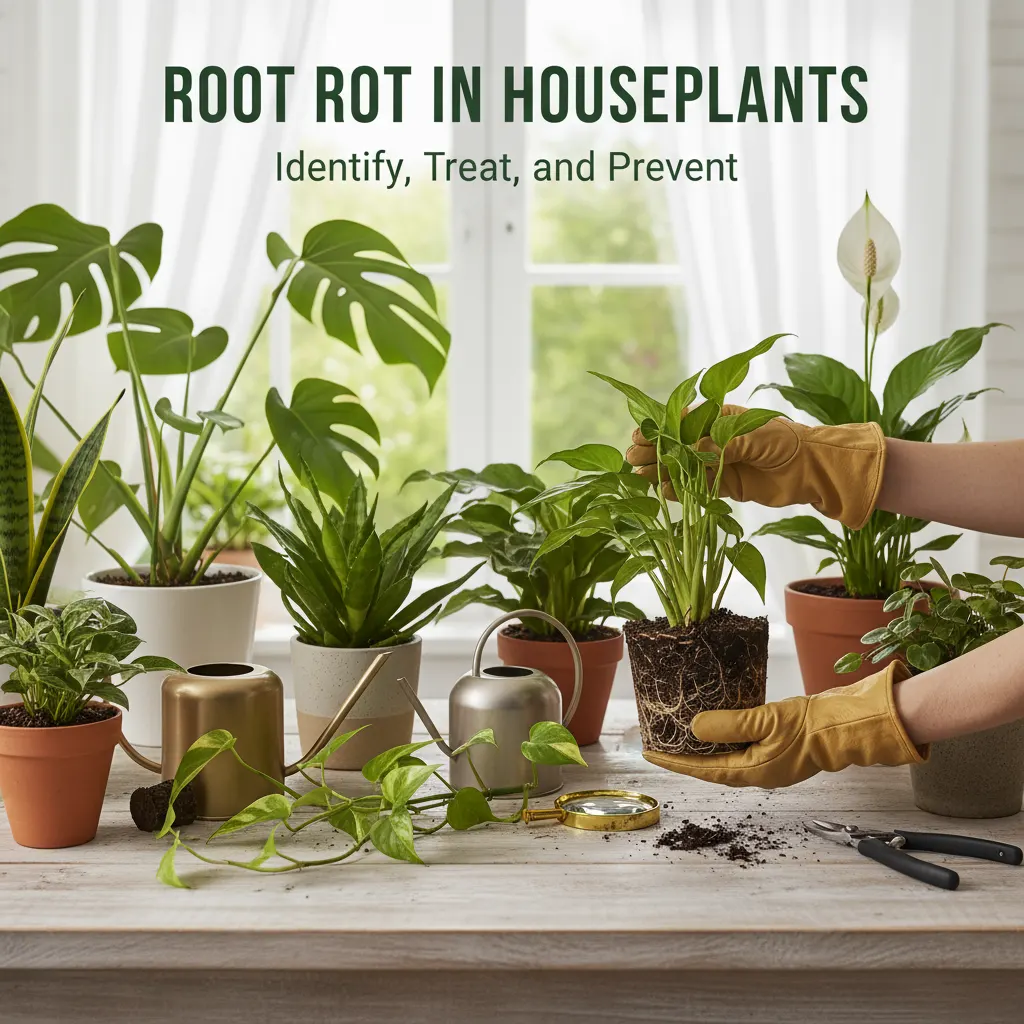
Root Rot in Houseplants: Identify, Treat, and Prevent
Root rot is a destructive condition for houseplants, primarily caused by overwatering and inadequate drainage, leading to oxygen deprivation and fungal growth in the roots. Recognizing early symptoms like wilting, yellowing leaves, and a musty odor is vital for effective intervention and saving your plant. Successful treatment involves prompt action, including repotting and careful root trimming.
Understanding and addressing root rot is crucial for any houseplant enthusiast. This comprehensive guide will walk you through identifying the signs, understanding the causes, and providing actionable steps to treat and prevent this common plant killer. By following these expert tips, you can ensure your green companions thrive.
What is Root Rot and Why is it Dangerous? 🌿
Root rot is a condition where plant roots decay due to lack of oxygen, often from waterlogged soil, making them unable to absorb water and nutrients, ultimately leading to plant death. It's a silent killer that can quickly devastate your beloved houseplants if not caught early.
At its core, root rot occurs when plant roots are deprived of oxygen. Healthy roots need air pockets in the soil to breathe and function properly. When soil remains constantly wet, these air pockets fill with water, suffocating the roots. This anaerobic environment also creates ideal conditions for harmful fungi and bacteria to proliferate, further attacking and decaying the roots.
Once roots begin to rot, they lose their ability to absorb water and essential nutrients from the soil. Ironically, a plant suffering from root rot will often display symptoms similar to underwatering, such as wilting, because its damaged roots cannot transport water to the foliage. This can lead to a vicious cycle where well-meaning owners water more, exacerbating the problem.
Tip: Think of healthy roots like a sponge – they absorb water and nutrients. Rotting roots are like a clogged pipe – they can't perform their function, leading to plant dehydration and starvation.
How to Identify Root Rot: Key Symptoms 🤔
Look for wilting or yellowing leaves, stunted growth, soft and mushy stems, and a foul, decaying smell from the soil. Affected roots will appear brown or black and feel slimy, a stark contrast to healthy, firm white roots.
Identifying root rot early is paramount to saving your plant. The symptoms often mimic other plant issues, making careful observation essential. Here are the primary indicators to watch for:
- Wilting or Drooping Leaves: Despite the soil being moist, your plant's leaves may wilt or droop. This is because the damaged roots cannot supply water to the rest of the plant.
- Yellowing or Browning Leaves: Leaves may turn yellow, brown, or develop dark spots, often starting from the lower leaves and progressing upwards. This discoloration is a sign of nutrient deficiency and stress.
- Stunted Growth: The plant may stop growing or show very slow, weak growth, as its ability to absorb nutrients is severely compromised.
- Soft, Mushy Stems: In advanced stages, the base of the stem may become soft, mushy, or discolored, indicating the rot has spread upwards.
- Foul Odor from Soil: A distinct, unpleasant, musty, or rotten smell emanating from the soil is a strong indicator of anaerobic conditions and decaying organic matter, including roots.
- Root Examination: The most definitive sign is inspecting the roots themselves. Gently remove the plant from its pot. Healthy roots are typically white or light-colored, firm, and pliable. Roots affected by rot will be brown, black, mushy, slimy, and may easily break off.
Warning: Do not confuse wilting from root rot with wilting from underwatering. If the soil is wet and your plant is wilting, root rot is highly probable. If the soil is dry and your plant is wilting, it likely needs water.
What Causes Root Rot in Houseplants? 💧
The primary causes are overwatering, poor drainage from compacted soil or pots without drainage holes, and fungal pathogens thriving in consistently wet conditions. These factors combine to create an environment where roots suffocate and decay.
Understanding the root causes (pun intended!) of root rot is crucial for both treatment and prevention. It's rarely a single factor but often a combination of environmental conditions:
- Overwatering: This is by far the most common cause. Consistently keeping the soil saturated deprives roots of oxygen, leading to suffocation. Many plant owners water on a schedule rather than checking the soil moisture, which can lead to overwatering, especially in cooler months when plants need less water.
- Poor Drainage: Even if you water correctly, poor drainage can lead to waterlogged soil. This can be due to:
- Pots without drainage holes: Water accumulates at the bottom, creating a perpetually wet zone.
- Compacted or heavy soil: Soil that is too dense or has broken down over time can retain too much moisture and prevent proper aeration.
- Too large a pot: A pot that is too big for the plant's root ball will hold excess soil, which retains more moisture than the plant can use, leading to prolonged wetness.
- Fungal Pathogens: While overwatering creates the conditions, specific fungi (like Pythium, Phytophthora, and Fusarium) are often the direct agents of root decay. These pathogens thrive in wet, oxygen-deprived environments and attack weakened roots. They can be introduced through contaminated soil, tools, or even new plants.
- Lack of Air Circulation: Poor air circulation around the plant and soil surface can slow down evaporation, contributing to prolonged soil wetness.
Insight: Different plants have different watering needs. Succulents, for example, are highly susceptible to root rot if overwatered, while some tropical plants can tolerate more moisture.
Step-by-Step Guide: How to Treat Root Rot 🚑
Carefully remove the plant from its pot, gently wash off old soil, trim away all mushy, discolored roots with sterile shears, and repot in fresh, well-draining soil. This process removes diseased tissue and provides a healthier environment for recovery.
Treating root rot requires prompt and decisive action. Follow these steps carefully to give your plant the best chance of survival:
- Gently Remove the Plant: Carefully take the plant out of its current pot. Be gentle to avoid further damaging any healthy roots.
- Inspect and Clean Roots: Shake off as much of the old soil as possible. You can also gently rinse the root ball under lukewarm running water to remove stubborn soil and get a clear view of the roots.
- Identify and Trim Affected Roots: Examine the roots. Healthy roots are firm and typically white or light-colored. Rotting roots will be brown, black, mushy, slimy, and may smell foul. Using sterile pruning shears or scissors (sterilize with rubbing alcohol between cuts), cut away all affected roots. Make clean cuts into healthy, firm root tissue.
Callout: Sterilizing your tools is crucial to prevent spreading pathogens to healthy parts of the plant or other plants.
- Remove Damaged Foliage (Optional but Recommended): If a significant portion of the roots was removed, consider trimming back some of the foliage. This reduces the plant's water demands, allowing the remaining healthy roots to focus on recovery without being overwhelmed.
- Repot with Fresh, Well-Draining Soil: Choose a clean pot (preferably one with drainage holes) that is appropriately sized for the remaining root ball. If reusing the old pot, wash it thoroughly with a bleach solution (1 part bleach to 9 parts water) to kill any lingering pathogens. Use a fresh, well-draining potting mix. Avoid using the old, contaminated soil.
- Initial Watering and Aftercare: After repotting, water the plant lightly. Do not drench it. Place the plant in a location with bright, indirect light and stable temperatures. Avoid direct sunlight, which can stress a recovering plant. Monitor the plant closely and resist the urge to overwater. Allow the top inch or two of soil to dry out completely before watering again.
Preventing Root Rot: Best Practices for Healthy Plants ✅
Ensure proper watering habits (water only when the top inch of soil is dry), use pots with drainage holes, and select well-draining potting mix to avoid waterlogging. These practices create an environment where roots can breathe and thrive.
Prevention is always better than cure, especially when it comes to root rot. Implementing these best practices will significantly reduce the risk of your houseplants succumbing to this common issue:
- Master Proper Watering Techniques:
- Check Soil Moisture: Don't water on a strict schedule. Instead, check the soil moisture before watering. Stick your finger about 1-2 inches into the soil. If it feels dry, it's time to water. If it's still moist, wait.
- Water Thoroughly, Then Drain: When you do water, water until it drains out of the bottom of the pot. This ensures the entire root ball gets moisture. Immediately empty any excess water from the saucer.
- Adjust Seasonally: Plants generally require less water in cooler, darker months (fall and winter) when their growth slows down. Adjust your watering frequency accordingly.
- Use Pots with Drainage Holes: This is non-negotiable. Drainage holes allow excess water to escape, preventing water from pooling at the bottom of the pot and suffocating roots. If you love decorative pots without holes, use them as cachepots (decorative outer pots) and keep your plant in a nursery pot with drainage inside.
- Choose the Right Potting Mix: Opt for a high-quality, well-draining potting mix specifically formulated for houseplants. These mixes typically contain ingredients like perlite, vermiculite, or bark to improve aeration and drainage.
- Avoid Oversized Pots: Repot into a pot that is only slightly larger than the current root ball. A pot that is too big will hold excess soil and moisture, increasing the risk of root rot.
- Ensure Good Air Circulation: Good airflow around your plants helps the soil surface dry out more evenly and reduces humidity, which can deter fungal growth.
- Consider a Moisture Meter: For those new to plant care or with many plants, a moisture meter can be a helpful tool to accurately gauge soil moisture levels.
Choosing the Right Potting Mix to Avoid Root Rot 🪴
Opt for a chunky, airy potting mix containing perlite, bark, or coco coir to promote excellent drainage and aeration, preventing water from sitting around the roots. The right mix is fundamental for root health.
The potting mix you choose plays a critical role in preventing root rot. A good mix provides essential nutrients, but more importantly, it offers the right balance of moisture retention and drainage. Here's what to look for:
- Excellent Drainage: The mix should allow water to flow through easily, preventing waterlogging. Ingredients like perlite, pumice, or coarse sand are excellent for this.
- Good Aeration: Roots need oxygen. A chunky mix with larger particles creates air pockets, ensuring roots can breathe. Orchid bark, coco coir, and horticultural charcoal contribute to this.
- Appropriate Water Retention: While drainage is key, the mix still needs to hold enough moisture for the plant to absorb. Peat moss or coco coir are good for this, but they should be balanced with drainage-enhancing components.
Examples of good potting mix components:
- Perlite: Lightweight, volcanic rock that improves drainage and aeration.
- Pumice: Similar to perlite but heavier, providing good drainage without floating.
- Orchid Bark: Excellent for aeration, especially for plants that prefer very fast drainage (e.g., orchids, aroids).
- Coco Coir: A sustainable alternative to peat moss, offering good water retention and aeration.
- Coarse Sand/Grit: Improves drainage, but use horticultural sand, not play sand.
Recommendation: For most houseplants, a mix of equal parts potting soil, perlite, and orchid bark (or coco coir) works wonderfully. Adjust ratios based on your plant's specific needs; succulents and cacti need even more drainage.
Common Problems & Troubleshooting 🛠️
Here are solutions to common issues related to root rot:
- Problem: Wilting leaves despite watering.
- Solution: Check roots for mushiness and foul smell; if present, it's likely root rot, not thirst. Repot and trim affected roots. Wilting leaves with wet soil indicate root rot. Solution: inspect roots, remove diseased parts, repot.
- Problem: Foul odor from soil.
- Solution: This is a strong indicator of anaerobic conditions and root decay. Immediately unpot the plant, clean roots, and repot with fresh, well-draining soil. A foul soil odor signals root rot. Action: unpot, clean roots, repot in fresh soil.
- Problem: Hard water mineral buildup affecting plant health.
- Solution: Avoid using tap water if you have hard water; filter it or use rainwater. Softened water can also be problematic due to salt content. Hard water harms plants. Use filtered tap water or rainwater; avoid softened water due to salt.
Expert Tips & Advanced Techniques ✨
Beyond the basics, these tips can further safeguard your plants from root rot and aid in recovery:
- Bottom Watering: For some plants, watering from the bottom can encourage deeper root growth and prevent the topsoil from staying too wet. Place the pot in a tray of water for 15-30 minutes, allowing the plant to soak up water through the drainage holes.
- Aerating the Soil: Gently poke holes in the soil with a chopstick or skewer to improve air circulation, especially if your soil tends to compact.
- Fungicide Application: In severe cases or for highly susceptible plants, a systemic fungicide specifically designed for root rot can be used as a last resort, following product instructions carefully.
- Propagating Healthy Cuttings: If your plant is severely affected and unlikely to recover, take healthy stem cuttings. This allows you to start a new plant from the healthy parts, ensuring the lineage continues.
- Monitor Humidity: While not a direct cause, very high humidity combined with consistently wet soil can exacerbate fungal issues. Ensure good air circulation.
FAQ Section ❓
Can a plant recover from severe root rot?
A plant can recover from severe root rot, but success depends on the extent of the damage and how quickly you intervene. If a significant portion of the root system is still healthy, and you promptly remove all diseased tissue and repot in fresh, well-draining soil, recovery is possible. However, if the rot has spread extensively to the stem, the chances of survival are much lower.
How often should I water my plant to prevent root rot?
There's no universal watering schedule, as it depends on the plant type, pot size, soil mix, and environmental conditions. The best practice is to water only when the top 1-2 inches of soil feel dry to the touch. For most houseplants, this might be once every 1-2 weeks, but always check the soil moisture before watering.
What kind of soil is best for preventing root rot?
The best soil for preventing root rot is a well-draining, airy potting mix. Look for mixes that contain ingredients like perlite, pumice, orchid bark, or coco coir, which create air pockets and allow excess water to drain quickly. Avoid heavy, dense soils that retain too much moisture.
Is tap water bad for houseplants?
Tap water can be problematic for some houseplants, especially if it's high in chlorine, fluoride, or mineral salts (hard water). These chemicals and minerals can build up in the soil over time, causing leaf tip burn or other issues. Letting tap water sit out for 24 hours can help dissipate chlorine, or consider using filtered water, rainwater, or distilled water for sensitive plants.
What are the signs of overwatering vs. underwatering?
Overwatering typically leads to wilting leaves despite wet soil, yellowing leaves, stunted growth, and a foul smell from the soil due to root rot. Underwatering also causes wilting, but the soil will be dry and hard, leaves may become crispy or brittle, and the plant might look generally shriveled. The key differentiator is the soil moisture level.
Summary & Next Steps 📝
Root rot is a formidable foe for houseplants, but with vigilance and proper care, it's entirely preventable and treatable. Remember these key takeaways:
- Identify Early: Look for wilting, yellowing, and a foul smell.
- Act Decisively: Trim rotten roots and repot in fresh, well-draining soil.
- Prevent Proactively: Master watering techniques, use drainage holes, and choose the right potting mix.
By implementing these strategies, you'll cultivate a healthier environment for your houseplants, ensuring they thrive for years to come. Continue to monitor your plants regularly and adjust your care routine as needed. Happy growing!
Related Topics for Further Reading 📚
- The Ultimate Guide to Houseplant Watering
- Choosing the Best Pots for Your Indoor Plants
- Understanding Houseplant Pests and Diseases
- How to Propagate Houseplants from Cuttings