
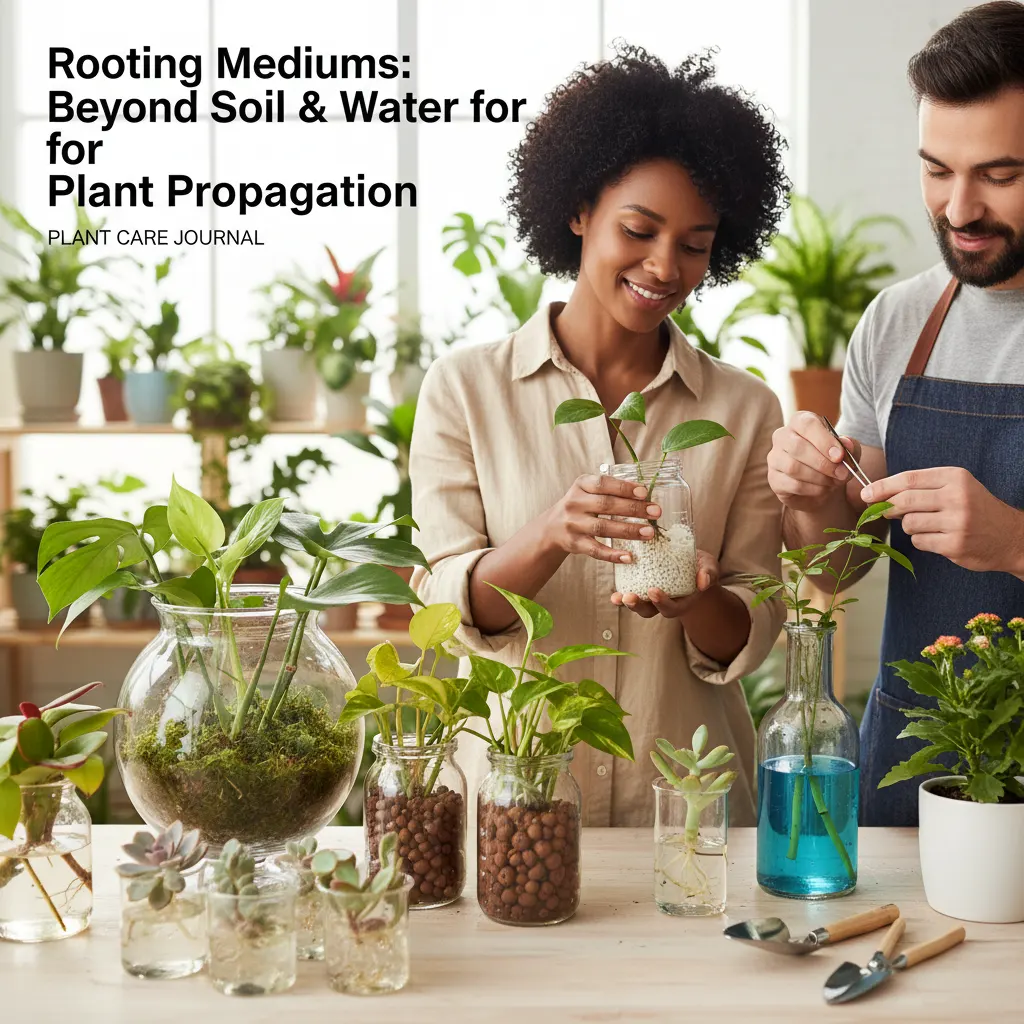
Rooting Mediums: Beyond Soil & Water for Plant Propagation
Exploring rooting mediums beyond traditional soil and water, such as perlite, LECA, and sphagnum moss, offers distinct advantages for plant propagation. These soilless options provide enhanced aeration, controlled moisture, and sterile environments, significantly improving rooting success for various plant cuttings.
Propagating plants can be one of the most rewarding aspects of plant care, allowing you to multiply your favorite specimens or rescue struggling plants. While water and soil are common choices, a world of specialized rooting mediums exists, offering superior conditions for root development. Understanding these alternatives can dramatically increase your propagation success rates, especially for challenging cuttings.
What are the Best Rooting Mediums Beyond Soil and Water? 🌱
Beyond traditional soil and water, effective rooting mediums include perlite, LECA (Lightweight Expanded Clay Aggregate), and sphagnum moss. Each offers unique benefits for plant propagation, such as superior aeration, moisture retention, or sterile environments, catering to different plant needs and propagation methods.
Many plant enthusiasts encounter challenges with traditional rooting methods, such as root rot in water or slow, inconsistent rooting in soil. Soilless mediums address these issues by providing optimal conditions for oxygen exchange, moisture regulation, and disease prevention. This guide will delve into the specifics of perlite, LECA, and sphagnum moss, offering a comprehensive comparison to help you choose the best option for your propagation goals.
What is Perlite and its Role in Rooting? 🌬️
Perlite is a lightweight, porous volcanic glass that provides excellent aeration and drainage, preventing root rot. It's often mixed with other mediums or used alone for rooting cuttings, offering a stable, sterile environment.
Perlite is a naturally occurring amorphous volcanic glass that expands when heated, creating a lightweight, white, porous material. Its irregular surface and numerous tiny air pockets make it an exceptional medium for improving soil structure and, more importantly, for rooting cuttings. When used alone, perlite offers a sterile, inert environment that minimizes the risk of fungal diseases.
Pros of Using Perlite for Rooting:
- Excellent Aeration: Its porous structure ensures roots receive ample oxygen, crucial for healthy growth and preventing anaerobic conditions that lead to rot.
- Superior Drainage: Water drains quickly, preventing waterlogging while still retaining some moisture on its surface.
- Sterile and Inert: Perlite is free from pathogens and nutrients, providing a clean slate for delicate new roots.
- Lightweight: Easy to handle and doesn't compact, maintaining its structure over time.
- Affordable and Accessible: Widely available at garden centers.
Cons of Using Perlite for Rooting:
- Low Moisture Retention: Can dry out quickly, requiring more frequent watering or misting.
- No Nutrients: Cuttings will eventually need to be transferred to a nutrient-rich medium or fertilized.
- Dusty: Can be dusty when dry; it's best to rinse it before use.
Tip: For best results, use coarse perlite for rooting. Fine perlite can compact and reduce aeration.
How Does LECA Benefit Plant Propagation? 💧
LECA (Lightweight Expanded Clay Aggregate) offers superior aeration and a consistent moisture supply through capillary action, making it ideal for semi-hydroponic propagation. Its inert nature prevents nutrient imbalances and provides a stable rooting base.
LECA consists of small, round, baked clay balls that are porous and lightweight. These clay balls absorb water and then slowly release it, creating a consistent moisture level around the roots. This makes LECA a popular choice for semi-hydroponic systems, where plants are grown without soil, relying on a reservoir of water and nutrients.
Pros of Using LECA for Rooting:
- Consistent Moisture: Capillary action ensures roots have access to water without being waterlogged.
- Excellent Aeration: The spaces between the clay balls provide ample oxygen to the roots.
- Reusable and Sustainable: Can be cleaned and reused indefinitely, making it an eco-friendly option.
- Pest and Disease Resistant: Inert and sterile, it doesn't harbor pests or pathogens.
- Visual Indicator: The color of the LECA can indicate moisture levels, making watering easier.
Cons of Using LECA for Rooting:
- Initial Cost: Can be more expensive upfront than other mediums.
- Nutrient Management: Requires a diluted nutrient solution as it contains no inherent nutrients.
- Learning Curve: Adapting to semi-hydroponic watering can take some practice.
- Heavy When Wet: While lightweight dry, it can become heavy when fully saturated with water.
Warning: Always rinse new LECA thoroughly before use to remove clay dust, which can clog roots and systems.
Why Choose Sphagnum Moss for Rooting Cuttings? 🌿
Sphagnum moss is highly absorbent, retaining significant moisture while still allowing air circulation, creating an ideal humid environment for rooting. Its natural antiseptic properties can also help prevent fungal issues in cuttings.
Sphagnum moss is a type of moss that grows in bogs and wetlands. It's renowned for its incredible water-holding capacity, able to absorb up to 20 times its weight in water. This makes it excellent for creating a consistently moist, humid environment that many cuttings, especially those from tropical plants, thrive in. Long-fibered sphagnum moss is particularly effective due to its structure, which prevents compaction and allows for good air circulation.
Pros of Using Sphagnum Moss for Rooting:
- High Moisture Retention: Creates a consistently humid microclimate around cuttings, reducing stress.
- Good Aeration: Even when wet, its fibrous structure allows for air pockets, preventing suffocation of roots.
- Antiseptic Properties: Contains natural compounds that can inhibit fungal and bacterial growth.
- Lightweight and Easy to Use: Simple to prepare and work with.
- Ideal for Air Layering: Its moisture retention and structure make it perfect for air layering techniques.
Cons of Using Sphagnum Moss for Rooting:
- Can Be Acidic: May not be suitable for plants that prefer alkaline conditions.
- Sustainability Concerns: Harvesting can impact wetland ecosystems if not done responsibly.
- Can Compact: Over time, especially if packed too tightly, it can compact and reduce aeration.
- Nutrient-Poor: Like perlite, it provides no nutrients, requiring eventual transfer or fertilization.
Tip: Always rehydrate dried sphagnum moss thoroughly before use. Squeeze out excess water until it's damp, not dripping wet.
Comparing Perlite, LECA, and Sphagnum Moss: A Quick Guide 📊
Each medium excels in different areas: perlite for aeration, LECA for semi-hydroponic moisture control, and sphagnum moss for high humidity and sterility. The best choice depends on the plant's needs and propagation goals.
Choosing the right rooting medium can significantly impact your success. Here's a comparative overview to help you decide:
| Feature | Perlite | LECA | Sphagnum Moss |
|---|---|---|---|
| Aeration | Excellent | Excellent | Good |
| Moisture Retention | Low | High (consistent via capillary action) | Very High |
| Sterility | High (inert) | High (inert) | High (natural antiseptic) |
| Nutrients | None | None (requires solution) | None |
| Reusability | Yes (can be washed) | Yes (can be washed and sterilized) | Limited (degrades over time) |
| Cost | Low | Moderate to High (initial) | Moderate |
| Best For | Cuttings prone to rot, improving soil | Semi-hydroponics, consistent moisture | High humidity lovers, air layering |
This table highlights that while all three are excellent soilless options, their strengths lie in different areas. Consider the specific needs of your cutting – does it need maximum aeration, consistent moisture, or a very humid environment?
Preparing and Using Alternative Rooting Mediums 🛠️
Preparation varies: perlite and LECA often require rinsing, while sphagnum moss needs rehydration. Proper setup ensures optimal conditions for root development, minimizing common propagation failures.
Proper preparation and usage are key to maximizing the benefits of these soilless mediums. Neglecting these steps can lead to propagation failures, even with the best materials.
1. Perlite Preparation and Use:
- Rinse: Place perlite in a colander and rinse thoroughly under running water to remove fine dust. This prevents respiratory irritation and keeps the medium clean.
- Moisten: Ensure the perlite is damp, not soaking wet, before placing cuttings.
- Insert Cuttings: Make a small hole with a finger or stick, then insert the cutting. Ensure at least one node is buried.
- Maintain Moisture: Keep the perlite consistently moist by misting or watering lightly when the top layer feels dry. Consider covering with a dome for humidity.
2. LECA Preparation and Use:
- Rinse Thoroughly: New LECA must be rinsed multiple times until the water runs clear. This removes clay dust that can clog roots and systems.
- Soak: Soak LECA for at least 24 hours, or even a few days, to allow it to fully absorb water.
- Prepare Container: Use a container with a reservoir for water at the bottom. This can be a self-watering pot or a clear container where you can monitor water levels.
- Insert Cuttings: Place a layer of LECA, then position your cutting, and fill around it with more LECA. Ensure the base of the cutting is above the water line in the reservoir to prevent rot, allowing roots to grow down into the water.
- Add Water: Fill the reservoir with water (and a diluted nutrient solution if desired) to about 1/3 of the way up the LECA.
3. Sphagnum Moss Preparation and Use:
- Rehydrate: Place dried sphagnum moss in a bowl of warm water and let it soak for 15-30 minutes until fully rehydrated.
- Squeeze Excess Water: Gently squeeze out excess water until the moss is damp but not dripping. It should feel like a wrung-out sponge.
- Insert Cuttings: Wrap the base of the cutting in a ball of damp sphagnum moss, or fill a container loosely with the moss and insert the cutting.
- Maintain Humidity: Place the container in a clear plastic bag or a propagation dome to maintain high humidity. Mist occasionally if the moss starts to dry out.
Tip: When using any of these mediums, ensure your cuttings are prepared correctly with a clean, sharp cut and optionally, rooting hormone.
Common Problems & Troubleshooting 🩹
Even with the best mediums, issues can arise. Here's how to tackle common propagation problems:
Problem: Cuttings rotting in perlite or sphagnum moss.
- Solution: This usually indicates overwatering or insufficient air circulation. Ensure perlite is not waterlogged and sphagnum moss is damp, not soaking. Increase ventilation if using a humidity dome.
Problem: Cuttings drying out too quickly in perlite.
- Solution: Perlite has low water retention. Increase watering frequency, mist more often, or place the propagation container inside a larger clear container or bag to create a humidity dome.
Problem: No root development in LECA.
- Solution: Ensure the water level in the reservoir is correct (below the base of the cutting initially). Check for adequate light and warmth. Some plants simply take longer to root. Consider adding a very diluted rooting hormone to the water.
Problem: Algae growth in LECA reservoir.
- Solution: Algae is common in clear containers exposed to light. It's generally harmless but can compete for nutrients. Use an opaque container or cover the clear reservoir to block light. Regular water changes also help.
Expert Tips & Advanced Techniques 🧪
Elevate your propagation game with these insights:
- Bottom Heat: Using a heat mat can significantly speed up rooting in all three mediums by encouraging metabolic activity in the cutting.
- Rooting Hormone: While not always necessary, applying rooting hormone (powder or gel) to the cut end of your cutting can stimulate faster and stronger root development.
- Humidity Domes: For cuttings that require high humidity, especially in perlite or sphagnum moss, a clear plastic dome or bag creates a mini-greenhouse effect, reducing moisture loss.
- Sterilization: Always sterilize your tools (shears, knives) with rubbing alcohol or a bleach solution between cuttings to prevent the spread of diseases.
- Patience is Key: Rooting times vary greatly by plant species. Some may root in a week, others can take months. Don't give up too soon!
FAQ Section ❓
Can I reuse perlite, LECA, or sphagnum moss for rooting?
Yes, perlite and LECA are highly reusable. Rinse them thoroughly with water, and for LECA, you can even sterilize it by boiling or soaking in a diluted bleach solution. Sphagnum moss can be reused if it hasn't degraded too much and is free of disease, but its fibrous structure breaks down over time, reducing its effectiveness.
Which rooting medium is best for succulents?
For succulents, perlite is often an excellent choice due to its superior drainage and aeration, which prevents rot – a common issue for succulents. A mix of perlite and a small amount of coco coir can also work well. LECA can also be used, but careful monitoring of water levels is crucial to avoid overwatering.
How often should I water cuttings in perlite or sphagnum moss?
In perlite, water when the top layer feels dry, which might be every 1-3 days depending on environmental conditions. For sphagnum moss, maintain consistent dampness; it should feel like a wrung-out sponge. Check every few days and mist or add a small amount of water if it starts to dry out. Using a humidity dome can significantly reduce watering frequency for both.
What are the signs of successful rooting in these mediums?
Signs of successful rooting include new leaf growth, resistance when gently tugging on the cutting, and visible roots through clear containers (especially with LECA or clear pots for perlite/moss). For sphagnum moss, you might need to gently unwrap a small section to check for roots.
Are there any downsides to using LECA for propagation?
While LECA offers many benefits, its main downsides include a higher initial cost compared to other mediums, the need for a diluted nutrient solution as it's inert, and a slight learning curve for managing water levels in a semi-hydroponic setup. It can also be heavy when fully saturated with water.
Summary: Propagating Success Beyond the Basics
Exploring alternative rooting mediums like perlite, LECA, and sphagnum moss can revolutionize your plant propagation efforts. Each offers distinct advantages:
- Perlite: Excellent for aeration and drainage, preventing root rot.
- LECA: Ideal for consistent moisture and semi-hydroponic systems.
- Sphagnum Moss: Perfect for high humidity and natural antiseptic properties.
By understanding the unique characteristics of these mediums and preparing them correctly, you can significantly improve your rooting success. Don't be afraid to experiment and find what works best for your specific plants and environment. Happy propagating!
Next Steps:
- Assess Your Cuttings: Consider the specific needs of your plant cutting (e.g., high humidity, rot-prone).
- Choose Your Medium: Select perlite, LECA, or sphagnum moss based on your assessment and propagation goals.
- Prepare & Propagate: Follow the preparation and usage guidelines for your chosen medium.
- Monitor & Adjust: Observe your cuttings closely, adjusting watering and humidity as needed.
- Experiment: Try different mediums for different plant types to discover your preferred methods.