
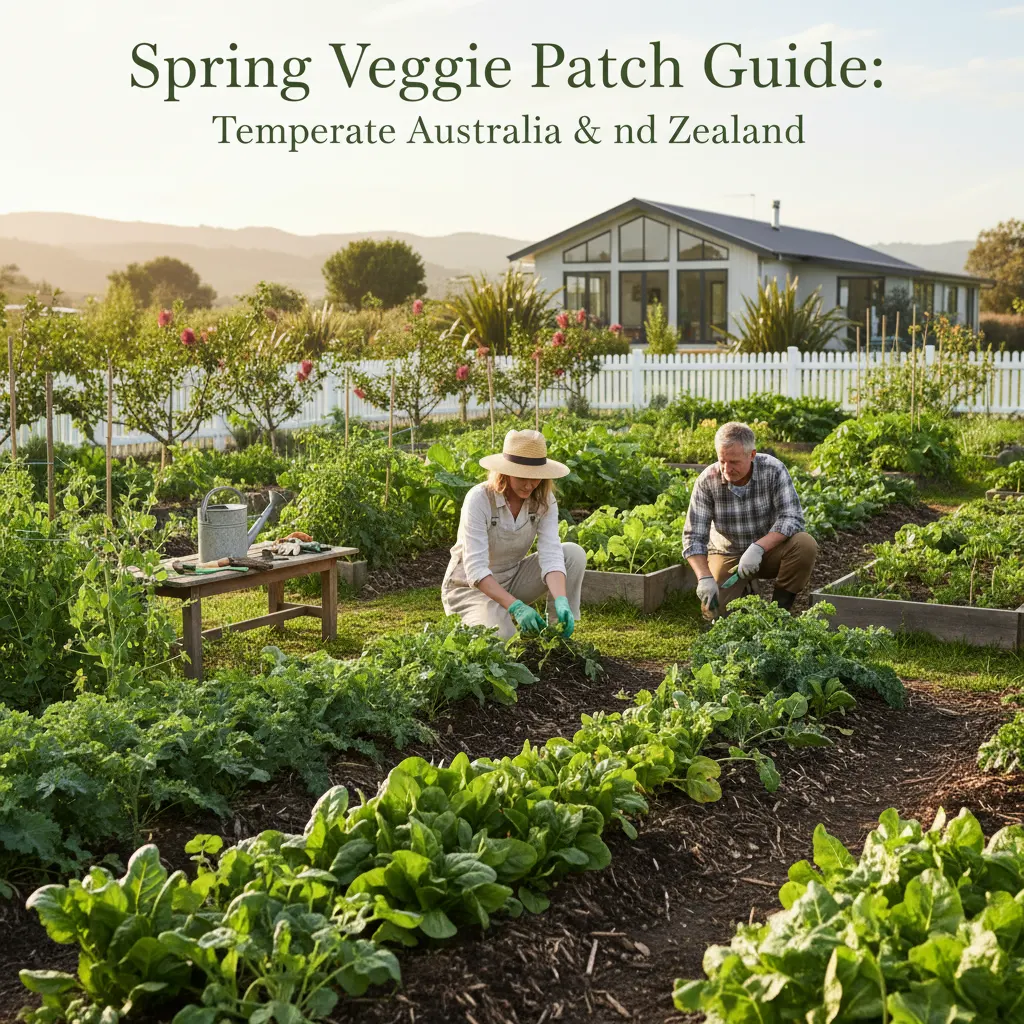
Spring Veggie Patch Guide: Temperate Australia & New Zealand
Unlock a bountiful harvest this spring in your temperate Australian or New Zealand garden! This guide provides essential planting times, crop selections, pest control strategies, and harvesting tips to ensure your veggie patch thrives from seed to plate.
Spring in temperate Australia and New Zealand heralds a season of growth and abundance for the home gardener. As temperatures rise and days lengthen, it's the perfect time to transform your veggie patch into a productive haven. This comprehensive guide will walk you through everything you need to know, from preparing your soil to harvesting your delicious produce, ensuring your garden flourishes from seed to plate.
What Vegetables Thrive in Temperate Spring Gardens?
Temperate spring gardens in Australia and New Zealand are perfect for heat-loving crops like tomatoes, capsicums, corn, and beans, alongside leafy greens, root vegetables, and cucurbits like zucchini and cucumbers.
Spring offers an incredible diversity of vegetables that thrive in the temperate climates of Australia and New Zealand. For those eager to get a head start, early spring is ideal for planting cool-season crops that can tolerate a light frost, such as lettuce, spinach, silverbeet, peas, and broad beans. As the weather consistently warms up, typically from mid-spring onwards, it's time to introduce your heat-loving favorites. Think juicy tomatoes, vibrant capsicums (bell peppers), spicy chillies, sweet corn, climbing beans, and prolific cucurbits like zucchini and cucumbers. Don't forget root vegetables like carrots, beetroot, and radishes, which can be sown in succession for a continuous harvest. Selecting the right varieties suited for your specific microclimate within the temperate zone can further enhance your success.
When to Plant Your Spring Crops for Best Results?
Optimal planting times vary, but generally, early spring (September/October) is for cool-season crops, while mid-to-late spring (October/November) is ideal for warm-season vegetables after the last frost risk has passed.
Timing is everything in gardening, and spring planting is no exception. In temperate regions of Australia and New Zealand, early spring (typically September to early October) is perfect for sowing seeds or planting seedlings of cool-season vegetables. These include leafy greens like lettuce, spinach, and rocket, as well as peas, broad beans, and brassicas such as broccoli and cabbage. As the risk of frost diminishes and soil temperatures consistently rise, usually from mid-October through November, it's safe to plant warm-season crops. This is the prime window for tomatoes, capsicums, chillies, corn, beans, zucchini, and cucumbers. Always check your local frost dates and monitor soil temperatures to ensure optimal conditions for germination and growth. Starting some seeds indoors a few weeks before the last frost can also give you a head start.
Essential Soil Preparation for a Productive Spring Patch
Prepare your soil by enriching it with compost and well-rotted manure, ensuring good drainage, and checking pH levels. Healthy soil is the foundation for strong plant growth and disease resistance.
Healthy soil is the cornerstone of a successful vegetable garden. Before planting anything this spring, dedicate time to preparing your soil. Start by clearing any weeds and debris. Next, generously incorporate organic matter such as well-rotted compost, aged animal manure, or mushroom compost. This improves soil structure, enhances drainage, and boosts nutrient retention. Aim for a soil depth of at least 30cm for most vegetables. It's also beneficial to test your soil's pH; most vegetables prefer a slightly acidic to neutral range (pH 6.0-7.0). Adjust pH if necessary using lime to raise it or sulfur to lower it. Good aeration is also crucial, so avoid compacting the soil and consider a light fork-over to loosen it up. This foundational work will provide your spring crops with the best possible start.
Harvesting Your Spring Bounty: When and How?
Harvesting at the right time ensures peak flavor and encourages further production. Learn to identify ripeness cues for each vegetable, such as size, color, and firmness, to maximize your yield.
Knowing when and how to harvest your spring vegetables is key to enjoying their best flavor and encouraging your plants to produce more. For leafy greens like lettuce and spinach, harvest outer leaves regularly to promote continuous growth. Peas and beans should be picked when pods are plump but still tender. Zucchini and cucumbers are best harvested when young and small for optimal taste and to prevent them from becoming seedy. Tomatoes and capsicums should be allowed to ripen fully on the vine, developing their characteristic color and firmness. Corn is ready when the silks turn brown and the kernels are plump when pierced. Regular harvesting prevents plants from putting all their energy into seed production, instead redirecting it to producing more delicious vegetables for your table. Always use clean, sharp tools to avoid damaging the plant.
Natural Pest Control Strategies for a Healthy Spring Garden
Employ organic pest control methods like companion planting, introducing beneficial insects, using neem oil, and regular garden inspections to keep common spring pests at bay without harmful chemicals.
Spring often brings an increase in pest activity, but you can protect your garden naturally. Start with prevention: healthy plants are more resilient. Companion planting is an excellent strategy; for example, marigolds can deter nematodes, and nasturtiums can act as a trap crop for aphids. Encourage beneficial insects like ladybugs, lacewings, and predatory wasps by planting flowers that provide nectar and pollen. Regularly inspect your plants for early signs of pests. If you spot aphids, whiteflies, or spider mites, a strong jet of water can dislodge them, or you can apply an organic insecticidal soap or neem oil spray. Hand-picking larger pests like snails and slugs is also effective. Maintaining good garden hygiene, such as removing diseased leaves and fallen fruit, also helps reduce pest habitats and breeding grounds.
Common Problems & Troubleshooting
Problem: Early spring frosts damaging tender seedlings.
Solution: Use cloches, frost cloth, or move potted plants indoors overnight. Delay planting heat-loving crops until all risk of frost has passed, typically mid-to-late spring. Monitoring local weather forecasts is crucial for timely protection.
Problem: Aphid infestations on new spring growth.
Solution: Spray with a strong jet of water to dislodge them, apply neem oil or insecticidal soap, or introduce beneficial insects like ladybugs. Companion planting with nasturtiums can also act as a trap crop.
Problem: Poor germination rates for spring seeds.
Solution: Ensure you are using fresh seeds, provide proper soil temperature (often warmer for spring crops), maintain consistent moisture without waterlogging, and ensure adequate light. Starting seeds indoors can offer better control over these conditions.
Problem: Powdery mildew on cucurbits (zucchini, cucumber).
Solution: Ensure good air circulation by proper plant spacing, water at the base of plants to keep leaves dry, and apply an organic fungicide like a diluted milk spray or neem oil at the first sign of infection. Choose resistant varieties if available.
Expert Tips & Advanced Techniques
For an even more productive spring, consider these expert tips. Practice crop rotation to prevent soil-borne diseases and nutrient depletion. This means not planting the same crop in the same spot year after year. Implement succession planting for crops like lettuce, radishes, and beans; sow small batches every few weeks to ensure a continuous harvest rather than a single glut. Utilize vertical gardening techniques for climbing plants like tomatoes, beans, and cucumbers to save space and improve air circulation. Consider installing a drip irrigation system for efficient watering, especially as spring temperatures rise, conserving water and delivering it directly to the root zone. Finally, keep a garden journal to track planting dates, harvest yields, and pest issues – this data will be invaluable for planning future seasons.
FAQ Section
When is the last frost date for temperate regions in Australia and New Zealand?
Last frost dates vary significantly even within temperate regions. Generally, for many temperate areas, the last frost risk passes by late September to mid-October. However, it's crucial to check local weather patterns and historical data for your specific location, as microclimates can cause variations.
What are the best companion plants for tomatoes in spring?
Excellent companion plants for tomatoes include basil (improves flavor and deters flies), marigolds (deters nematodes and other pests), carrots (loosens soil), and borage (attracts pollinators and beneficial insects). Avoid planting tomatoes near brassicas or corn.
How often should I water my spring vegetable garden?
In spring, watering frequency depends on rainfall, soil type, and plant stage. Generally, aim for deep, infrequent watering to encourage strong root growth. Check soil moisture regularly; if the top 2-3 cm feels dry, it's time to water. Young seedlings may need more frequent, lighter watering.
What are common diseases affecting spring vegetables and how can I prevent them?
Common spring diseases include powdery mildew (cucurbits), early blight (tomatoes), and rust (beans). Prevention involves good air circulation, proper plant spacing, watering at the base, choosing disease-resistant varieties, and practicing crop rotation. Prompt removal of infected plant parts can also help.
Can I start seeds indoors for my spring garden?
Yes, starting seeds indoors is highly recommended for many spring crops, especially heat-loving varieties like tomatoes, capsicums, and chillies. This gives them a head start, protects them from early spring chills, and allows you to transplant stronger seedlings once outdoor conditions are ideal.
What are some water-wise gardening tips for spring?
To conserve water, incorporate plenty of organic matter into your soil to improve water retention, apply a thick layer of mulch around plants to reduce evaporation, and consider drip irrigation or soaker hoses. Water deeply in the early morning or late evening to minimize evaporation.
How do I prepare my raised garden beds for spring planting?
For raised beds, remove any old plant debris, top up with fresh compost and well-rotted manure, and gently fork through to aerate. Check the soil pH and amend if necessary. Ensure the bed has good drainage and is free of weeds before planting.
Summary & Next Steps
Spring in temperate Australia and New Zealand is a golden opportunity for a thriving vegetable garden. By focusing on good soil preparation, selecting appropriate crops for your climate, understanding optimal planting times, and employing natural pest control, you're well on your way to a successful harvest. Remember these key takeaways:
- Soil First: Enrich your soil with organic matter.
- Right Crop, Right Time: Plant cool-season crops early, warm-season crops after frost.
- Watch & Learn: Regularly inspect plants for pests and signs of ripeness.
- Harvest Smart: Pick regularly to encourage more production.
- Go Natural: Embrace organic pest control methods.
Now, grab your gardening gloves, prepare your patch, and enjoy the rewarding journey of growing your own delicious spring vegetables!