
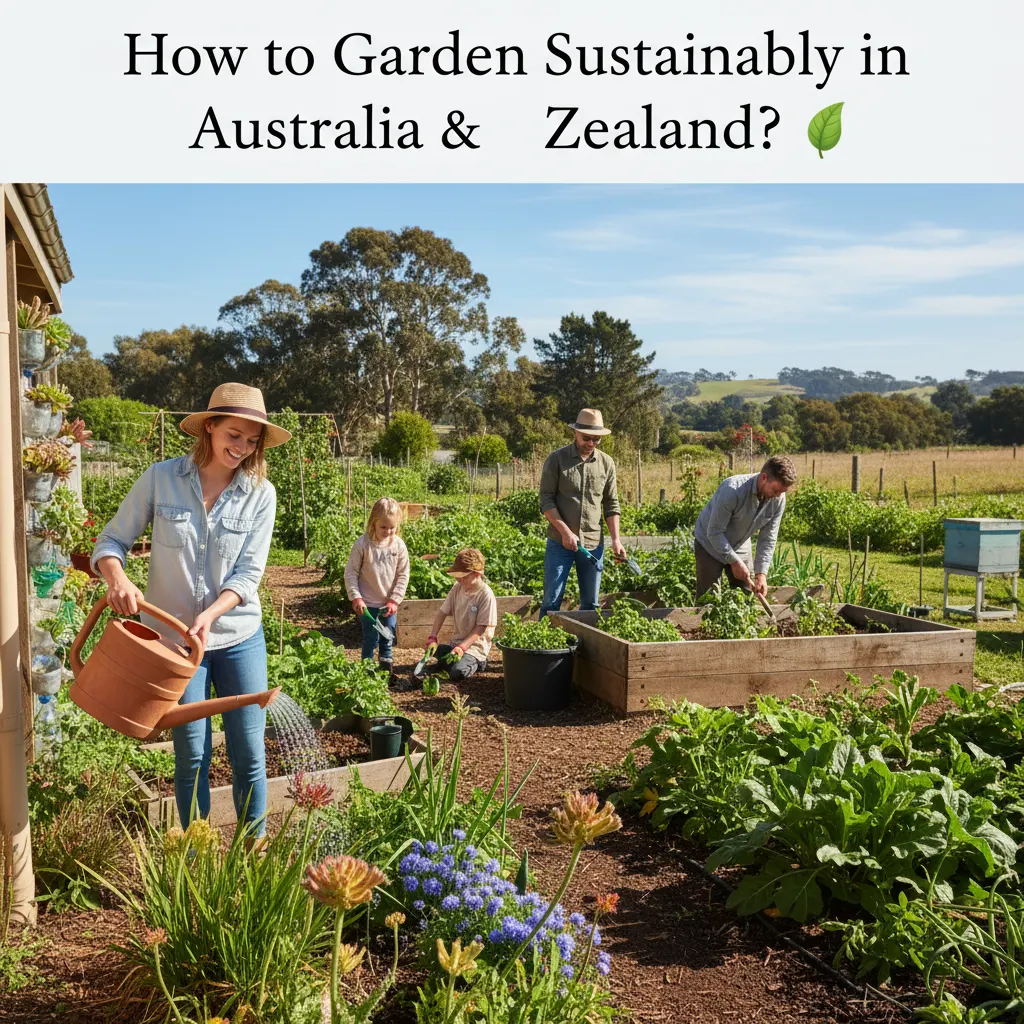
Sustainable Gardening: Australia & NZ Eco-Friendly Guide 🌱
Embracing sustainable gardening in Australia and New Zealand means cultivating practices that respect and work with the unique local ecosystems. This involves selecting native plants, conserving precious water resources, enriching soil naturally, and fostering biodiversity to create resilient and thriving green spaces.
Gardening sustainably in Australia and New Zealand is more than just a trend; it's a vital approach to nurturing our unique environments. With increasing climate challenges like droughts and biodiversity loss, adopting eco-friendly practices helps create resilient gardens that thrive while supporting local ecosystems. This guide provides actionable steps to transform your garden into a sustainable haven.
Why is Sustainable Gardening Crucial for Australia & NZ? 🌍
Sustainable gardening addresses critical environmental challenges like water scarcity, biodiversity loss, and soil degradation, which are particularly pertinent in the unique and often fragile ecosystems of Australia and New Zealand.
Australia and New Zealand face distinct environmental pressures, including prolonged droughts, bushfires, and the impact of invasive species. Sustainable practices help mitigate these issues by promoting water conservation, enhancing soil health, and protecting native flora and fauna. It's about creating a garden that gives back to the environment.
Tip: Understanding your local climate zone is the first step towards truly sustainable gardening. Research average rainfall, temperature extremes, and soil types specific to your region.
Which Native Plants Thrive in Australian & NZ Gardens? 🌿
Selecting native plants is fundamental for sustainable gardening, as they are adapted to local climates, require less water and fertilizer, and provide essential habitat and food for local wildlife, enhancing ecological balance.
Native plants are perfectly suited to the local climate and soil conditions, meaning they generally require less water, fertilizer, and pest control than exotic species. They also provide crucial food and shelter for native birds, insects, and other wildlife, supporting local biodiversity.
1. Australian Native Plant Selection 🇦🇺
Australia boasts an incredible diversity of native plants, from drought-tolerant grevilleas and banksias to lush ferns. Choosing species endemic to your specific region ensures maximum success and ecological benefit.
- Drought-Tolerant: Grevillea, Banksia, Callistemon (Bottlebrush), Acacia (Wattle), Westringia.
- Shade-Loving: Ferns (e.g., Asplenium, Blechnum), Lomandra, Dianella.
- Coastal Regions: Coastal Rosemary (Westringia fruticosa), Pigface (Carpobrotus).
2. New Zealand Native Plant Selection 🇳🇿
New Zealand's native flora is unique, with many species adapted to its temperate climate and volcanic soils. Incorporating plants like flaxes, hebes, and kawakawa can create a beautiful, low-maintenance garden.
- Hardy & Versatile: Phormium (Flax), Hebe, Coprosma, Griselinia.
- Bird Attracting: Fuchsia excorticata (Tree Fuchsia), Vitex lucens (Puriri), Sophora (Kowhai).
- Shade & Understory: Asplenium (Spleenworts), Hosta (NZ native varieties), Libertia.
Warning: Always source native plants from reputable nurseries to ensure they are genuinely local species and not hybrids or introduced varieties.
How Can You Conserve Water in Your Garden? 💧
Water conservation is paramount. Implement strategies like mulching, installing drip irrigation, collecting rainwater, and grouping plants with similar water needs to significantly reduce your garden's water footprint.
Given the frequent water restrictions and drought conditions in many parts of Australia and New Zealand, efficient water use is non-negotiable. Smart watering techniques not only save a precious resource but also reduce your utility bills.
1. Implement Water-Wise Irrigation Systems
Switching from overhead sprinklers to more targeted irrigation methods can drastically cut water waste. Drip irrigation and soaker hoses deliver water directly to the plant roots, minimizing evaporation.
- Drip Irrigation: Delivers water slowly and directly to the soil surface, reducing runoff and evaporation.
- Soaker Hoses: Porous hoses that weep water along their entire length, ideal for garden beds.
- Smart Controllers: Use weather data to adjust watering schedules, preventing overwatering.
2. Mulching for Moisture Retention
Applying a thick layer of organic mulch around plants is one of the simplest yet most effective ways to conserve soil moisture. Mulch also suppresses weeds and regulates soil temperature.
- Organic Mulches: Sugar cane, wood chips, straw, shredded bark, compost.
- Application: Apply a 5-10 cm layer, keeping it away from plant stems to prevent rot.
3. Rainwater Harvesting
Collecting rainwater from your roof is an excellent way to supplement your garden's water supply. Rainwater is also free of chlorine and other chemicals found in tap water, which can be beneficial for plants.
- Rainwater Tanks: Install tanks of varying sizes to capture and store rainwater for later use.
- Rain Barrels: Smaller, more affordable options for collecting water from downpipes.
4. Group Plants by Water Needs (Hydrozoning)
Design your garden by grouping plants with similar water requirements together. This allows for more efficient watering, as you won't be overwatering drought-tolerant plants or underwatering thirsty ones.
What are the Best Practices for Healthy Soil? 🪱
Healthy soil is the foundation of a sustainable garden. Focus on composting, using organic fertilizers, avoiding synthetic chemicals, and practicing no-dig methods to enrich soil structure and microbial life.
Soil is a living ecosystem, teeming with microorganisms that are essential for plant health. Nurturing your soil naturally improves fertility, drainage, and water retention, leading to stronger, more resilient plants.
1. Composting and Worm Farming
Composting kitchen scraps and garden waste creates nutrient-rich organic matter that enriches your soil. Worm farming (vermicomposting) is an even faster way to produce high-quality soil amendments.
- Compost Bins: Turn organic waste into valuable compost for your garden beds.
- Worm Farms: Convert food scraps into nutrient-dense worm castings and 'worm tea'.
2. No-Dig Gardening
Minimizing soil disturbance helps preserve its structure and the delicate network of fungi and bacteria within it. No-dig gardening involves layering organic materials directly onto the soil surface.
- Benefits: Improves soil structure, reduces weed growth, conserves moisture, and enhances microbial activity.
3. Green Manures and Cover Crops
Planting green manures or cover crops during fallow periods can improve soil fertility, prevent erosion, and suppress weeds. These plants are then dug back into the soil to release their nutrients.
- Examples: Legumes (clover, vetch), oats, mustard.
How to Manage Pests Organically and Sustainably? 🐞
Organic pest management involves encouraging beneficial insects, using companion planting, applying natural deterrents, and regular garden inspection to minimize reliance on harmful chemical pesticides.
Chemical pesticides can harm beneficial insects, pollute waterways, and pose risks to human health. Sustainable pest control focuses on prevention and natural solutions to maintain a balanced ecosystem in your garden.
1. Encourage Beneficial Insects
Many insects are natural predators of common garden pests. Attracting these beneficial bugs can create a self-regulating pest control system.
- Plant Flowers: Dill, fennel, cosmos, marigolds, and alyssum attract ladybugs, lacewings, and parasitic wasps.
- Provide Shelter: Create insect hotels or leave small piles of leaves for overwintering beneficials.
2. Companion Planting
Certain plants can deter pests or attract beneficial insects when planted near susceptible crops. This ancient practice is a cornerstone of organic pest management.
- Examples: Marigolds deter nematodes; basil repels flies and mosquitoes; nasturtiums can act as a trap crop for aphids.
3. Organic Pest Control Solutions
For persistent pest problems, natural sprays and physical barriers can provide effective control without resorting to harsh chemicals.
- Neem Oil: A natural insecticide and fungicide derived from the neem tree.
- Garlic/Chilli Spray: Homemade deterrents for various pests.
- Physical Barriers: Netting, row covers, and copper tape can protect plants from birds, snails, and slugs.
What Role Does Biodiversity Play in Your Garden? 🦋
Promoting biodiversity by planting a variety of species, including flowering plants for pollinators and dense foliage for shelter, creates a resilient ecosystem that naturally controls pests and supports local wildlife.
A diverse garden is a healthy garden. By creating a rich tapestry of plants, you provide habitat and food for a wide range of creatures, from microscopic soil organisms to birds and bees. This ecological balance makes your garden more resilient to pests and diseases.
1. Attract Pollinators
Pollinators like bees, butterflies, and hoverflies are crucial for the reproduction of many plants, including food crops. Planting a variety of flowering plants ensures a continuous food source for them.
- Native Flowers: Choose native flowering plants that are adapted to local pollinators.
- Succession Planting: Ensure something is always in bloom throughout the year.
2. Create Wildlife Habitats
Your garden can be a sanctuary for local wildlife. Providing food, water, and shelter encourages birds, lizards, and beneficial insects to take up residence.
- Bird Baths: Provide a fresh water source.
- Dense Shrubs: Offer nesting sites and protection from predators.
- Log Piles/Rockeries: Create homes for lizards and insects.
Expert Tips & Advanced Techniques 💡
Beyond the basics, several advanced techniques can further enhance your garden's sustainability and resilience.
- Xeriscaping: Designing landscapes to reduce or eliminate the need for irrigation, especially relevant for arid Australian regions.
- Permaculture Principles: Applying ecological design principles to create self-sustaining agricultural ecosystems. This includes zoning, stacking functions, and observing natural patterns.
- Bushfire-Resistant Landscaping: In bushfire-prone areas, selecting fire-retardant plants and maintaining clear zones around structures is crucial.
- Urban Food Gardening: Maximizing food production in small urban spaces using vertical gardens, raised beds, and community gardens.
Common Problems & Troubleshooting 🛠️
Even with sustainable practices, challenges can arise. Here's how to troubleshoot common issues.
- Problem: "My native plants are dying despite being drought-tolerant."
- Solution: Ensure proper drainage; native plants often dislike 'wet feet'. Check for overwatering or compacted soil. Also, ensure they are truly local natives, not just Australian/NZ natives from a different climate zone.
- Problem: "My compost bin smells bad and isn't breaking down."
- Solution: Your compost likely has too much 'green' (nitrogen-rich) material and not enough 'brown' (carbon-rich) material. Add more dry leaves, shredded paper, or wood chips. Turn the pile regularly for aeration.
- Problem: "Aphids are still a problem even with beneficial insects."
- Solution: For heavy infestations, try a strong jet of water to dislodge them or apply an organic insecticidal soap. Ensure you have a continuous supply of flowering plants to keep beneficial insects around.
FAQ Section ❓
What is permaculture and how does it apply to Australia/NZ?
Permaculture is an ecological design system that aims to create sustainable human settlements and agricultural systems by mimicking natural ecosystems. In Australia and New Zealand, it involves designing gardens that are productive, resilient, and require minimal external inputs, often incorporating native species, water harvesting, and soil building techniques adapted to local conditions.
Are there government rebates for water-saving garden features?
Yes, many local councils and state/territory governments in Australia and New Zealand offer rebates or incentives for installing water-saving features like rainwater tanks, greywater systems, and efficient irrigation. It's best to check with your specific local council or water authority for current programs and eligibility criteria.
How do I start a compost bin in a small space?
For small spaces, consider a compact tumbling compost bin or a worm farm. Tumblers are efficient for breaking down kitchen scraps and garden waste, while worm farms are excellent for food waste and produce nutrient-rich castings. Ensure good aeration and a balanced mix of 'greens' and 'browns' to prevent odors.
What are common invasive species to avoid in Australia/NZ?
Common invasive species to avoid include Lantana, Bridal Creeper, and Blackberry in Australia, and Old Man's Beard, Wild Ginger, and Moth Plant in New Zealand. These plants outcompete native flora, disrupt ecosystems, and can be difficult to eradicate. Always choose native or non-invasive exotic species.
Can I grow vegetables sustainably in my climate zone?
Absolutely! Sustainable vegetable gardening involves practices like crop rotation, companion planting, using organic fertilizers, and water-wise irrigation. Research vegetable varieties suited to your specific climate zone and growing season, and consider raised beds or wicking beds for efficient water use.
Key Takeaways for Your Sustainable Garden ✨
- Embrace Natives: Prioritize local native plants for resilience and biodiversity.
- Conserve Water: Implement mulching, rainwater harvesting, and efficient irrigation.
- Nourish Soil: Focus on composting, worm farming, and no-dig methods.
- Go Organic: Manage pests naturally by encouraging beneficial insects and using organic solutions.
- Boost Biodiversity: Create habitats to support a thriving ecosystem.
By adopting these sustainable practices, you're not just growing a garden; you're cultivating a healthier planet, one plant at a time. Start small, observe your garden, and enjoy the journey of creating a truly eco-friendly space.
Summary and Next Steps
- Work with local climate: Australia and New Zealand gardens benefit from region-aware planting, mulch, and water-wise design.
- Prioritize soil health: Compost, organic matter, and living roots reduce reliance on synthetic inputs.
- Support biodiversity: Native plants, mixed flowers, and habitat features help pollinators and beneficial insects.
- Reduce waste: Propagate plants, reuse materials, and compost garden residues where safe.
Next, audit one part of your garden for water use, soil cover, and plant diversity, then choose one sustainable upgrade to make this week.