How to Water Houseplants: The Ultimate Guide for Thriving Plants
Proper houseplant watering is crucial for plant health, involving a balance of moisture and aeration. The key is to understand your plant's specific needs, check soil moisture regularly, and water thoroughly but not excessively, ensuring good drainage to prevent root rot.
Watering houseplants correctly is arguably the most critical aspect of indoor plant care. It's a delicate balance, as both overwatering and underwatering can lead to significant stress and even death for your beloved green companions. This comprehensive guide will equip you with the knowledge and techniques to master houseplant watering, ensuring your plants thrive.
Why is Proper Watering So Important for Houseplants? 🌱
Correct watering prevents common issues like root rot and dehydration, ensuring your plants receive essential nutrients and maintain healthy growth. It's the most frequent cause of houseplant demise.
Water is fundamental for plant survival, acting as a transport system for nutrients from the soil to the leaves. It also plays a vital role in photosynthesis, the process by which plants convert light energy into food. Without adequate water, plants cannot perform these essential functions, leading to a decline in health.
Conversely, too much water can be equally detrimental. Overwatering deprives roots of oxygen, leading to suffocation and the proliferation of harmful anaerobic bacteria and fungi, commonly known as root rot. Understanding this balance is the first step to becoming a successful plant parent.
How Do I Know When to Water My Houseplant? 💧
The best method is to check the soil moisture. For most plants, allow the top inch or two of soil to dry out before watering again. Use your finger or a moisture meter for accuracy.
Determining the right time to water is more art than science, as it depends on various factors including plant type, pot size, soil composition, humidity, and season. However, there are reliable methods to gauge soil moisture:
- The Finger Test: Insert your index finger about 1-2 inches deep into the soil. If it feels dry, it's likely time to water. If it feels moist, wait a few more days.
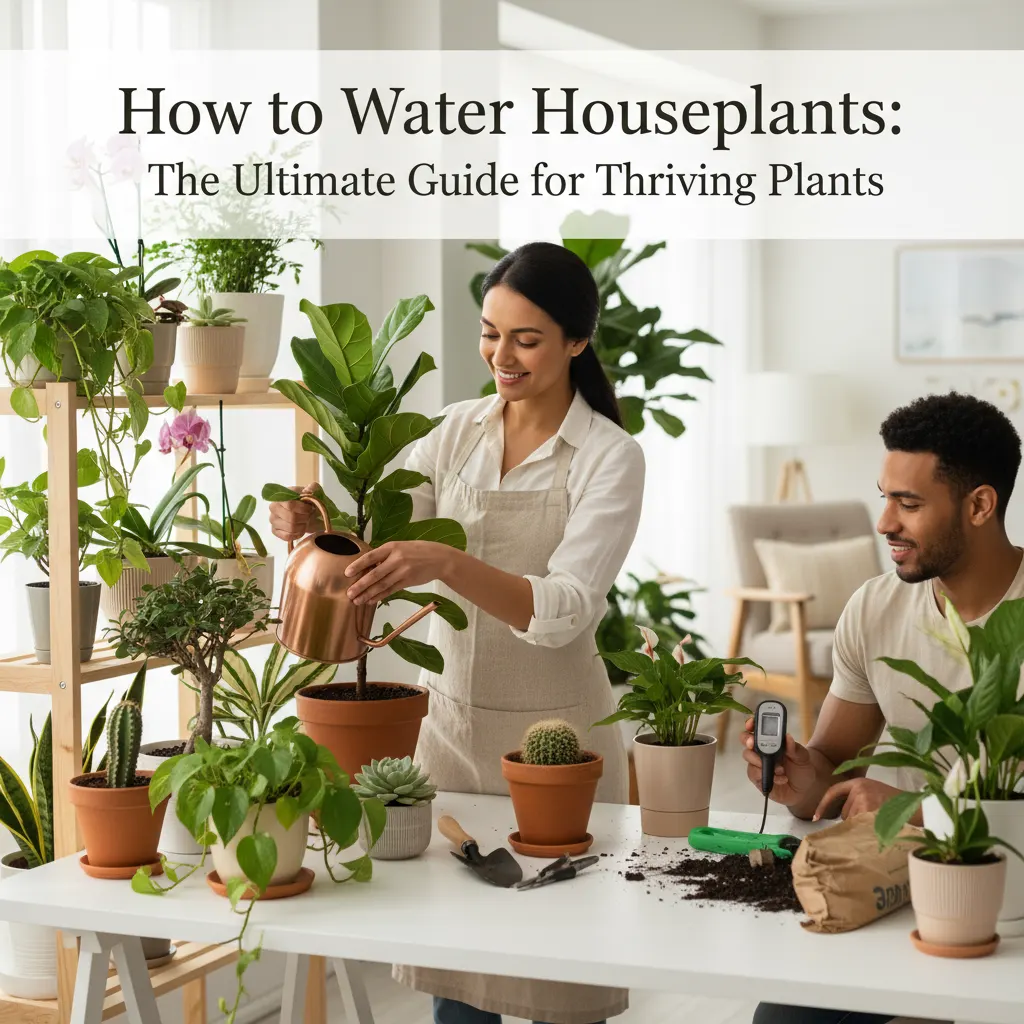
- Moisture Meter: For more precision, a soil moisture meter can provide a numerical reading of the soil's dampness. This is especially useful for larger pots or plants with specific needs.
- Lifting the Pot: A dry pot will feel significantly lighter than a freshly watered one. Over time, you'll develop a feel for the weight difference.
- Visual Cues: Look for changes in soil color (darker when wet, lighter when dry) or if the soil pulls away from the pot edges.
Tip: Always check the soil, don't just follow a strict schedule. Your plant's needs change with its environment and growth cycle.
What are the Best Watering Techniques for Indoor Plants? 🚿
Common techniques include top watering, bottom watering, and misting. Each has benefits depending on the plant type and environment, with thoroughness being key for all methods.
Choosing the right watering technique can significantly impact your plant's health. Different methods suit different plant types and growing conditions.
1. Top Watering
This is the most common method. Water is poured directly onto the soil surface until it drains from the bottom of the pot. This helps flush out accumulated salts.
- How to: Pour water slowly and evenly over the soil surface, avoiding the plant's foliage if possible. Continue until water begins to drain from the pot's drainage holes. Discard any excess water from the saucer after 15-30 minutes.
- Best for: Most houseplants, especially those that benefit from salt flushing.
2. Bottom Watering
Plants absorb water from the bottom up, allowing the soil to wick up moisture at its own pace. This encourages stronger root growth and prevents soil compaction.
- How to: Place the potted plant in a tray or sink filled with 1-2 inches of water. Allow the plant to soak for 15-45 minutes, or until the topsoil feels moist. Remove the plant and let any excess water drain completely.
- Best for: Plants prone to root rot, plants with dense foliage (like African Violets), or those that prefer consistent moisture.
3. Misting
Misting increases humidity around the plant, which is beneficial for tropical plants that thrive in humid environments. It is not a substitute for watering the soil.
- How to: Use a fine mist sprayer to lightly spray the foliage. Do this in the morning to allow leaves to dry before nightfall, reducing the risk of fungal issues.
- Best for: Ferns, orchids, and other humidity-loving plants. Not recommended for plants with fuzzy leaves.
How Can I Avoid Overwatering My Houseplants? 🚫
Prevent overwatering by using pots with drainage holes, well-draining soil, and only watering when the soil indicates it's needed. Avoid leaving plants sitting in standing water.
Overwatering is a leading cause of houseplant death. It's often a result of good intentions rather than neglect. Here's how to prevent it:
- Ensure Drainage: Always use pots with drainage holes. A pot without drainage is a recipe for root rot.
- Use Well-Draining Soil: A good potting mix should be airy and allow water to pass through easily. Amend heavy soils with perlite or orchid bark for better aeration.
- Check Before You Water: Never water on a schedule. Always check the soil moisture first using the finger test or a moisture meter.
- Empty Saucers: After watering, always empty any standing water from the plant's saucer within 15-30 minutes. Roots sitting in water will suffocate.
- Consider Pot Size: A plant in a pot that's too large will retain too much moisture, increasing the risk of overwatering. Repot only when necessary.
What are the Signs of an Underwatered Houseplant? 🏜️
Underwatered plants often show wilting, dry and crispy leaves, stunted growth, and very dry, compacted soil. Leaves may also turn yellow or brown and drop off.
While overwatering gets a lot of attention, underwatering can be just as damaging. Recognizing the signs early can save your plant:
- Wilting or Drooping Leaves: The plant looks limp and lacks turgor (firmness). This is often the first sign.
- Dry, Crispy Leaves: Leaves may turn brown, especially at the edges, and feel brittle to the touch. They might also curl inwards.
- Stunted Growth: The plant stops growing or new growth is very small and weak.
- Very Dry, Compacted Soil: The soil may pull away from the sides of the pot and feel hard.
- Light Pot Weight: The pot feels unusually light when lifted.
- Yellowing or Browning Leaves: Older leaves, especially at the bottom, may turn yellow or brown and eventually fall off.
Solution: If your plant is underwatered, give it a thorough soaking. For severely dry plants, bottom watering can be very effective to rehydrate the soil evenly.
What are the Signs of an Overwatered Houseplant? 🌊
Overwatered plants typically exhibit yellowing leaves, soft or mushy stems, wilting despite wet soil, and a foul odor from the soil due to root rot.
Identifying overwatering can be tricky because some symptoms, like wilting, can also indicate underwatering. However, context is key:
- Yellowing Leaves: Often starting with lower leaves, they turn yellow and may feel soft or mushy.
- Wilting Despite Wet Soil: The plant looks droopy, but the soil is clearly wet to the touch. This is a classic sign of root rot, as damaged roots can't absorb water.
- Soft, Mushy Stems: The stem or base of the plant may feel soft, discolored, or even slimy.
- Foul Odor from Soil: A rotten or musty smell emanating from the soil indicates anaerobic conditions and root rot.
- Edema: Small, blister-like growths on leaves, often on the underside, caused by cells bursting from excess water pressure.
- Fungus Gnats: These small flies are attracted to consistently moist soil and can be an indicator of overwatering.
Solution: If you suspect overwatering, stop watering immediately. Allow the soil to dry out completely. For severe cases, repotting into fresh, dry soil after trimming away any rotten roots may be necessary.
How Does Water Quality Affect Houseplant Health? 🧪
Tap water can contain chlorine or minerals that may harm sensitive plants. Filtered, distilled, or rainwater is often preferred, especially for plants prone to mineral buildup.
The quality of the water you use can have a subtle but significant impact on your houseplants over time. While most plants tolerate tap water, some are more sensitive.
- Chlorine and Chloramines: These chemicals, used to disinfect tap water, can accumulate in the soil and harm sensitive plants. Letting tap water sit out for 24 hours can help dissipate chlorine, but not chloramines.
- Hard Water (Mineral Buildup): Water high in dissolved minerals (calcium, magnesium) can leave white crusty deposits on soil surfaces and pot rims. This mineral buildup can alter soil pH and interfere with nutrient uptake. Sensitive plants like ferns and prayer plants may show brown leaf tips or edges.
- Fluoride: Some plants, particularly Dracaenas and Spider Plants, are sensitive to fluoride, which can cause brown tips.
Better Water Options:
- Filtered Water: A simple Brita filter can remove some chlorine and minerals.
- Distilled Water: Pure H2O, free of minerals and chemicals. Excellent for sensitive plants but lacks beneficial minerals.
- Rainwater: Nature's perfect water for plants, naturally soft and free of chemicals. Collect it in a clean barrel or bucket.
How to Water Specific Houseplant Types (e.g., Succulents, Ferns, Tropicals)? 🌴
Different plants have varying water requirements. Succulents need infrequent, deep watering, while ferns prefer consistently moist soil. Tropicals often thrive with regular, moderate watering.
Understanding your plant's natural habitat is key to tailoring its watering schedule. Here's a general guide for common plant types:
Succulents and Cacti
- Needs: Drought-tolerant. Store water in their leaves, stems, or roots. Prefer infrequent, deep watering.
- How to: Water thoroughly until it drains, then allow the soil to dry out completely, often for several weeks, before watering again. Err on the side of underwatering.
Ferns
- Needs: High humidity and consistently moist (but not soggy) soil. Mimic their forest floor environment.
- How to: Keep the soil evenly moist. Check frequently and water when the top inch feels slightly dry. Misting is highly beneficial.
Tropical Foliage Plants (e.g., Monstera, Pothos, Philodendron)
- Needs: Moderate, consistent moisture. They come from environments with regular rainfall.
- How to: Water when the top 1-2 inches of soil are dry. Water thoroughly and ensure good drainage. Adjust frequency based on light and temperature.
Orchids
- Needs: Specific watering in their bark or moss medium. They don't like to sit in water.
- How to: Typically watered once a week. Soak the pot in water for 10-15 minutes, then let it drain completely. Or use 2-3 ice cubes once a week (for Phalaenopsis).
Common Problems & Troubleshooting 🛠️
Here are solutions to common watering-related issues:
- Problem: Yellowing leaves and wilting despite wet soil.
- Solution: This often indicates overwatering and potential root rot. Reduce watering frequency, ensure proper drainage, and consider repotting with fresh, well-draining soil if severe.
- Problem: Crispy, brown leaf tips and stunted growth.
- Solution: These are common signs of underwatering. Increase watering frequency, ensuring the soil is thoroughly moistened each time, and consider increasing humidity around the plant.
- Problem: White crust on soil or pot rim.
- Solution: This is mineral buildup from hard tap water. Use filtered or distilled water, or periodically flush the soil with distilled water to remove excess salts.
- Problem: Fungus gnats flying around the plant.
- Solution: Fungus gnats thrive in consistently moist topsoil. Allow the top inch or two of soil to dry out completely between waterings. You can also use sticky traps or beneficial nematodes.
Expert Tips & Advanced Techniques 💡
- Seasonal Adjustments: Plants generally require less water in winter due to slower growth and lower light, and more in summer due to increased evaporation and active growth. Always adjust based on ambient temperature and humidity.
- Humidity Matters: High humidity can reduce the frequency of watering, as less moisture evaporates from the soil and leaves. Consider a humidifier for tropical plants.
- Watering Readiness Checklist: Before watering, quickly check:
- Soil moisture (finger test/meter)
- Pot weight
- Leaf appearance (turgid vs. droopy)
- Drainage hole status (clear?)
- Tools for Success: A good watering can with a long spout, a reliable soil moisture meter, and pots with ample drainage holes are invaluable.
FAQ Section ❓
Can I use ice cubes to water my orchids?
Yes, for Phalaenopsis orchids, using 2-3 ice cubes once a week can be an effective and convenient way to provide slow, consistent moisture without overwatering. The slow melt allows the roots to absorb water gradually, mimicking natural conditions.
How do I water my plants when I go on vacation?
For short trips (1-2 weeks), thorough watering before you leave and moving plants away from direct sunlight might suffice. For longer periods, consider self-watering globes, wicking systems, or placing plants in a shallow tray of water (for bottom-watering plants). A plant sitter is ideal for extended absences.
Is it better to water from the top or bottom?
Both methods have benefits. Top watering flushes salts and is good for most plants. Bottom watering encourages deeper root growth and prevents soil compaction, ideal for sensitive plants or those prone to root rot. Many plant parents use a combination of both.
Why are my plant's leaves turning yellow after watering?
Yellowing leaves after watering often indicate overwatering and potential root rot. The roots are suffocating due to lack of oxygen, preventing them from absorbing water and nutrients. Allow the soil to dry out completely before the next watering and ensure good drainage.
How often should I fertilize when watering?
Fertilizing frequency depends on the plant and season. Most houseplants benefit from fertilization every 2-4 weeks during their active growing season (spring and summer) and rarely, if ever, during dormancy (fall and winter). Always dilute fertilizer to half strength to avoid chemical burn, and never fertilize a dry plant.
Key Takeaways for Thriving Houseplants
- Know Your Plant: Research its specific watering needs based on its origin.
- Check Soil Moisture: Always use the finger test or a moisture meter before watering.
- Water Thoroughly: Ensure water drains from the bottom, then discard excess.
- Prioritize Drainage: Pots with holes and well-draining soil are non-negotiable.
- Recognize Symptoms: Learn the signs of both overwatering and underwatering.
- Adjust Seasonally: Watering needs change with light, temperature, and humidity.
Mastering houseplant watering is a journey of observation and adjustment. By understanding your plants' needs and applying these techniques, you'll cultivate a thriving indoor jungle. Happy watering!
Summary and Next Steps
- Check before watering: Soil moisture, pot weight, and leaf texture are better guides than a fixed calendar.
- Drainage matters: Water thoroughly, then let excess drain so roots get both moisture and oxygen.
- Adjust by season: Lower light and cooler rooms usually mean slower drying and less frequent watering.
- Watch plant signals: Yellow leaves, crisp edges, wilting, and fungus gnats all point to different watering problems.
Next, pick three houseplants, check soil moisture before watering, note how long each pot takes to dry, and build a routine around observation instead of habit.