
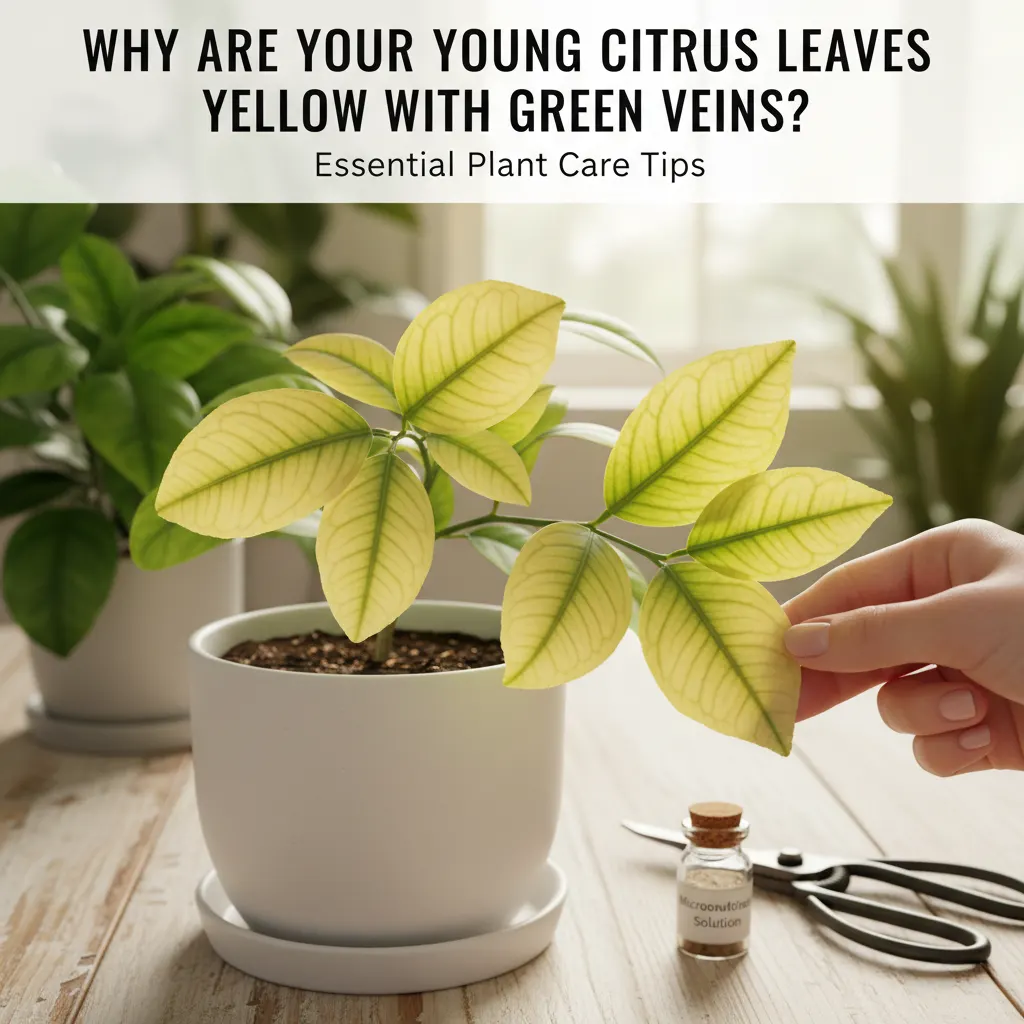
Why Are Young Citrus Leaves Yellow with Green Veins?
Young citrus leaves that turn yellow while the veins stay green usually signal iron, zinc, or manganese deficiency, often caused by alkaline soil or cold, wet roots that block nutrient uptake. Start with soil pH and drainage, then use chelated micronutrients and a citrus-specific fertilizer to restore healthy green growth.
Why Are Your Young Citrus Leaves Yellow with Green Veins?
Yellowing young citrus leaves with green veins, known as chlorosis, typically indicate a nutrient deficiency, most commonly iron or zinc. This often occurs in alkaline soils that bind these essential micronutrients, preventing uptake by the tree. Addressing soil pH and providing chelated micronutrient supplements are key to recovery.
Discovering your young citrus tree's leaves turning yellow while the veins remain a distinct green can be alarming for any gardener. This specific symptom, known as interveinal chlorosis, is a clear signal that your tree is struggling to absorb vital micronutrients. Understanding the underlying causes and implementing targeted solutions can quickly restore your citrus tree to vibrant health and ensure a bountiful harvest.
What Causes Yellow Leaves with Green Veins in Young Citrus?
This specific pattern, called interveinal chlorosis, points to deficiencies in micronutrients like iron, zinc, or manganese. These deficiencies are frequently triggered by high soil pH, which makes these essential elements unavailable to the plant's roots, even if they exist in the soil.
Interveinal chlorosis is a common issue in citrus, particularly in regions with alkaline soils. While the soil might contain sufficient amounts of iron, zinc, or manganese, a high pH (above 7.0) can chemically bind these nutrients, making them insoluble and inaccessible to the tree's root system. Young leaves are often the first to show symptoms because they have the highest demand for these mobile nutrients during rapid growth. Iron deficiency typically manifests as bright yellowing on the newest leaves, with the veins remaining green. Zinc and manganese deficiencies can present similarly, often affecting younger to mid-aged leaves, sometimes with smaller leaf size or distorted growth. Other factors contributing to chlorosis can include poor drainage leading to root stress, overwatering, or compacted soil, all of which can impair nutrient uptake. Understanding the specific nutrient involved is crucial for effective treatment, as each requires a slightly different approach.
How to Diagnose Specific Nutrient Deficiencies in Citrus
While yellowing with green veins generally indicates micronutrient issues, iron deficiency often affects the newest leaves most severely, while zinc and manganese can show similar patterns on younger to mid-aged leaves. Soil testing is the most accurate diagnostic tool to confirm specific deficiencies and pH levels.
Accurate diagnosis is the first step toward effective treatment. While visual symptoms provide strong clues, a comprehensive soil test is invaluable. A soil test will reveal your soil's pH level, which is often the root cause of micronutrient unavailability, and can also indicate the levels of various nutrients present. For instance, if your soil pH is above 7.0 and your newest leaves are bright yellow with green veins, iron deficiency is highly probable. If, in addition to yellowing, you notice stunted growth, small leaves, or a mottled appearance, zinc deficiency might be at play. Manganese deficiency can also cause interveinal chlorosis, sometimes with a more diffuse yellowing. Leaf tissue analysis can provide an even more precise diagnosis by measuring the actual nutrient content within the plant's leaves. Consulting with your local agricultural extension office can help interpret these results and provide tailored recommendations for your specific soil and climate conditions. This scientific approach ensures you're not just guessing but applying the right solution to the right problem.
Step-by-Step Guide to Treating Chlorosis in Citrus Trees
Begin by testing your soil pH. If it's above 6.5, amend it to a more acidic range (6.0-6.5). Apply chelated micronutrient sprays directly to the foliage for quick absorption, or use soil drench applications of chelated iron, zinc, or manganese, following product instructions carefully.
Treating chlorosis effectively involves a multi-pronged approach:
- Test Soil pH: Use a reliable soil pH test kit. Citrus trees thrive in slightly acidic to neutral soil (pH 6.0-7.0). If your pH is too high (alkaline), it's the primary culprit. For alkaline soils, consider amending with elemental sulfur or peat moss to gradually lower the pH. This is a long-term solution.
- Apply Chelated Micronutrients: Chelated forms of iron, zinc, and manganese are specially formulated to remain available to plants even in alkaline soils. For a quick response, foliar sprays are highly effective as nutrients are absorbed directly through the leaves. Mix the chelated product according to package directions and spray thoroughly, ensuring good coverage on both the top and bottom of the leaves. For a more sustained release, soil drench applications can be used, applying the chelated solution around the tree's drip line.
- Choose the Right Chelate: Different chelates work best at different pH levels. For very alkaline soils, Fe-EDDHA is often recommended for iron deficiency, as it remains stable at higher pH. For zinc and manganese, EDTA or DTPA chelates are commonly used.
- Regular Fertilization: Ensure your tree receives a balanced citrus-specific fertilizer that includes micronutrients. While this won't fix severe deficiencies in high pH soil, it helps maintain overall nutrient levels.
- Improve Soil Drainage: Compacted or waterlogged soil can hinder root function and nutrient uptake. Amend heavy clay soils with organic matter like compost to improve aeration and drainage.
Consistency is key. Monitor your tree's new growth for signs of improvement, and be prepared to reapply treatments as needed, especially during periods of active growth.
Preventative Measures for Healthy Citrus Foliage
Maintain optimal soil pH, regularly fertilize with a balanced citrus-specific fertilizer, and ensure good drainage. Incorporate organic matter to improve soil structure and nutrient availability. Monitor new growth for early signs of yellowing to address issues promptly.
Prevention is always better than cure when it comes to plant health. Establishing a proactive care routine can significantly reduce the likelihood of chlorosis in your citrus trees. Start by ensuring your planting site has well-draining soil and receives adequate sunlight. Regularly test your soil pH and amend it as necessary to keep it within the ideal range of 6.0-7.0. Incorporating a generous amount of organic matter, such as compost or aged manure, into the soil annually will not only improve soil structure and drainage but also provide a slow release of essential nutrients and help buffer pH changes. Use a high-quality, balanced fertilizer specifically formulated for citrus trees, following the manufacturer's recommendations for application frequency and dosage. These fertilizers typically contain a good balance of macro and micronutrients. Avoid overwatering, which can lead to root rot and impair nutrient uptake, and ensure consistent, deep watering, especially during dry spells. Finally, regularly inspect your tree, particularly new growth, for any early signs of yellowing or other abnormalities. Early detection allows for swift intervention, preventing minor issues from escalating into severe problems.
Common Problems & Troubleshooting
Can overwatering cause yellow leaves on citrus?
Yes, overwatering can definitely cause yellow leaves on citrus trees. While the yellowing might be more uniform rather than interveinal, excessive moisture deprives roots of oxygen, leading to root rot and impaired nutrient uptake, which can manifest as general yellowing or even leaf drop. Ensure your soil drains well and allow the top few inches of soil to dry out between waterings.
What is the best fertilizer for yellowing citrus leaves?
For yellowing leaves with green veins (interveinal chlorosis), the best approach is to use chelated micronutrient supplements, specifically chelated iron, zinc, or manganese, either as a foliar spray or soil drench. For general yellowing, a balanced citrus-specific fertilizer that includes micronutrients is recommended. Always choose a fertilizer appropriate for your soil pH.
How often should I fertilize my citrus tree?
The frequency of fertilization depends on the tree's age, size, and growing conditions. Young trees often benefit from more frequent, lighter applications (e.g., every 4-6 weeks during growing season). Mature trees typically need fertilization 2-4 times a year, usually in late winter/early spring, early summer, and late summer/early fall. Always follow product instructions and adjust based on tree response and soil test results.
Is Epsom salt good for yellow citrus leaves?
Epsom salt (magnesium sulfate) is beneficial for citrus leaves that show symptoms of magnesium deficiency, which typically appears as a mottled or blotchy yellowing on older leaves, not usually the interveinal chlorosis on young leaves. If magnesium deficiency is confirmed, Epsom salt can be applied as a foliar spray or soil drench. It is not a cure-all for all types of yellowing.
What is chelated iron and how does it help citrus?
Chelated iron is iron that has been chemically bonded with an organic molecule (a chelating agent). This chelation process protects the iron from reacting with other elements in the soil, particularly in alkaline conditions, keeping it soluble and available for absorption by the plant's roots. It's highly effective for treating iron deficiency in citrus grown in high pH soils where unchelated iron would quickly become unavailable.
Expert Tips & Advanced Techniques
For persistent chlorosis, consider trunk injections of micronutrients, which deliver nutrients directly into the tree's vascular system for rapid uptake. This method is typically performed by certified arborists. Additionally, exploring the use of beneficial soil microbes, such as mycorrhizal fungi, can enhance nutrient uptake efficiency by expanding the root system's reach. Regularly monitoring leaf tissue nutrient levels through laboratory analysis can provide precise data for fine-tuning your fertilization program, moving beyond visual symptoms to scientific management. For organic growers, incorporating biochar can improve soil structure, water retention, and nutrient availability over the long term, contributing to overall tree health and resilience against nutrient deficiencies.
Summary & Next Steps
Yellowing young citrus leaves with green veins are a clear indicator of micronutrient deficiencies, most commonly iron or zinc, often exacerbated by high soil pH. Addressing this issue is crucial for your tree's health and productivity.
Key Takeaways:
- Diagnose Accurately: Use visual cues and, ideally, a soil test to pinpoint the specific deficiency and soil pH.
- Correct Soil pH: Amend alkaline soils with elemental sulfur or organic matter for long-term health.
- Apply Chelated Nutrients: Use chelated iron, zinc, or manganese as foliar sprays or soil drenches for effective treatment.
- Preventative Care: Maintain optimal soil pH, fertilize regularly with citrus-specific products, and ensure good drainage.
Actionable Advice:
- Get a Soil Test: This is your most important first step to understand your soil's specific needs.
- Purchase Chelated Micronutrients: Have them on hand for immediate treatment.
- Establish a Regular Feeding Schedule: Use a high-quality citrus fertilizer.
- Monitor New Growth: Watch for signs of improvement and adjust your care as needed.
By following these steps, you can effectively treat and prevent yellowing leaves, ensuring your citrus tree remains healthy and productive for years to come. For further reading, explore topics like 'organic citrus care' or 'advanced soil amendment techniques' to deepen your understanding of citrus tree health.
FAQ: Yellow Citrus Leaves with Green Veins
Why are only the new citrus leaves yellow with green veins?
Yellow new growth with green veins usually means iron, zinc, or manganese is present in the soil but unavailable to the roots. High pH, cold wet soil, compacted mix, or root stress can block uptake, so correcting soil conditions matters as much as adding micronutrients.
Will chelated iron fix yellow citrus leaves?
Chelated iron can help when iron deficiency is the cause, especially in alkaline soil. Use it according to label directions and pair it with better drainage, correct pH, and consistent citrus feeding. If zinc or manganese is also low, choose a citrus micronutrient blend.
Should I remove yellow citrus leaves?
Do not remove lightly yellow leaves if they are still attached and functioning. They can still photosynthesize while the tree recovers. Remove leaves only when they are fully dead, diseased, or heavily pest-damaged, and focus on improving new growth color.
How long does citrus chlorosis take to improve?
New growth can look better within a few weeks after pH, drainage, and micronutrients are corrected, but existing yellow leaves may not fully green up. Judge recovery by the color and size of new leaves rather than expecting every old leaf to return to perfect green.