
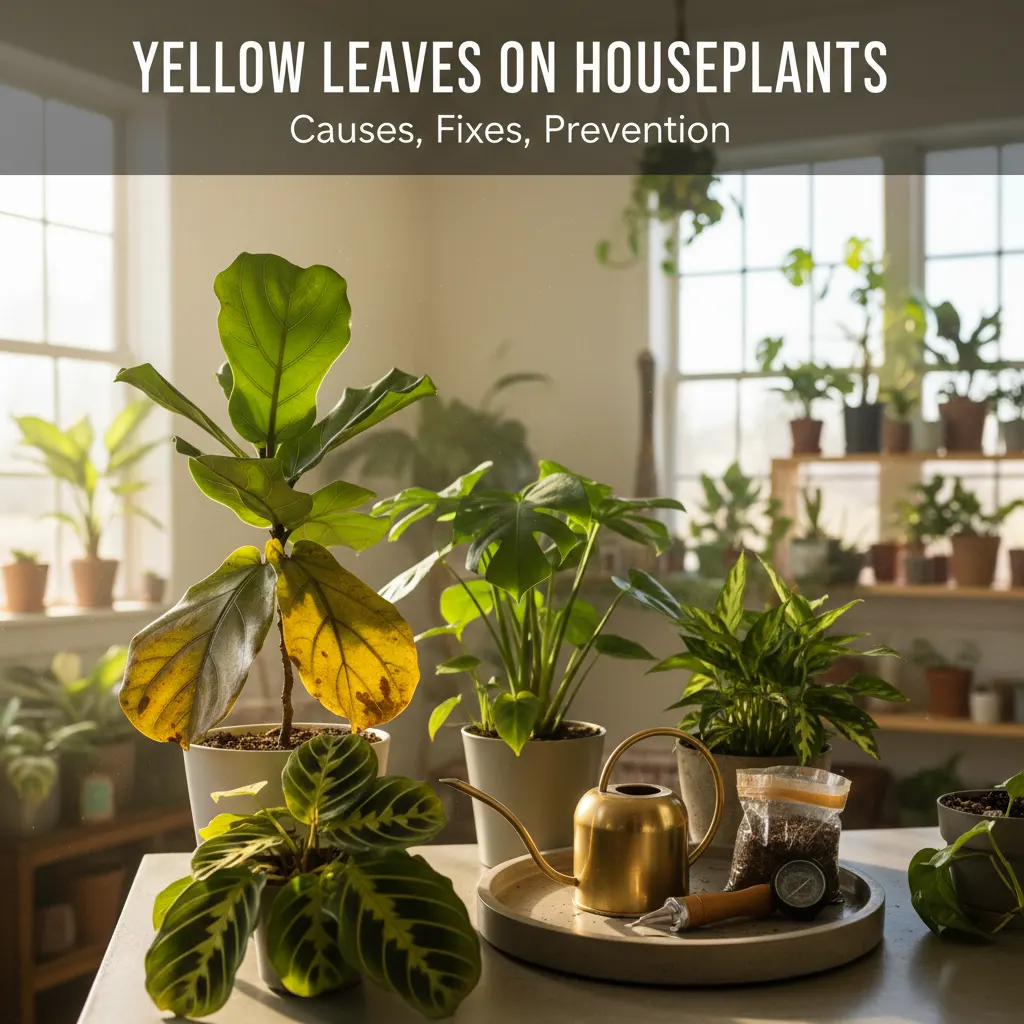
Why Are My Houseplant Leaves Turning Yellow?
Houseplant leaves turn yellow most often because of watering stress, low light, or nutrient imbalance. Check soil moisture first, then review light exposure and feeding. If only one lower leaf yellows, it may be normal aging; if several leaves yellow together, inspect roots, pests, and drainage before the problem spreads.
🌿 Why Are My Plant Leaves Yellow? You are not alone
If you woke up to plant leaves turning yellow overnight, take a deep breath. Yellow leaves on a houseplant are one of the most searched, most solvable plant problems. In this guide, you will learn how to quickly diagnose the cause, fix it with confidence, and prevent yellow leaves from coming back. We will focus on the big three triggers: watering issues, poor light, and nutrient deficiencies, plus a few sneaky culprits like temperature swings and pests.
Quick reality check: one or two yellow leaves are usually normal and not a reason to panic. If multiple leaves are yellowing at once, it is time to act.
📘 Understanding Yellow Leaves: Why it is a common houseplant problem
Yellowing, also called chlorosis, happens when a leaf cannot produce or maintain enough chlorophyll. For indoor plants, this typically traces back to inconsistent watering, incorrect light, or depleted nutrients. Sometimes it is just an aging leaf the plant is ready to shed. According to widely shared advice among growers, a yellow leaf is often a dying leaf, so your goal is to correct the cause and save the rest of the plant.
What you will learn here:
- How to tell overwatering from underwatering fast
- How to match light levels to your plant
- How to feed correctly to avoid nutrient-related yellowing
- What else can cause yellow leaves on houseplants
- Practical steps to revive and keep foliage green
🧭 The A–Z of Yellow Leaves: Common causes and how to identify them
Use these clues to get a quick read on the cause.
- Pattern: Lower, older leaves yellow first
- Likely: Natural aging or nitrogen deficiency
- Pattern: New leaves pale, veins remain green
- Likely: Iron or magnesium deficiency
- Pattern: Yellowing mostly on the side away from a window
- Likely: Insufficient light
- Texture: Leaves yellow, feel soft or mushy; soil stays wet for days
- Likely: Overwatering or poor drainage
- Texture: Leaves yellow, feel crisp; soil pulls from pot edges and is bone dry
- Likely: Underwatering
- Timing: Yellowing after a cold draft or heat blast
- Likely: Temperature stress
- Extras: Sticky residue, webbing, or tiny moving dots
- Likely: Pests (check undersides and stems)
💧 Watering Woes: Are you over or underwatering?
Watering sits at the root of most houseplant yellow leaves. Here is how to separate the two.
Overwatering signs:
- Consistently wet, compacted, or sour-smelling soil
- Yellow leaves that droop and feel soft
- Brown soft spots on leaves or stems
- Fungus gnats hovering near the potting mix
How to fix overwatering:
- Let the top 1 to 2 inches of soil dry before watering again
- Always use pots with drainage holes or double-pot with an inner nursery pot
- Improve aeration with a chunky, well-draining mix (perlite, bark, coarse coco)
- If soil is waterlogged, repot into fresh mix and trim any black or mushy roots
- Water thoroughly, then empty saucers so roots never sit in water
Underwatering signs:
- Pot feels unusually light; soil is crusty and pulls from the pot edges
- Yellow leaves that feel papery or edges that crisp and curl
- Stalled growth and slow recovery after watering
How to fix underwatering:
- Bottom-water or slow-soak the pot until the root ball rehydrates, then drain well
- Water thoroughly until it runs from the drainage holes
- Create a consistent schedule based on plant type, pot size, and light level
- Consider a moisture meter as a training tool to learn your plant’s rhythm
My quick anecdote: My Monstera once dropped three yellow leaves in a week. I thought it was thirsty, so I watered more. The real culprit was a decorative pot with no drainage trapping water. Once I moved it to a nursery pot with drainage and let the mix dry to the top knuckle before watering, the yellowing stopped and new leaves unfurled within a month.
🌞 Light Levels: Finding the sweet spot for healthy foliage
Light drives photosynthesis. Too little light and your plant cannot keep older leaves green; too much and leaves can bleach or scorch.
Signs of too little light:
- Yellowing on the side farthest from the window
- Sparse, leggy growth reaching toward light
- Soil staying wet too long because the plant is not using water
Fixes for low light:
- Move closer to a bright window with indirect light
- Rotate the plant weekly for even exposure
- Supplement with a full-spectrum grow light in darker rooms
Signs of too much light:
- Yellowing that looks bleached, often paired with brown, crispy patches
- Leaves feel hot to the touch during midday sun
Fixes for excess light:
- Shift back from harsh south or west windows
- Add a sheer curtain to soften rays
- Increase humidity slightly to buffer stress
🧪 Nutrient Deficiencies: Feeding for vibrant green
Even with perfect watering and light, a plant can show yellow leaves if nutrients are lacking. Houseplants need nitrogen, phosphorus, potassium, plus calcium, magnesium, and trace elements. Because nitrogen is mobile in plants, older leaves often yellow first when it runs low as the plant reallocates resources to new growth.
How to recognize common deficiencies:
- Nitrogen: Older leaves turn evenly pale yellow; growth slows
- Magnesium: Interveinal chlorosis where veins stay green but areas between veins yellow, often on older leaves
- Iron: New leaves emerge pale with green veins; older leaves may stay green
Fix and prevent:
- During spring and summer, feed every 2 to 4 weeks with a balanced liquid houseplant fertilizer at label rate
- In winter, reduce or pause feeding as growth slows
- If you suspect a specific deficiency, use a fertilizer with micronutrients or add Cal-Mag as directed
- If problems persist, consider repotting into fresh mix to reset pH and nutrients
Pro tip: Consistent, light feeding beats sporadic heavy doses. Flushing pots with clean water every few months helps prevent fertilizer salt buildup that can cause yellow tips and leaf burn.
🧊 Beyond the Basics: Other factors that trigger yellowing
- Temperature swings: Cold drafts, heat blasts, or frequent thermostat changes can stress foliage and cause yellow leaves. Keep most houseplants between 65 and 80 F and away from vents and drafty doors.
- Humidity dips: Many tropicals prefer 40 to 60 percent humidity. Very dry air can accelerate yellowing and browning edges.
- Pests and disease: Spider mites, scale, and mealybugs can sap vigor and cause yellow speckling or overall decline. Inspect weekly, especially the undersides of leaves and at nodes.
- Aging: It is normal for plants to retire their oldest, lowest leaves. If new growth looks healthy and only an occasional old leaf yellows, you are fine.
- Pot size and roots: A rootbound plant may dry out too quickly, triggering stress yellowing. On the flip side, an oversized pot can keep soil wet too long.
🚑 Reviving Your Plant: A step-by-step game plan
Use this quick flow to diagnose and act.
- Check soil moisture
- Probe with a finger or moisture meter at least 2 inches down.
- If soggy: Hold watering, increase light and airflow, and consider repotting into well-draining mix.
- If bone dry: Slow-soak the root ball, drain thoroughly, then resume a consistent cadence.
- Audit light
- Note which side is yellowing. If the side away from the window is worse, increase or even out light, rotate weekly, or add a grow light.
- Inspect leaves and stems
- Look for pests: webbing, sticky residue, tiny moving dots.
- Treat promptly with insecticidal soap or neem oil, repeating weekly for 3 weeks.
- Feed or refresh soil
- If growth is pale and slow during the growing season, start a balanced fertilizer routine.
- If soil is exhausted or compacted, repot into fresh, chunky mix.
- Prune yellow leaves
- Remove fully yellow leaves with clean scissors to redirect energy to healthy growth. Partial yellowing on otherwise healthy leaves can stay if you prefer.
- Stabilize the environment
- Keep temps steady, avoid drafts, and cluster plants for modest humidity gains.
🛠️ Troubleshooting: Common problems and fast fixes
- Overwatering
- Allow the top 1 to 2 inches to dry between waterings
- Use pots with drainage; repot if soil is waterlogged
- Underwatering
- Water thoroughly until water drains out; rehydrate a hydrophobic root ball with a slow soak
- Set a schedule aligned with plant, pot, and light
- Nutrient deficiency
- Feed with a balanced houseplant fertilizer during spring and summer
- Consider micronutrients if interveinal chlorosis appears
- Insufficient light
- Move to a brighter spot, rotate weekly, or add a grow light
- Inconsistent temperature
- Keep plants away from drafts, radiators, and AC blasts; aim for steady indoor temps
- Aging leaves
- Pinch off older yellow leaves; this can be normal
- Pests or disease
- Inspect closely; treat with insecticidal soap or neem oil if you see pests
🧩 Quick diagnostic mini flowchart
- If the soil is wet and leaves are soft and yellow
- Reduce watering, improve drainage, increase light
- If the soil is dry and leaves are crisp and yellow
- Rehydrate thoroughly and water consistently
- If yellowing is worse away from the light
- Brighten the location and rotate regularly
- If older leaves yellow first during active growth
- Begin a balanced feeding routine
- If only a few oldest leaves are yellow but new growth is strong
- Likely normal aging
🌱 Species spotlights: Monstera, Pothos, Fiddle Leaf Fig
- Yellow Monstera leaves
- Most often overwatering or low light. Use a chunky aroid mix with bark and perlite, water when the top 2 inches are dry, and provide bright, indirect light.
- Pothos
- Tolerant but prone to yellow leaves if kept too wet in low light. Let the top inch dry, and move closer to a window for better color.
- Fiddle Leaf Fig
- Sensitive to overwatering and drafts. Keep in bright, indirect light, water when the top 2 inches are dry, and avoid cold air or heat blasts.
Including the long-tail queries many readers ask: why are my Monstera leaves turning yellow and how to fix yellow leaves on houseplant. The answer nearly always lives in watering, light, or nutrients.
🎯 Pro tips and advanced techniques
- Measure, do not guess: Use a moisture meter as training wheels to learn when your potting mix is truly ready for water.
- Time your water: In brighter light, plants drink more. As you increase light, expect to water a bit more often.
- Right-size the pot: Up-pot only one size at a time. Oversized pots stay wet and encourage root issues.
- Mix matters: For most tropicals, blend equal parts high quality potting mix, perlite, and fine bark for drainage and oxygen.
- Flush salts: Every 6 to 8 weeks, run water through the pot for a few minutes to wash away built-up fertilizer salts.
- Gentle feeding: Half-strength fertilizer every other watering in spring and summer often keeps color rich without risk of burn.
- Quarantine newcomers: Keep new plants separate for 2 to 3 weeks to prevent unseen pests from spreading.
🍂 Seasonal care notes
- Spring to summer: Plants grow fastest; feed regularly with balanced fertilizer and water when the top layer dries.
- Fall: Watch for shorter days that reduce water needs; begin to taper feeding.
- Winter: Growth slows; water less often and avoid cold drafts. A humidifier or pebble tray can prevent crispy edges and yellowing.
- Seasonal transitions: Be extra mindful of temperature swings near windows and heaters, which can trigger sudden yellowing.
🧰 Tools and supplies I trust
- Moisture meter to gauge soil moisture
- Balanced liquid houseplant fertilizer with micronutrients
- Clean pruning shears or scissors to remove yellow leaves
- Well-draining potting mix with perlite and bark
- Pots with drainage holes or nursery pots for double potting
- Full-spectrum grow lights for low-light rooms
- Optional plant food from reputable brands and bio-based options
🚦 When to worry: Normal vs serious yellowing
- Probably normal
- Only one or two lower leaves yellow on an otherwise vigorous plant
- New growth looks healthy and green
- Take action now
- Several leaves yellow at once
- Yellowing paired with mushy stems, foul smells, or obvious pests
- The plant is not pushing new growth during the growing season
✅ Encouraging wrap-up: You have got this
Yellow leaves houseplant issues are common, fixable, and a normal part of learning plant care. Start with the big three: water, light, and nutrients. Adjust one variable at a time, prune away the fully yellow leaves, and give your plant a stable environment. Most houseplants bounce back with steady care. Your next step: check moisture, audit light, and set a simple feeding routine. Healthy green growth is closer than you think.
FAQ: Yellow Houseplant Leaves
Should I cut yellow leaves off my houseplant?
Cut off leaves that are fully yellow, brown, mushy, or pest-damaged because they will not turn green again. If a leaf is only partly yellow and the plant is otherwise healthy, you can leave it temporarily while you correct watering, light, or nutrient problems.
Can yellow houseplant leaves turn green again?
Fully yellow leaves usually do not turn green again because chlorophyll has already broken down. The goal is to stop new leaves from yellowing. Once watering, light, roots, and feeding are corrected, watch for healthy new growth as the main recovery signal.
Is overwatering or underwatering more likely to cause yellow leaves?
Both can cause yellow leaves, but overwatering is more common indoors because low light and decorative pots slow drying. Wet soil, soft drooping leaves, fungus gnats, or a sour smell point to overwatering. Bone-dry soil, crisp edges, and a light pot point to underwatering.
How quickly should yellow leaves stop after fixing care?
New yellowing should slow within one to three weeks after the main cause is corrected, but the plant may need a full growth cycle to look full again. Keep conditions stable and avoid changing water, light, fertilizer, and pot size all at once.
Summary and Next Steps
- Start with the big three: Watering, light, and nutrients cause most yellow houseplant leaves.
- Check roots before guessing: Wet soil, poor drainage, or compacted mix often explains sudden yellowing.
- Inspect for pests: Sticky residue, webbing, and speckling can point to insects rather than care mistakes.
- Adjust one thing at a time: Stable care makes it easier to see what actually helped.
Next, check soil moisture, inspect leaf undersides, move the plant if light is poor, and wait for healthy new growth before making more changes.