
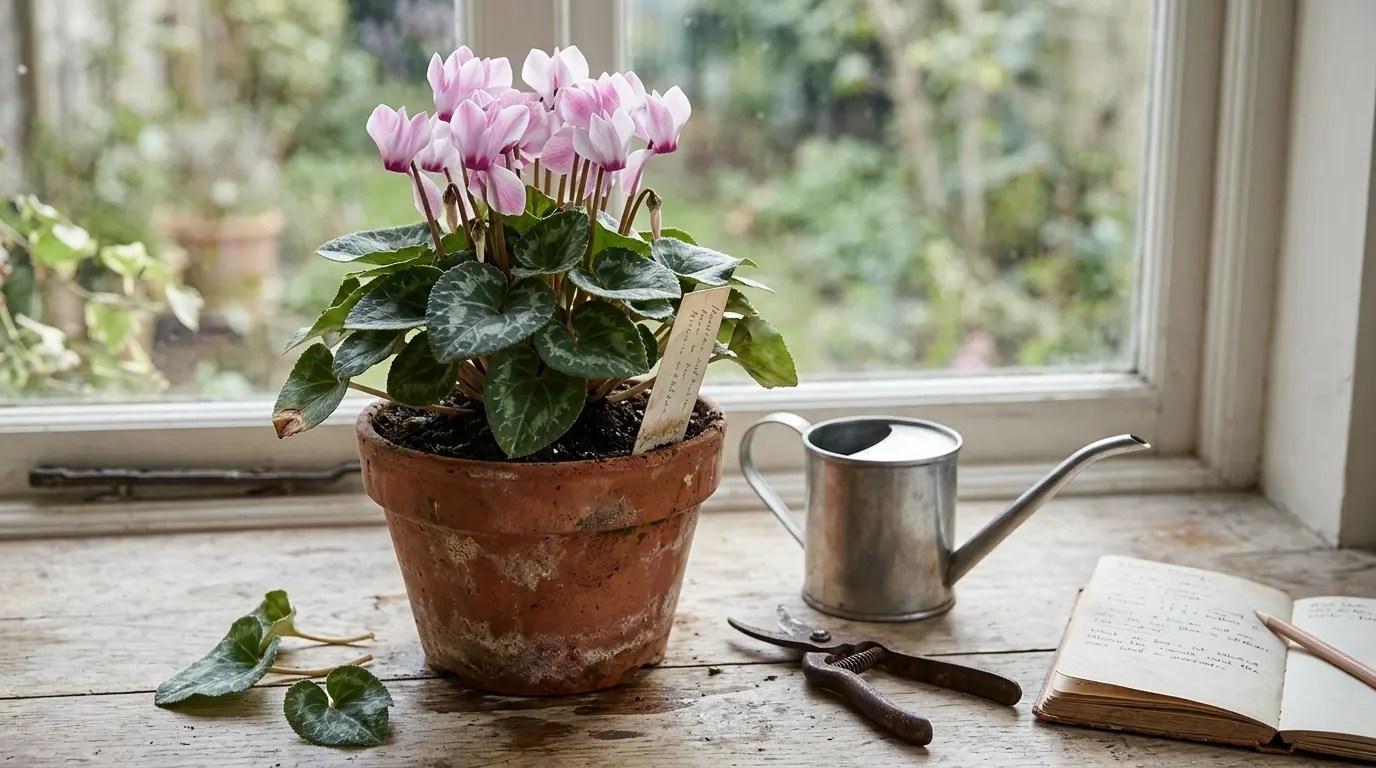
To care for cyclamen indoors, give it bright, indirect light and cool air of 10°C to 18°C (50°F to 65°F). Bottom-water for 15 to 20 minutes when the top 2.5 cm (1 in) of soil feels dry, and keep water off the crown. Let it go dormant and dry in summer, then restart watering in early autumn to flower again.
Most cyclamen are bought in full bloom and thrown out a few months later, usually because yellow leaves in spring look like death. They are not. Cyclamen persicum is a tuberous plant with a built-in rest period, and once you understand that cycle, the same tuber can flower for many years. This guide covers light, temperature, bottom watering, yellow leaves, dormancy and reblooming, with timing for both hemispheres and a clear pet safety warning.
Light and Temperature: The Cool-Climate Secret
Keep potted cyclamen in bright, indirect light with day temperatures of 15°C to 18°C (60°F to 65°F) and nights of 10°C to 13°C (50°F to 55°F). Anything consistently above 20°C (68°F) pushes the plant towards early dormancy and shortens flowering.
Cyclamen come from cool, damp Mediterranean winters, so a warm lounge room is the most common reason for failure. A bright windowsill that gets gentle morning sun is ideal. Avoid hot afternoon sun through glass, which scorches leaves and warms the pot.
Good spots and bad spots:
- Best: an east-facing window, a bright unheated entry, a cool spare room or a enclosed porch that stays above 5°C (41°F).
- Acceptable: a north-facing window in the Northern Hemisphere or a south-facing window in the Southern Hemisphere, as long as it is bright and cool.
- Avoid: above radiators, beside heaters, near heat vents, on top of the fridge or in a sunny west-facing window.
Tip: If you are comfortable in a jumper, your cyclamen is probably comfortable too. Move it to the coolest bright room you have, especially at night.
Cyclamen tolerate brief dips to about 5°C (41°F) but not frost. Do not leave pots against cold glass on freezing nights.
How to Bottom-Water Cyclamen to Prevent Crown Rot
Bottom-water by standing the pot in a saucer or basin of room-temperature water for 15 to 20 minutes, then drain it fully. This wets the roots by capillary action and keeps moisture off the crown, where the leaf and flower stems emerge from the tuber.
Top watering is the main cause of rot. Water pooling in the centre of the plant sits against the tuber and invites fungus. Bottom watering avoids that completely.
- Check the soil. Water only when the top 2.5 cm (1 in) feels dry, or the pot feels noticeably light.
- Fill a basin or saucer with 2 to 3 cm (0.8 to 1.2 in) of room-temperature water.
- Stand the pot in it for 15 to 20 minutes. The soil surface should look slightly damp.
- Lift the pot out and let it drain for several minutes.
- Empty any water left in the saucer and return the plant to its spot.
In a cool room, most pots need water about once a week, sometimes less. Flowering plants in warmer, brighter spots dry out faster. Always judge by the soil, not the calendar.
Warning: Never leave a cyclamen standing in water for hours. Soaked roots rot quickly, and wilting from overwatering looks just like wilting from thirst.
If you need to water from above, use a narrow spout and pour at the pot edge, never onto the tuber or the centre of the plant.
Why Cyclamen Leaves Turn Yellow: Diagnosis and Fixes
Yellow leaves in April to May (Northern Hemisphere) or October to November (Southern Hemisphere) are usually natural dormancy. Yellowing during peak flowering is stress: heat above 20°C (68°F), soggy soil or crown rot from top watering.
Timing is the main clue. Check the calendar, then check the conditions.
Seasonal dormancy looks like this:
- Leaves yellow gradually, a few at a time, after flowering has finished.
- Flowers stop forming and stems droop.
- The tuber stays firm when gently pressed.
Stress yellowing looks like this:
- It happens mid-flowering in autumn or winter.
- Leaves go yellow quickly, often with limp stems.
- The soil is wet, or the room is warm.
- The tuber feels soft, mushy or smells sour.
Fixes for stress yellowing:
- Move the plant to a cooler spot of 10°C to 16°C (50°F to 61°F), away from heaters.
- Stop top watering and switch to bottom watering.
- If the pot is soggy, let it dry until the top 2.5 cm (1 in) is dry before watering again.
- Twist off yellow leaves and spent flowers at the base so no stubs rot on the tuber.
For wider causes of yellowing on any houseplant, see the Plant Clinic page on yellow leaves. Wet, constantly damp mix can also attract fungus gnats, which is another sign you are watering too often.
Summer Dormancy Schedule: Northern vs. Southern Hemisphere
Dormancy starts in late spring in both hemispheres. Leaves yellow from April to May in the Northern Hemisphere and October to November in the Southern Hemisphere. The dry rest runs June to August in the north and December to February in the south.
The cycle is the same everywhere, only the months shift by six.
| Stage | Northern Hemisphere | Southern Hemisphere |
|---|---|---|
| Leaves yellow, flowers finish | April to May | October to November |
| Dry summer rest | June to August | December to February |
| Watering restarts | September | March |
How to manage the rest period:
- As leaves yellow, water less and less. Do not fertilise.
- Once the foliage has died back, trim it off at the tuber.
- Move the pot to a cool, shaded, dry spot, ideally below 25°C (77°F), such as a covered porch, a cool cupboard shelf or a shady corner of a garage with some light.
- Keep the pot upright. Leave the tuber in its pot of dry mix.
- Check every few weeks. If the tuber is firm, leave it. If it shrivels badly, give a very light splash of water at the pot edge.
Tip: Do not store the pot outdoors in rain or in a hot greenhouse. Summer rain on a dormant tuber is a common cause of rot, and heat above 30°C (86°F) can damage it.
How to Wake Up Cyclamen and Get It to Flower Again
In early autumn, September (Northern) or March (Southern), move the pot to bright, indirect light and soak it by bottom watering. Repot if needed, keeping the top third of the tuber above the soil, then feed lightly once new leaves appear.
New growth often shows within two to four weeks as small curled leaves at the top of the tuber.
- Check the tuber. It should be firm with small growth buds on top. Discard it if it is soft, hollow or smells bad.
- Move the pot to bright, indirect light in a cool room.
- Bottom-water thoroughly for 15 to 20 minutes, then drain.
- Repot if the tuber fills the pot. Choose a container only 2 to 3 cm (about 1 in) wider than the tuber, with drainage holes.
- Set the tuber so the top third sits above the mix. This keeps the crown dry and acts as a barrier against rot.
- Resume watering only when the top 2.5 cm (1 in) is dry.
- When several new leaves have opened, feed every two to three weeks with a half-strength, low-nitrogen liquid fertiliser (such as a 10-20-20 ratio) until flowers fade.
Flower buds form as the weather cools and the plant grows a full set of leaves. Cool nights of 10°C to 13°C (50°F to 55°F) help. Remove faded flowers by twisting the whole stem off at the tuber, not snipping halfway.
A light, free-draining mix works best: roughly two parts peat-free potting mix to one part perlite or coarse grit. Terracotta helps the mix dry evenly.
Toxicity Warning: Keeping Pets Safe Around Cyclamen
Cyclamen tubers are toxic to cats and dogs. They contain saponins that cause drooling, vomiting and diarrhoea, and large amounts may cause heart rhythm changes, seizures or death. Keep pots well out of reach and call a vet immediately after any ingestion.
The toxins are most concentrated in the tuber, so a dormant plant in a pot that is knocked over is still a risk. Leaves and flowers are less dangerous but still best avoided.
Pet safety steps:
- Place pots on high shelves or in rooms pets cannot enter.
- Store dormant tubers in a closed cupboard or high spot, not on the floor.
- Pick up fallen leaves and flowers promptly.
- Wear gloves when repotting, since sap can irritate skin, and wash hands afterwards.
If a pet chews the plant, remove any plant material from the mouth and contact a vet or an animal poison helpline straight away. Do not wait for symptoms. Tell them roughly how much was eaten, especially if it was tuber.
Tools and Supplies
- A pot with drainage holes, terracotta preferred
- Light, well-draining potting mix with perlite or grit
- A basin or deep saucer for bottom watering
- Clean snips or scissors
- Low-nitrogen liquid fertiliser
- Gloves for handling tubers
Common Problems and Troubleshooting
Flowers drooping, leaves still green
Drooping usually means thirst or heat. Bottom-water and move the plant somewhere cooler. If the soil is already wet, check for rot.
Plant keeps collapsing in a warm room
Temperatures above 20°C (68°F) make cyclamen think summer has arrived. Relocate to a cool, bright spot.
Grey mould on flowers or leaves
This follows poor airflow and damp. Remove affected parts, improve ventilation and avoid wetting the crown.
Sticky leaves or distorted growth
Check for aphids on new growth and flower buds. Cyclamen can also pick up spider mites in warm, dry air, which is another reason to keep them cool.
Expert Tips and Advanced Techniques
- Pick plants with many unopened buds and firm, compact leaves. They last longer at home.
- Rotate the pot a quarter turn weekly for even growth.
- Mark your dormancy dates on a calendar with the right hemisphere months so you do not discard a resting tuber.
- If you love seasonal flowering pots, the care approach for a poinsettia is also cool-season focused, though the plants differ in what they need.
- Do not panic repot in dormancy. Wait until new growth appears.
FAQ
Why are my cyclamen flowers drooping while the leaves look healthy?
Drooping flowers usually mean the plant is too dry or too warm. Bottom-water for 15 to 20 minutes and move it to a cooler spot of 10°C to 18°C (50°F to 65°F). If the soil is already wet, check the tuber for softness and let the mix dry out.
Can I cut off yellow cyclamen leaves?
Yes. Twist or snip yellow leaves and spent flower stems off at the base of the tuber. Leaving stubs invites rot. During dormancy, wait until the leaves have fully yellowed so the tuber can reclaim some energy before you trim.
How do I know if my cyclamen tuber has rotted or is just dormant?
A dormant tuber is firm, dry and may show small buds on top. A rotted tuber is soft, mushy, hollow or smells sour. If it feels firm, keep it dry and wait until September in the north or March in the south before restarting watering.
What potting soil mix is best for indoor cyclamen?
Use a light, free-draining mix, such as two parts peat-free potting mix to one part perlite or coarse grit. Plant in a pot with drainage holes and keep the top third of the tuber above the soil surface to protect the crown.
What should I do if my dog or cat bites a cyclamen tuber?
Remove any plant material from the pet's mouth and contact a vet or animal poison helpline immediately. Do not wait for symptoms. Tell them how much and which part was eaten. Tubers are the most toxic part and can cause vomiting, drooling and heart problems.
Do cyclamen come back every year?
Yes, with the right cycle. Let the plant go dormant in late spring, keep it dry through summer (June to August north, December to February south), and restart watering in September or March. Healthy tubers can flower for many years.
Can I leave cyclamen outdoors in summer?
Only in a covered, shaded, dry spot where rain cannot soak the pot and temperatures stay moderate. Hot sun and wet summer weather can rot a dormant tuber, so a cool sheltered indoor spot is safer.
Summary and Next Steps
Key takeaways for caring for cyclamen indoors:
- Give bright, indirect light and cool temperatures of 10°C to 18°C (50°F to 65°F).
- Bottom-water for 15 to 20 minutes when the top 2.5 cm (1 in) is dry, and keep the crown dry.
- Yellow leaves in April to May (north) or October to November (south) mean dormancy, not death.
- Rest the tuber dry through summer: June to August in the north, December to February in the south.
- Restart watering in September (north) or March (south), with the top third of the tuber above the soil.
- Cyclamen tubers are toxic to cats and dogs, so keep them out of reach.
Immediate actions:
- Move your cyclamen to the coolest bright spot in your home and switch to bottom watering today.
- Write your hemisphere's dormancy and restart months on your calendar.
- Place the pot, and any stored tubers, where pets cannot reach them.
With these habits, how to care for cyclamen indoors becomes a simple yearly rhythm, and the same plant will keep rewarding you with winter flowers. If other leaves look unhappy, the wilting page in the Plant Clinic is a good next stop.