
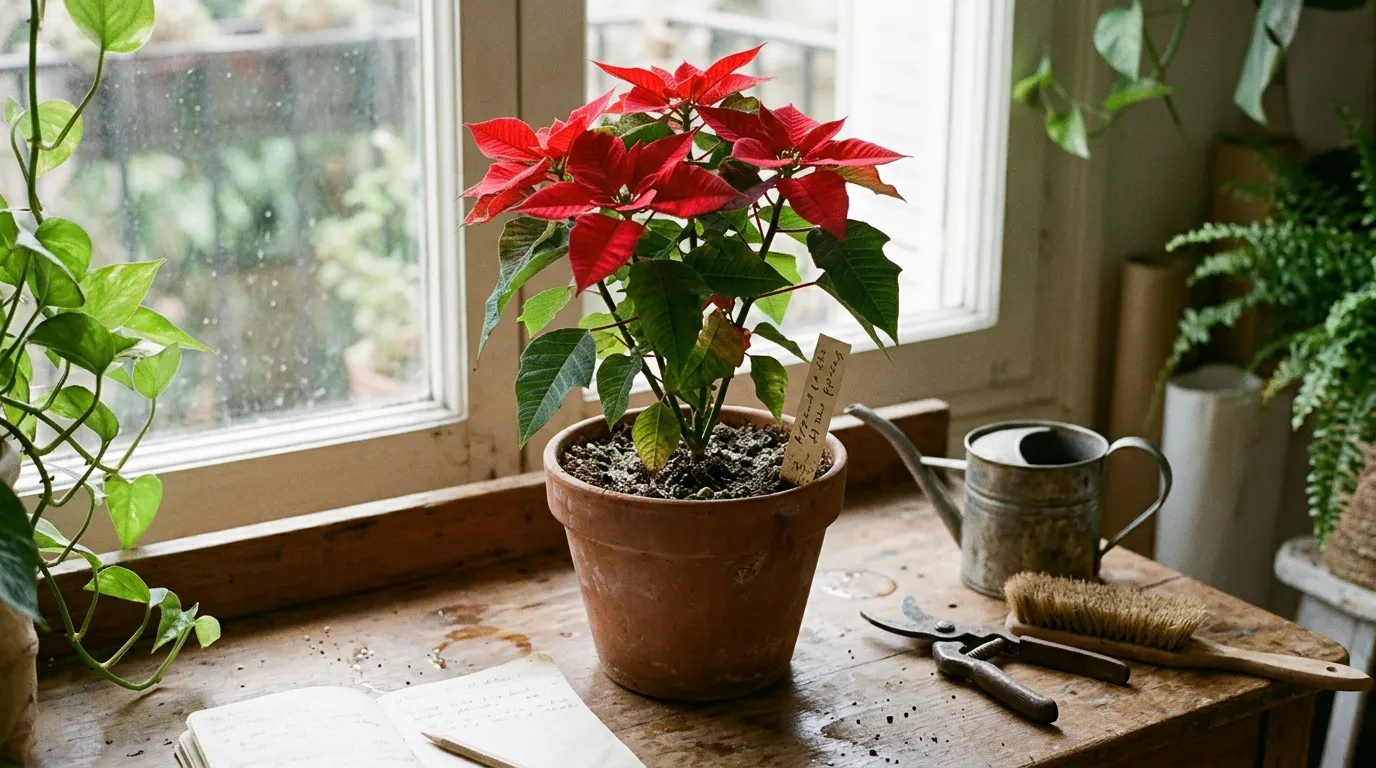
To care for a poinsettia indoors, give it bright, indirect light for at least six hours a day, keep it at 18°C to 21°C (65°F to 70°F), and water only when the top 2.5 cm (1 inch) of soil is dry. Keep it away from cold drafts below 10°C (50°F) and never leave it standing in water.
Most poinsettias are bought in full colour and then lose their leaves within weeks. That is nearly always a placement or watering problem, not bad luck. This guide covers light, watering, temperature, leaf drop, keeping the plant after the holidays and getting it to colour up again, with timing for both the Northern and Southern Hemispheres.
Where Should You Put a Poinsettia for the Best Light?
Poinsettias need at least six hours of bright, indirect light daily. The sunniest window is south-facing in the Northern Hemisphere and north-facing in the Southern Hemisphere. An east-facing window works well in both hemispheres because the morning sun is gentle.
The plant you bring home is a Euphorbia pulcherrima, a shrub from warm, bright climates, so it sulks in dim corners. A spot within about 1 metre (3 feet) of a bright window is ideal.
- Northern Hemisphere: a south window gives the strongest winter light. Pull the pot back slightly if leaves touch the cold glass.
- Southern Hemisphere: a north window is the brightest. In summer, filter it with a sheer curtain.
- Both hemispheres: an east window gives soft morning light with little risk of scorching.
- West windows: acceptable, but hot afternoon sun can bleach the leaves and fade the bracts.
Tip: If the bracts look washed out or the leaf edges are crisp, the light is too harsh. If the stems stretch and the plant leans, it is too dim.
Turn the pot a quarter turn each week so it grows evenly.
How Do You Water an Indoor Poinsettia Correctly?
Water thoroughly only when the top 2.5 cm (1 inch) of soil feels dry. Remove any decorative foil before watering, let the excess drain completely, and empty the saucer within about 20 minutes. Sitting in water is the quickest way to kill a poinsettia.
The red or coloured parts are bracts, which are modified leaves. The true flowers are the small yellow clusters in the centre, called cyathia.
- Check the soil with a finger or a moisture meter.
- Take the plant to the sink and remove any foil sleeve.
- Water slowly until it runs freely from the drainage holes.
- Let it drain for 10 to 15 minutes.
- Return it to its saucer or decorative pot only once it has stopped dripping.
In a warm, bright room this usually means watering every 5 to 10 days, but go by the soil, not the calendar. Pots in foil are the usual culprit for root problems, because water collects out of sight. If you want more detail on technique, see our houseplant watering guide.
What Temperature and Humidity Does a Poinsettia Need?
Keep daytime temperatures at 18°C to 21°C (65°F to 70°F) and nights around 15°C to 18°C (60°F to 65°F). Anything below 10°C to 12°C (50°F to 54°F) can damage the plant. Keep it away from heaters, air conditioners, and exterior doors.
Poinsettias dislike swings more than steady warmth. Common trouble spots include:
- Windowsills where the glass gets icy at night
- Spots beside heating vents or fireplaces
- Hallways near a front door that opens often
- Directly in the path of an air conditioner
Average household humidity is fine. If the air is very dry, grouping plants together helps a little, but do not mist the bracts, as it can encourage grey mould.
Why Is Your Poinsettia Dropping Leaves?
Sudden leaf drop is usually caused by cold shock below 10°C (50°F), a draught, bone-dry soil, or roots sitting in water. Check the soil moisture and the plant's position first, then stabilise both. Some drop is normal as the plant adjusts to a new home.
Use this quick diagnosis:
- All leaves drop within days of purchase: cold shock during transport or a chilly entryway. Move to a stable, warm spot and keep the soil lightly moist.
- Lower leaves yellow and drop, soil is wet: overwatering or trapped runoff. Stop watering, remove the foil, and check the roots. See our guide to root rot in houseplants.
- Leaves wilt and drop, soil is dry and pulling from the pot edge: underwatering. Soak thoroughly and let it drain.
- Leaves drop after being moved near a heater or vent: relocate away from the air flow.
For other symptoms, the Plant Clinic pages on yellow leaves and wilting can help narrow it down.
Warning: Do not respond to leaf drop by watering more. Check the soil first, because wet soil with dropping leaves means too much water, not too little.
How Do You Keep a Poinsettia After the Holidays?
After the bracts fade, water a little less and keep the plant bright and warm. In late spring, prune stems back to 10 to 15 cm (4 to 6 inches), repot into fresh, free-draining mix, and start feeding monthly. This is April to May in the north and October to November in the south.
- Let it rest. When the bracts fade and leaves start to drop naturally, water less often but never let the soil go completely dry.
- Prune. Cut stems back to 10 to 15 cm (4 to 6 inches) using clean secateurs. Wear gloves, as the milky sap can irritate skin.
- Repot. Move into a pot one size larger with drainage holes and a free-draining potting mix. Our guide to the best pots for indoor plants covers options.
- Feed. Use a balanced water-soluble fertiliser (20-20-20 or 15-15-15) monthly while the plant is growing.
- Pinch. Once new shoots reach about 15 cm (6 inches), pinch the tips to encourage a bushier shape. Stop pinching about 8 to 10 weeks before you want colour.
In warm climates, the plant can spend summer (or the warmest months) in bright shade outdoors once nights stay above 15°C (60°F). Bring it in before temperatures drop.
How Do You Get a Poinsettia to Turn Red Again?
Poinsettias are short-day plants. To colour up, give 14 to 16 hours of complete darkness each night and 8 to 10 hours of bright light for 8 to 10 weeks. Start in late September to early October in the north, or late March to April in the south.
| Hemisphere | Start darkness treatment | Colour expected |
|---|---|---|
| Northern | Late September to early October | December |
| Southern | Late March to April | Around June |
Step-by-step darkness schedule
- Keep the plant growing well through summer, fed and pruned as above.
- On the start date, choose a fixed routine, for example light from 7am to 5pm.
- At 5pm, move the plant into a dark closet or cover it with a large opaque box or bin.
- At 7am, bring it back to a bright window (east-facing works well in both hemispheres).
- Water and feed as normal during treatment.
- Continue for 8 to 10 weeks, until the bracts show strong colour.
- Stop the treatment and display the plant in bright, indirect light.
Warning: Light leaks ruin the process. Even a brief exposure to a lamp, a passing torch, or hall light during the dark period can stop the bracts from colouring. Choose a room nobody will enter at night.
Daytime temperatures of 18°C to 21°C (65°F to 70°F) and nights not below 15°C (60°F) suit this stage. A plant that stays green is nearly always getting too much light at night or too little light by day.
What About Southern Hemisphere Christmas Poinsettias in Summer Heat?
In the Southern Hemisphere, poinsettias sold in December are forced to flower in summer heat. Keep them indoors at 18°C to 24°C (65°F to 75°F), out of direct midday sun, and water more often, as warm air dries the soil faster.
This is the opposite of the northern experience. Natural colour in the south arrives around May to July, but nurseries time plants for Christmas, so they are working against the season.
- Place the plant in a bright, air-conditioned room, but out of the direct airflow.
- Shield it from hot north-facing glass in the afternoon with a sheer curtain.
- Check the soil every two or three days in a heatwave.
- Never leave the pot in a hot car or on a sun-baked porch.
For heat planning more broadly, see our guide to protecting plants in a heatwave.
Are Poinsettias Poisonous to Cats and Dogs?
Poinsettias are mildly irritating to cats and dogs, not deadly. The milky sap can cause mouth irritation, drooling, mild vomiting, or skin irritation. Severe poisoning is a myth, but contact your vet if your pet seems unwell or eats a lot.
The sap contains compounds that irritate mucous membranes and skin. Most pets recover without treatment.
- Remove any plant material from your pet's mouth.
- Offer fresh water.
- Wipe sap from skin or fur with mild soap and water.
- Call your vet if vomiting continues, the pet seems lethargic, or you are worried.
It is still best to keep the plant out of reach, as chewing is unpleasant for the animal and makes a mess of the plant.
What Supplies Do You Need?
- Moisture meter or a wooden probe
- Pot with drainage holes and a saucer
- Free-draining potting mix
- Secateurs and gloves
- Balanced water-soluble fertiliser (20-20-20 or 15-15-15)
- Opaque box or a dark closet for the darkness treatment
Expert Tips
- Buy plants that are wrapped in a sleeve for transport, and get them home quickly in cold weather.
- Choose plants with tight, yellow-green cyathia in the centre. Open, pollen-shedding flowers mean the display is ageing.
- Check for tiny flying insects in damp soil. Our guide to fungus gnats explains the fix.
- Treat the plant as a shrub with a seasonal cycle, not a disposable decoration.
FAQ
Can poinsettias tolerate cold drafts or air vents?
No. Poinsettias react badly to cold air below 10°C (50°F) and to hot or cold blasts from vents. Both can cause rapid leaf drop. Place the plant in a stable spot at 18°C to 21°C (65°F to 70°F), away from doors, heaters, and air conditioners.
Why did my poinsettia drop all its green leaves overnight?
The most common cause is cold shock, often from transport or a cold entryway. Other causes include a sudden move near a heater, very dry soil, or waterlogged roots. Check the soil, move the plant somewhere warm and stable, and hold off on fertiliser.
Do east-facing windows provide enough light for poinsettias?
Yes. An east-facing window gives bright morning light that is gentle enough to avoid scorching. It works in both hemispheres. Keep the pot close to the glass, and make sure the plant gets about six hours of bright light a day.
What happens if darkness is interrupted during the reblooming phase?
Stray light can delay or prevent colouring. Poinsettias need long, uninterrupted nights, so even a brief exposure to a lamp can set the process back. Use a closet or opaque box and keep everyone away until morning.
What should I do if my cat or dog chews on a poinsettia leaf?
Remove any leaf from the mouth, offer water, and wipe sap off skin or fur. Mild drooling or a single bout of vomiting is common and usually passes. Call your vet if symptoms continue or your pet has eaten a large amount.
How often should I water an indoor poinsettia?
Water when the top 2.5 cm (1 inch) of soil is dry, usually every 5 to 10 days indoors. Water thoroughly, let it drain, and empty the saucer. In hot weather, check more often.
Can I keep a poinsettia for more than one year?
Yes. With pruning, repotting, feeding, and a short-day treatment, a poinsettia can live and colour for many years indoors, as long as it stays warm and avoids waterlogging.
Summary and Next Steps
Caring for a poinsettia indoors comes down to bright light, steady warmth, and careful watering, with a planned darkness routine if you want colour again.
- Give six hours of bright, indirect light, using a south window in the north, a north window in the south, or an east window anywhere.
- Keep temperatures at 18°C to 21°C (65°F to 70°F) and avoid anything under 10°C (50°F).
- Water only when the top 2.5 cm (1 inch) is dry, and always drain the saucer.
- Leaf drop usually points to cold, drafts, or watering mistakes.
- Prune, repot, and feed in late spring, then start 14 to 16 hours of darkness for 8 to 10 weeks.
- Poinsettias are mildly irritating to pets, not deadly.
Immediate actions:
- Check the soil today and remove any foil from the pot.
- Move the plant away from drafts and into bright, indirect light.
- Mark your hemisphere's darkness start date in your calendar: late September for the north, late March for the south.
With these habits, your poinsettia indoors can stay healthy long after the holidays are over. If you enjoy seasonal bloomers, our Christmas cactus guide is a good next read.