
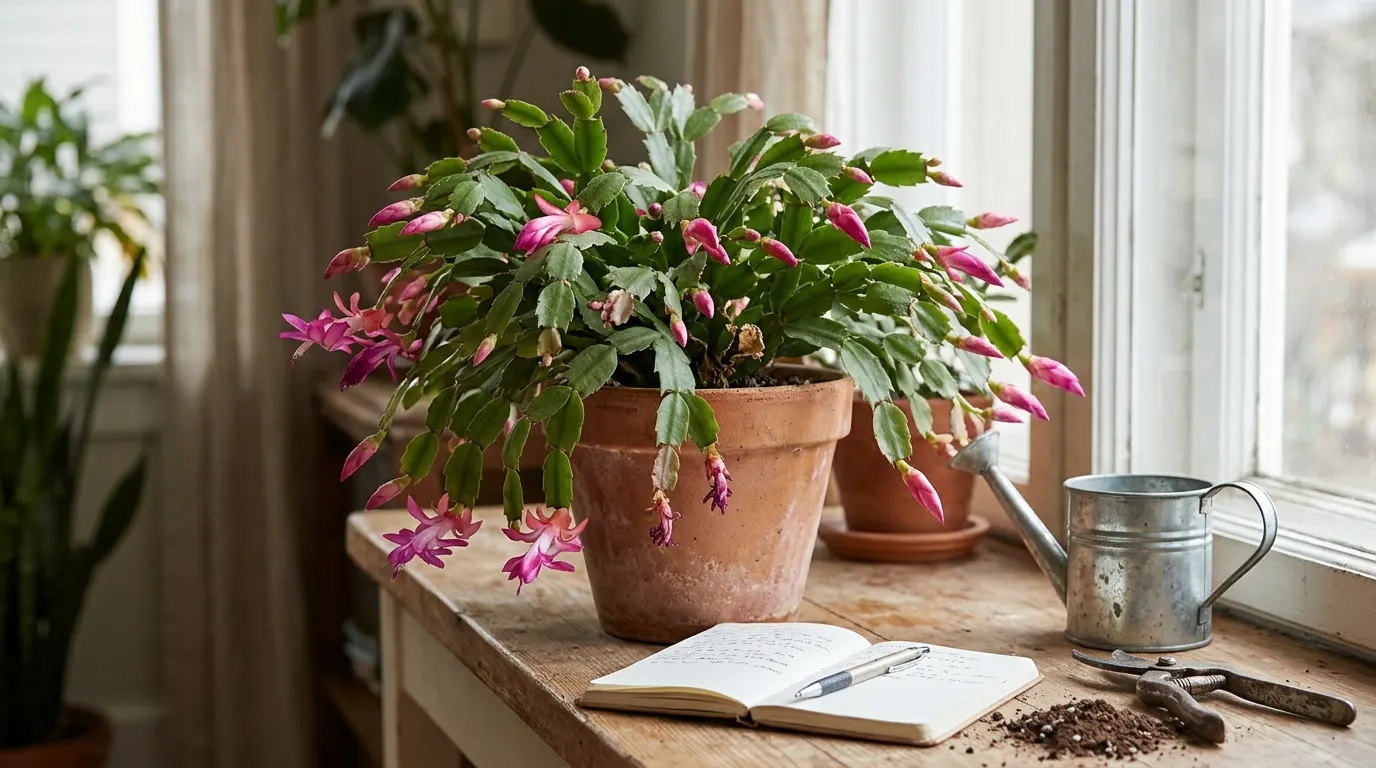
To care for a Christmas cactus indoors, give it bright, indirect light (an east-facing window is ideal), water only when the top 1 to 2 inches of mix feel dry, and keep it away from drafts. To bloom again, give 12 to 14 hours of nightly darkness and cool nights of 50-55°F (10-13°C) for six to eight weeks.
A Christmas cactus (Schlumbergera x buckleyi) is not a desert plant. It is a rainforest epiphyte that grows on tree branches in humid, dappled shade, and most problems come from treating it like a normal cactus. This guide covers light, watering, reblooming with timing for both hemispheres, and how to fix bud drop and limp leaves.
Where Should You Put a Christmas Cactus for Light?
An east-facing window is the best spot in both hemispheres, because it gives gentle morning sun without harsh afternoon heat. The sunniest windows are south- and west-facing in the Northern Hemisphere, and north- and west-facing in the Southern Hemisphere. Filter or step back from those.
In its natural habitat this plant lives under a canopy, so strong direct sun scorches the stem segments (called cladodes). Scorched segments turn reddish, pale or bleached and may feel dry and papery.
Use this quick guide:
- East-facing (all hemispheres): Best choice. Place the plant right at the glass.
- Northern Hemisphere south- and west-facing: Strongest light. Hang a sheer curtain or move the pot 3 to 5 feet back from the glass.
- Southern Hemisphere north- and west-facing: Strongest light. Use the same sheer curtain or step-back approach.
- Northern Hemisphere north-facing / Southern Hemisphere south-facing: Dim. The plant will survive but is less likely to flower well.
Tip: If the segments turn red-tinged or bleached, the light is too strong. If growth is thin and leggy with few flowers, it is too dim.
Temperatures of 60 to 70°F (15-21°C) suit it well through the year. Keep it away from heaters, air conditioners and drafty doorways. Rooms with heat pumps that cycle on and off can stress the plant, so avoid placing it directly in the airflow.
How Do You Water a Christmas Cactus Correctly?
Water thoroughly until liquid runs out of the drainage holes, then empty the saucer. Water again only when the top 1 to 2 inches of mix feel dry. This plant wants light, steady moisture, not the long drought of a desert cactus and not constantly wet roots.
A reliable routine:
- Push a finger or wooden skewer 2 inches into the mix.
- If it comes out dry, water slowly around the pot until water drains freely.
- Let it drain for several minutes and discard the saucer water.
- Check again in several days rather than watering on a fixed schedule.
In warm, bright rooms this may be about once a week. In cool rooms it can stretch to two weeks or more. For more on judging moisture, see our houseplant watering guide.
Soil and pot
Use a chunky, free-draining mix: standard potting soil blended with coarse perlite and fir bark. Choose a pot with drainage holes, and keep it fairly snug, since Christmas cacti flower best slightly root-bound. Our guide to the best pots for indoor plants helps with choosing.
Feeding
Feed with a diluted balanced houseplant fertiliser every four to six weeks during active growth in the warm months. Ease off while buds are forming and stop once the plant is in full flower, then resume after blooming finishes.
How Do You Get a Christmas Cactus to Bloom Again?
Start six to eight weeks before you want flowers. Give 12 to 14 hours of uninterrupted darkness every night and keep night temperatures around 50 to 55°F (10-13°C). Water sparingly until buds appear, then return the plant to bright, indirect light and normal watering.
Christmas cacti are short-day plants. They set buds when nights are long and cool, and even a little artificial light at night can interrupt the process.
Step-by-step reblooming routine
- Count back. Pick your bloom window and subtract six to eight weeks for the start date.
- Move it to a cool spot. Aim for night temperatures of 50 to 55°F (10-13°C), such as an unheated spare room or enclosed porch that stays frost-free.
- Provide darkness. Each evening, put the plant in a closet or cover it with a breathable dark box for 12 to 14 hours. Check that no hallway or street light leaks in.
- Uncover daily. In the morning, return it to bright, indirect light for the day.
- Water lightly. Let the mix dry a little more between waterings, but never let it go bone dry.
- Watch for buds. Tiny pink or red bumps at the segment tips mean the treatment worked.
- Stop moving it. Once buds appear, leave the plant in place, return to regular watering and keep temperatures steady.
Warning: Grow lights, lamps and TV glow in the room can stop buds forming. If the plant never flowers, light at night is a common reason, along with nights that stay above 65 to 70°F (18-21°C).
When Does a Christmas Cactus Bloom in the Northern and Southern Hemisphere?
In the Northern Hemisphere, short autumn days trigger flowers from late November to January. In the Southern Hemisphere, days shorten from April to June, so plants naturally flower from about May to July. A December bloom in the south needs artificial darkness in spring.
| Northern Hemisphere | Southern Hemisphere | |
|---|---|---|
| Natural bud trigger | September to October | March to May |
| Natural bloom time | Late November to January | May to July |
| Start darkness for December bloom | Late September to October | Mid-spring (September to October) with blackout treatment |
Southern Hemisphere growers often wonder why their plant flowers in winter rather than at Christmas. This is normal, because the plant responds to day length, not the calendar date. To flower in December in Australia or New Zealand, follow the darkness and cooling routine above starting in mid-spring, using a closet or dark cover to shorten the day artificially.
Sometimes plants flower slightly off-season. This usually happens when the plant experienced a run of cool, long nights, or when light at night varied. A few early flowers are not harmful.
How Do You Fix and Prevent Christmas Cactus Bud Drop?
Bud drop is caused by sudden changes: drafts, heat above 70°F (21°C), soil that dries out or stays soggy, or moving the pot once buds form. Keep conditions steady at 60 to 70°F (15-21°C), avoid vents and doorways, and water evenly.
Work through this checklist:
- Drafts: Move the plant away from cold doors, opening windows, radiators and air conditioner vents.
- Temperature swings: Avoid placing it where sun-warmed glass gets hot by day and cold at night.
- Moving or turning the pot: Once buds are about 1/8 inch, do not rotate or relocate it.
- Watering swings: Do not let the mix go dry, and do not leave the pot sitting in water.
- Dry air: Keep it away from heating outlets. Grouping it with other plants can slightly raise local humidity.
- Low light: Very dim spots can cause buds to abort. Choose brighter, indirect light.
Dropped buds do not reattach. Fix the cause, keep the plant steady, and it may set a new round of buds or flower normally next season.
Why Are Christmas Cactus Leaves Limp and How Do You Fix Them?
Limp or wrinkled segments mean the plant is not getting water, either because the mix is bone dry or because the roots have rotted. Check the mix and roots: pale firm roots point to underwatering, black mushy roots with a sour smell point to overwatering.
Diagnose first
- Slide the plant out of its pot.
- Feel the mix. If it is dry and light, thirst is the likely cause.
- Look at the roots. Firm, white or tan roots are healthy. Brown or black, soft roots that smell sour are rotting.
If underwatered
Soak the pot in a basin of water for 20 to 30 minutes, let it drain fully, then resume a regular routine. Segments usually plump up within a few days.
If overwatered
- Cut away all soft, dark roots with clean scissors.
- Let the root ball dry for a few hours.
- Repot into fresh, airy mix of potting soil, perlite and bark.
- Water lightly, then wait until the top inch or two is dry before watering again.
For a deeper look, read our guide to root rot in houseplants or use the Plant Clinic wilting guide. If the plant also shows insects or sticky residue, see how to identify houseplant pests and diseases.
Tools and Supplies You Need
A few simple items cover nearly everything:
- Free-draining epiphyte mix (potting soil, coarse perlite, fir bark)
- A clean pot with drainage holes
- A wooden skewer or moisture meter
- A sheer curtain or light diffuser
- A breathable dark box or closet for darkness treatment
- A room thermometer
Expert Tips for Better Flowering
- Prune lightly after flowering by twisting off one or two segments from each branch. This encourages branching and more flowering tips.
- Keep the plant in the same spot during bud set and flowering.
- Mid-day light is fine, but avoid strong afternoon sun through glass.
- Check you actually have a Christmas cactus. It has scalloped, rounded segment edges, while Thanksgiving cactus segments have pointed, claw-like teeth and Easter cactus has bristly, rounded segment edges and flowers in spring.
- Repot only every two to three years, in spring, into a pot just one size larger.
Frequently Asked Questions
Can a Christmas cactus tolerate direct sunlight?
It tolerates a little gentle morning sun but not strong midday or afternoon rays through glass. Hot direct light turns segments red or bleached and can scorch them. In south- or west-facing windows in the Northern Hemisphere, or north- or west-facing windows in the Southern Hemisphere, use a sheer curtain or move the plant back.
Why is my Christmas cactus blooming at the wrong time of year?
The plant flowers in response to long nights and cool temperatures, not the date. A cool, dark spell at any time can trigger buds. In the Southern Hemisphere, natural flowering is usually May to July, which feels early or late compared with Northern Hemisphere Christmas timing.
Should I fertilise my Christmas cactus while it is flowering?
No, it is best to stop feeding while it is in bud and bloom. Resume a diluted balanced fertiliser every four to six weeks once flowering ends and new growth begins. Feeding at the wrong time can push leafy growth instead of flowers.
How do I know if limp leaves are from overwatering or underwatering?
Check the mix and roots. Dry, light mix and firm pale roots mean underwatering, which a good soak fixes. Wet, heavy mix with black, mushy, sour-smelling roots means overwatering and rot. In that case, trim damaged roots and repot into fresh, airy mix.
Can I move my Christmas cactus to a new room once flower buds appear?
It is best not to. Moving the pot after buds form changes light, temperature and humidity, which often causes buds to drop. Once buds are about 1/8 inch, leave the plant in a consistent spot, and avoid even turning the pot.
How often should you water a Christmas cactus indoors?
There is no fixed schedule. Water when the top 1 to 2 inches of mix feel dry, which may be weekly in warm bright rooms or every two weeks or more in cool conditions. Always water thoroughly and let excess drain away.
Summary and Next Steps
Christmas cactus care indoors comes down to bright, indirect light, careful watering, steady temperatures and a cool, dark rest before flowering.
Key takeaways:
- Choose an east-facing window if you can, and filter or step back from the sunniest windows for your hemisphere.
- Water only when the top 1 to 2 inches of mix are dry, and let excess drain.
- To rebloom, give 12 to 14 hours of nightly darkness and 50 to 55°F (10-13°C) nights for six to eight weeks.
- Northern Hemisphere plants bloom late November to January; Southern Hemisphere plants bloom May to July unless forced.
- Bud drop is caused by sudden changes, so keep conditions stable.
- Limp leaves mean the roots are not delivering water, from either drought or rot.
Immediate actions:
- Check the top 2 inches of mix today, and unpot the plant if segments are limp.
- Move the plant away from drafts and strong afternoon sun.
- Mark your calendar six to eight weeks before the bloom time you want, and plan a dark, cool spot.
For other easy-care indoor options, see our guide to caring for succulents indoors.