
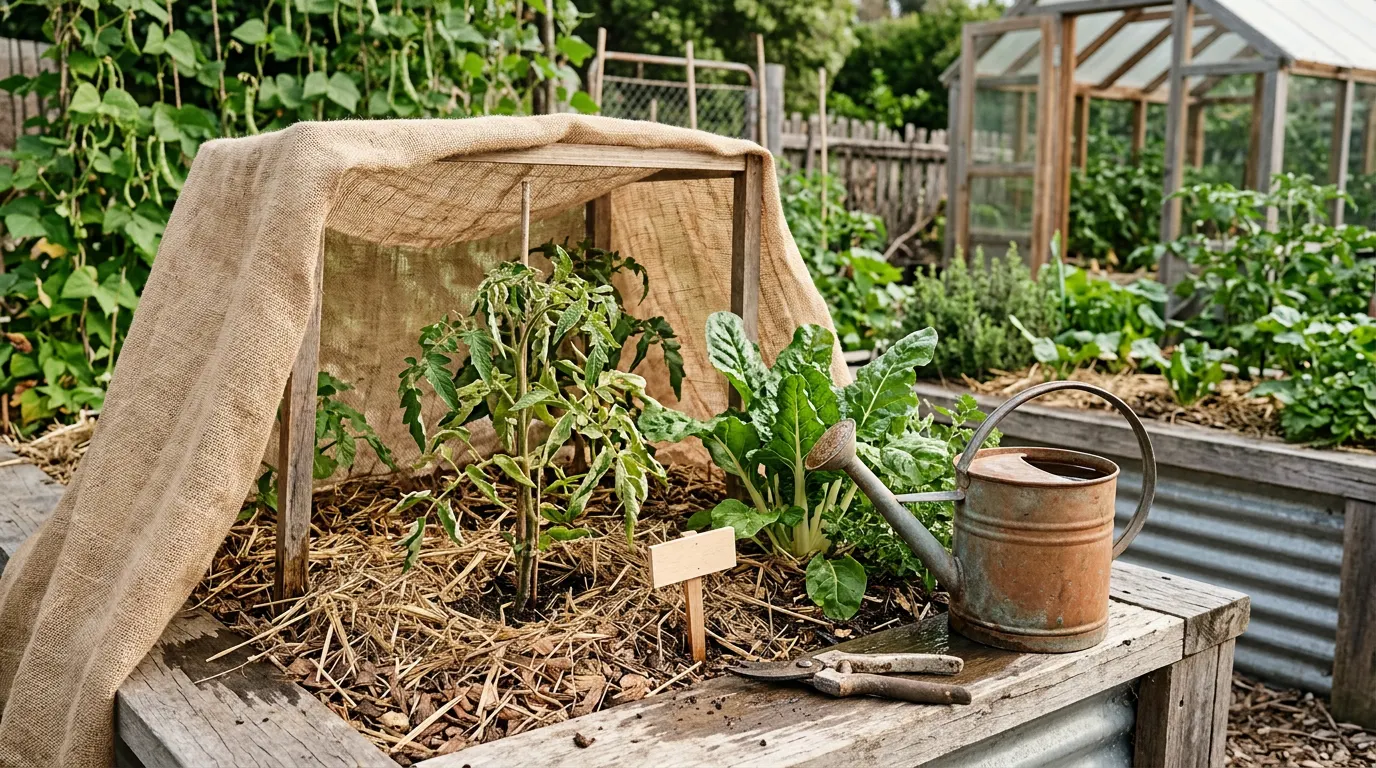
To protect your vegie garden in an Australian heatwave, water deeply in the early morning before the heat arrives. Cover all bare soil with mulch and shade tender crops with 30-50% shade cloth. Move pots into shade, hold off fertilising, and water at the base of plants rather than the leaves. Recover plants gently once temperatures fall.
A run of 40 degree days can undo months of work in a vegie patch. Leaves scorch, flowers drop and soil bakes hard. Most of the damage is preventable if you act before the heat arrives. This guide gives you a plan for the 48 hours before a heatwave, what to do during it, and how to bring plants back afterwards.
Tip: It is mid spring now, which is the best time to put up shade structures, lay mulch and set up drip irrigation. Doing it before December means you are not scrambling when the forecast turns.
What Is Heat Stress and Why Does It Hurt Vegies?
Heat stress happens when a plant loses water through its leaves faster than the roots can replace it. Most common vegies start struggling once days stay above about 35 degrees, and flowers, fruit and young seedlings are hit first.
Plants cope with heat by closing the tiny pores in their leaves. That protects water, but it also stops them cooling down and taking in carbon dioxide, so growth stalls. Hot soil adds to the problem because roots slow down and can be damaged above the surface layer.
Common signs of heat stress include:
- Wilting in the afternoon that recovers by evening (normal and usually harmless)
- Wilting that continues into the next morning (a sign of real stress or dry soil)
- Leaf curling, especially on tomatoes
- White or tan scorched patches on leaves and fruit, known as sunscald
- Flowers dropping without setting fruit, often called blossom drop
- Lettuce and other leafy crops bolting to seed
Some midday wilting is a protective response. Check the plant again in the evening before you panic or start cutting things back.
What Should You Do Before a Heatwave Hits?
Water deeply in the morning, mulch bare soil, put up shade cloth and move pots into shade. Bare soil can get far hotter than the air, so cover it. Seaweed solution can help strengthen roots ahead of the heat.
The Bureau of Meteorology forecast gives you a few days of warning, so use a simple countdown.
- 48 hours out: Check your forecast and your state's water restrictions. Gather shade cloth, stakes, clips and mulch.
- 48 hours out: Top up mulch to about 5 cm, keeping it a few centimetres clear of stems.
- 36 hours out: Apply seaweed solution to the soil. It is a tonic, not a fertiliser, so it is fine to use before heat.
- 24 hours out: Erect shade cloth over beds and stake it firmly so wind cannot tear it loose.
- 24 hours out: Move pots and hanging baskets into shade or against a cool wall.
- Evening before: Water deeply so the whole root zone is moist.
- Morning of: Water again early, before the sun hits the bed.
Pick any ripe or nearly ripe fruit and vegetables before the hottest days. Fruit left on the plant can sunscald, and picking reduces the load on a stressed plant.
Warning: Do not prune, transplant or fertilise in the days before a heatwave. All three push plants to grow when they should be conserving energy.
When and How Should You Water During a Heatwave?
Water early morning or evening, soaking the root zone rather than the foliage. Deep, less frequent watering builds heat-tolerant roots. Avoid waterlogging, since roots need oxygen. A wilting plant in dry soil may need an extra soil-level drink during the day.
Early morning is best because water soaks in before evaporation takes over, and the plant has moisture available as temperatures climb. Evening watering also works, though leaving foliage wet overnight can encourage fungal disease, so aim at the base of the plant.
A few watering rules for extreme heat:
- Water slowly so it sinks in. Hard, dry soil often sheds water, so a slow trickle works better than a blast.
- Check the soil by pushing a finger 5 cm down. If it is dry, water. If it is damp, wait.
- Keep drainage good. Soggy soil in hot weather can lead to root rot, which looks like wilting too. If you are unsure which problem you have, the Plant Clinic wilting guide can help you tell them apart.
- Do not splash cold water over hot leaves. Direct it at the soil.
Can you water in the middle of the day?
Yes, if a plant is wilting and the soil is bone dry. Give it water at soil level only. Midday watering is less efficient because more evaporates, but a plant that is truly out of water needs it more than it needs perfect timing.
Watering under restrictions
Where restrictions apply, focus on the plants that matter most. Use mulch to cut evaporation, water by can or drip line within allowed times, and use kitchen or laundry greywater on established plants if your state allows it. Use only low-salt, plant-friendly detergents and avoid putting greywater directly on leafy crops you will eat raw. For more on low-water habits, see our guide to sustainable gardening in Australia and New Zealand.
What Shade Cloth Is Best for Vegetables?
Use 30% shade cloth for heat-tolerant crops like beans and squash, and 50% for tomatoes, capsicum and salad greens. Position it above or on the west side of beds, leave airflow, and anchor it against wind.
Shade cloth is rated by the percentage of light it blocks. A lower number lets in more sun, which suits crops that need strong light to fruit. A higher number gives more protection but can slow growth if left up all summer.
| Crop type | Suggested shade cloth |
|---|---|
| Beans, zucchini, pumpkin, sweet potato | 30% |
| Tomatoes, capsicum, chillies, eggplant | 30-50% |
| Lettuce, spinach, rocket, herbs like coriander | 50-60% |
| Seedlings and new transplants | 50% |
These are practical starting points rather than strict rules, so adjust to your local conditions.
Tips for setting it up:
- Hang cloth at least 30 cm above the plants so air can move underneath.
- Shade the west side if you can, because afternoon sun is the harshest.
- Use clips or ties to fix it to a frame. Loose cloth acts like a sail in wind.
- Remove or roll back the cloth once the heatwave passes if the weather turns mild, so plants still get enough light to fruit.
In a pinch, beach umbrellas, old bed sheets and even a clothes airer draped with fabric will cut the worst of the sun. Sheets work for a day or two but are not a long-term fix.
Does Mulch Really Help in Extreme Heat?
Yes. Mulch shades the soil, slows evaporation and keeps the root zone cooler. Use straw, sugarcane or grass clippings about 5 cm deep. In bushfire-prone areas, consider gravel or pebbles near buildings. Living mulches like pumpkin or sweet potato also protect soil.
Bare soil in full sun heats up fast and dries out quickly. A layer of organic mulch acts like a blanket, keeping moisture in and temperature swings down. If you want proof, push a soil thermometer into a mulched bed and a bare one on a hot afternoon. The difference is usually obvious.
Good mulch choices include:
- Sugarcane mulch: Easy to spread and breaks down slowly.
- Pea straw or lucerne: Adds nutrients as it decomposes.
- Grass clippings: Free, but apply thinly and let them dry first to avoid a slimy mat.
- Gravel or pebbles: Better in bushfire zones, where dry organic mulch near the house can be a risk. Our bushfire-resistant garden guide covers this in detail.
Keep mulch a few centimetres away from stems to prevent rot. Living mulches such as sweet potato, pumpkin and nasturtium shade the ground with their leaves and work well in larger beds.
How Do You Protect Potted Vegies and Seedlings?
Move pots against a cool wall, under a patio or into tree shade, because pots dry out much faster than garden beds. Water them more often and shield young seedlings with temporary shade. Avoid heat-reflecting surfaces.
Pots have less soil to buffer heat, and dark pots absorb sunlight. On a 40 degree day a pot on concrete can cook its roots. If you grow on a balcony, our balcony vegetable garden guide has layout ideas that help with heat.
What works for pots:
- Group pots together so they shade each other's sides.
- Stand them on timber or soil rather than hot paving.
- Mulch the surface of each pot.
- Use self-watering pots or a saucer reservoir, and check them twice a day.
- Wrap dark pots in light-coloured fabric or place them inside a larger pot.
Reflected heat from walls, paving and fences
Heat bouncing off a brick wall or fence can scorch plants even when they are under shade cloth. Lean sheets of cardboard or old carpet against hot surfaces, or move plants a metre or more away. Damage from reflected heat often shows a day or two later, so keep checking after the temperature drops.
Should You Fertilise Heat-Stressed Plants?
No. Fertiliser triggers new growth, which stresses plants in extreme heat. Concentrate on watering and shade. Once temperatures drop below about 30 degrees, give a gentle feed with a liquid organic fertiliser.
Feeding a struggling plant is like asking someone with a fever to run a race. Soft new growth wilts and burns easily, and fertiliser salts can add to the stress when soil is dry. If you make your own plant food, save it for cooler weather. Our guide to homemade natural fertilizers has recipes to use once the heat breaks.
Seaweed solution is the exception. It is generally used as a tonic to support roots and stress tolerance, so it is a reasonable choice before or during hot spells. Anti-transpirant sprays are sometimes used to reduce water loss, but results vary, so treat them as an extra rather than a replacement for shade and water.
How Do You Help Vegies Recover After a Heatwave?
Keep watering consistently, remove badly scorched leaves only after the heat has passed, check for pests and disease, and resume gentle feeding once it cools. Some damage from reflected heat only appears afterwards.
A simple recovery timeline:
- Day 1-2 after: Keep watering deeply and regularly. Leave scorched leaves in place, since they still shade the plant below.
- Day 3-5: Prune off leaves that are fully brown and crisp. Leave partly green ones.
- Week 1: Look for pests such as aphids and mites, which often move in on weakened plants. Our DIY organic pest control guide covers gentle options.
- Week 1-2: Start a light liquid feed once days are reliably below 30 degrees.
- Week 2 onwards: Resow or replant anything that has not recovered. Fast crops like beans and lettuce can be replaced quickly.
Tomatoes that dropped blossoms will usually set fruit again when nights cool down. Do not pull plants out too early, because many bounce back with new growth.
Which Vegies Handle Australian Summer Heat Best?
Sweet potato, Warrigal greens, okra, chillies, eggplant, beans and pumpkin cope best with heat. Lettuce, spinach, peas and brassicas struggle, so grow them in shade or save them for cooler months.
If you are planning ahead, choose crops that suit your climate:
- Tough in heat: Sweet potato, Warrigal greens, okra, chillies, eggplant, zucchini, pumpkin, climbing beans
- Need shade: Tomatoes, capsicum, cucumbers, coriander, basil in afternoon sun
- Better left for autumn: Lettuce, spinach, peas, broccoli, cauliflower
Companion planting can also help, for example tall crops shading low ones. See our guide to the best companion plants for summer crops for pairings that work in hot weather.
Common Problems and Quick Fixes
Leaves are scorched or wilting at midday. Add shade, water the soil and avoid pruning or feeding. Check again in the evening, because many plants recover overnight.
Potted vegies are drying out. Move them into shade, water in the evening and mulch the surface.
Water runs off hard, dry soil. Water slowly, in several short rounds, and add mulch so the soil can absorb moisture.
Tomato leaves are curling. This is usually a response to heat and dry spells, and the plant can recover. Keep watering consistent and add shade.
Lettuce is bolting. Heat triggers flowering. Pick what you can and replace with a heat-tolerant crop.
Expert Tips for Heat-Proof Beds
- Build wicking beds or install drip irrigation on a timer so watering is steady.
- Test your soil with a thermometer at about 5 cm depth, comparing mulched and bare spots.
- Choose a permanent shade frame that holds cloth, so you can pull it on in minutes.
- Plant taller crops on the west side to shade smaller ones.
- Adjust for your climate. Tropical areas need shade and drainage in humid heat, while arid inland gardens need more attention to wind and evaporation.
Frequently Asked Questions
What temperature is too hot for vegetable plants?
Most vegies begin to struggle once temperatures stay above about 35 degrees, and fruit set on tomatoes and capsicum often falters even earlier. Leafy greens suffer sooner than heat-lovers like okra and sweet potato. Shade, mulch and steady watering help plants cope with hot spells.
Is it OK to water vegies at midday in a heatwave?
It is better to water early morning or evening, but midday watering is fine if a plant is wilting in dry soil. Water the soil, not the leaves, and soak slowly. Some afternoon wilting is normal and recovers in the evening, so check the soil first.
Which vegies handle Australian summer heat best?
Sweet potato, Warrigal greens, okra, chillies, eggplant, beans, zucchini and pumpkin generally cope well. Tomatoes and capsicum can do well with afternoon shade. Lettuce, spinach and peas prefer cooler weather and are better grown in autumn or spring.
Will shade cloth reduce my harvest?
Used sensibly, shade cloth usually protects the harvest by preventing scorched leaves and dropped flowers. Too much shade for too long can slow fruiting. Use 30-50% cloth, and take it off or pull it back when the weather is milder.
Why are my tomato leaves curling in the heat?
Tomato leaves curl to reduce the surface exposed to the sun and cut water loss. It is often a temporary stress response to heat or inconsistent watering. Add shade, mulch the soil and water deeply and regularly, and the plant should recover when the weather cools.
How do I protect vegies under water restrictions?
Mulch thickly to cut evaporation, water at the base of plants within allowed times, and group thirsty crops together. Use greywater on established plants if your state permits it. Prioritise fruiting crops and let low-value plants go if water is short.
Can I use bed sheets as shade?
Yes, light-coloured sheets work well for a day or two. Hang them above the plants on stakes or a frame so air can circulate, and secure them against wind. For repeated heatwaves, shade cloth lasts longer and breathes better.
Should I pick fruit early before a heatwave?
Yes, harvest ripe or nearly ripe fruit before extreme heat. It prevents sunscald and takes some load off the plant. Tomatoes picked at the first blush of colour will ripen indoors, so you lose little flavour.
Summary and Next Steps
To protect your vegie garden in a heatwave, prepare early, shade the plants, keep soil cool and wait to feed until the heat breaks.
Key takeaways:
- Water deeply in the early morning, and aim at the soil rather than the leaves.
- Mulch bare soil about 5 cm deep to cool roots and hold moisture.
- Use 30-50% shade cloth, matched to the crop and anchored well.
- Move pots into shade and watch for reflected heat from walls and paving.
- Do not fertilise in extreme heat. Resume gentle feeding once it is below about 30 degrees.
- Be patient with recovery, since some damage only shows days later.
Do these next:
- Check your beds today for bare soil and spread mulch before summer arrives.
- Buy or build a simple shade frame and test it in place.
- Save the Bureau of Meteorology forecast in your phone so you can start your 48-hour countdown as soon as a heatwave appears.