
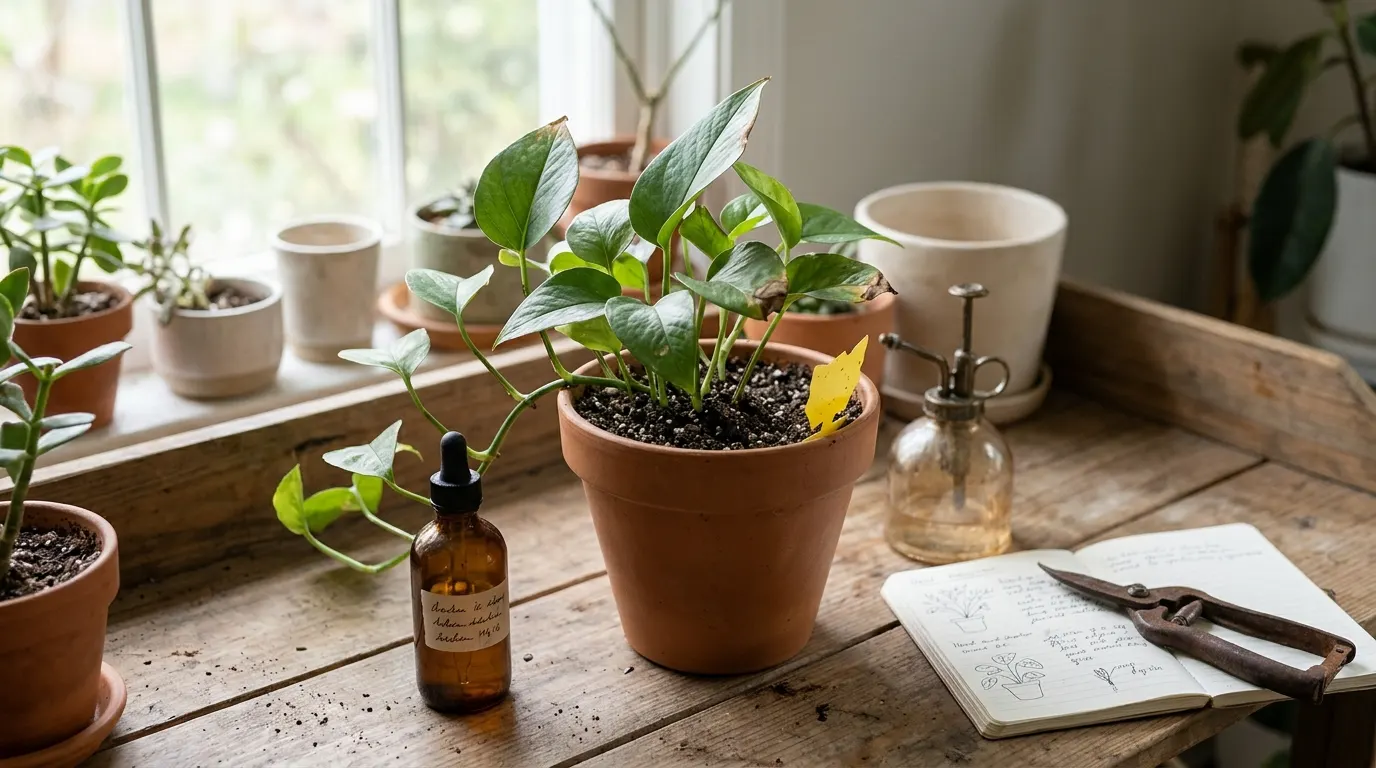
To get rid of fungus gnats in houseplants, attack both life stages at once. Let the top 5 cm (2 inches) of soil dry out, place yellow sticky cards at soil level to catch adults, and drench the soil with BTI (Bacillus thuringiensis israelensis) or a 1:4 mix of 3% hydrogen peroxide and water to kill larvae. Repeat for three to four weeks.
Those tiny black flies hovering around your pots are only the visible part of the problem. Most of the population is living in the soil as larvae, which is why swatting adults never works on its own. This guide covers what causes fungus gnats, the natural fixes that work, exact mixing ratios in metric and imperial, timing for both hemispheres, and how to stop them coming back.
What Causes Fungus Gnats in Houseplants?
Fungus gnats (family Sciaridae) are caused by persistently damp potting mix and decaying organic matter. Females lay eggs in the moist top 1 to 2.5 cm (0.5 to 1 inch) of soil, and the larvae feed on fungi, decaying material and fine roots.
Adults are small, dark, slow-flying insects about 2 to 4 mm long. They do not bite and do not eat your plants. The larvae are the real concern: they are thin, translucent worms with black heads, and they live in the soil.
The usual triggers are:
- Watering on a fixed schedule rather than when the plant needs it
- Pots without drainage holes, or saucers left holding water
- Peat-heavy potting mixes that stay wet at the surface
- Dead leaves and organic debris sitting on the soil
- New plants or bags of potting mix carrying eggs indoors
- Outdoor plants brought inside for the cooler months
A female can lay up to 200 eggs, and the cycle from egg to adult takes roughly 17 to 28 days depending on temperature. That is why a single missed treatment can restart the whole infestation.
Tip: Not sure it is fungus gnats? Fruit flies hover near fruit and bins, while fungus gnats stay close to the soil and run across the surface when disturbed. Our guide to identifying houseplant pests and diseases helps tell them apart from other pests.
What Is the Best Natural Plan to Eliminate Fungus Gnats?
The most reliable natural plan combines four actions: dry the soil surface, trap adults, kill larvae with a biological or peroxide drench, and cover the soil with a dry barrier. Running all four for at least three weeks covers a full life cycle.
Here is how the methods compare:
- Sticky cards: instant results on adults, no effect on larvae
- Soil drying: slows egg laying and larval survival, takes days to work
- BTI drench: kills larvae over one to two weeks, safe for plants and pets when used as directed
- Hydrogen peroxide drench: quick knockdown of larvae and eggs, best as a one-off or occasional treatment
- Sand or grit barrier: blocks egg laying, works long term
No single method clears an infestation reliably. Adults emerge continuously for weeks, so the aim is to cut off the supply of new ones.
How Do You Get Rid of Fungus Gnats Step by Step?
Start by letting the soil dry, then trap the adults, drench the larvae and add a barrier. Keep treating for 21 to 28 days so every egg and larva laid before treatment has passed through and been caught.
- Check the pot. Make sure it has drainage holes and empty any saucer of standing water. Remove dead leaves and surface debris.
- Let the soil dry. Hold off watering until the top 5 cm (2 inches) is dry. Push a finger or a wooden skewer into the mix to check. Plants that cannot tolerate this, such as ferns, should dry only the top 2.5 cm (1 inch).
- Set sticky traps. Cut yellow sticky cards into 5 cm (2 inch) squares and push them upright or lay them flat so they sit 1 to 2.5 cm (0.5 to 1 inch) above the soil. Replace them when covered.
- Drench the soil. Use either BTI or hydrogen peroxide (details below).
- Add a dry barrier. Spread 6 to 12 mm (0.25 to 0.5 inch) of coarse sand or fine grit over the soil surface.
- Repeat for three to four weeks. Re-treat weekly and keep the traps in place until no new gnats appear for a full week.
How Do You Use BTI to Kill Fungus Gnat Larvae?
BTI is a naturally occurring soil bacterium that is toxic to fungus gnat larvae but not to plants, people or pets when used as directed. Mix according to the product label, commonly about 15 ml (1 tablespoon) per 1 litre (1 quart) of lukewarm water, and soak the soil.
BTI is sold as granules, dunks or soluble powder. Products vary in strength, so always follow the label if it differs from the ratio above.
- Steep the BTI in lukewarm water for the time the label specifies, usually 30 minutes or more.
- Water the plant slowly until liquid reaches the drainage holes, so the whole root zone is treated.
- Repeat with each watering or weekly for 21 consecutive days.
Larvae stop feeding soon after eating treated soil and die within days. Because BTI only works on larvae, keep your sticky cards up to catch adults still emerging.
Tip: Pour the mix on the soil rather than misting the leaves. The larvae need to contact or eat the bacteria in the potting mix.
How Do You Mix a Hydrogen Peroxide Drench for Gnats?
Mix 1 part 3% hydrogen peroxide with 4 parts room-temperature water, for example 100 ml of peroxide to 400 ml of water (about 3.4 fl oz to 13.5 fl oz), and pour it through the soil. It fizzes on contact and kills larvae and eggs near the surface.
For larger pots, scale the ratio:
- 200 ml peroxide plus 800 ml water (roughly 7 fl oz plus 27 fl oz)
- Or 1 cup peroxide plus 4 cups water
Let the top of the soil dry before applying, then water until the mix runs from the drainage holes. Wait a week and repeat once or twice if gnats persist.
Warning: Peroxide can damage fine roots and beneficial soil life if overused. Use it as an occasional knockdown, not a weekly habit, and test on delicate plants such as ferns or calatheas by treating only once. Never use stronger than 3% household strength.
Do Sand and Diatomaceous Earth Stop Fungus Gnats?
A dry top layer of coarse sand or grit helps stop adult gnats from reaching damp soil to lay eggs. Apply 6 to 12 mm (0.25 to 0.5 inch) across the whole surface and keep it dry by watering from below.
Use sand with a grain size of about 1 to 3 mm, not fine builders sand, which can pack down and hold water. Perlite or fine gravel also works.
Food-grade diatomaceous earth can be dusted lightly on the surface. It works only while dry and loses effect once watered, so it suits plants that you bottom water. Avoid breathing the dust and apply it gently.
Beneficial nematodes (Steinernema feltiae) are another biological option. They are watered into the soil and attack larvae, but need moist soil and fresh stock, so follow the supplier's instructions closely.
When Do Fungus Gnats Peak in Each Hemisphere?
In the Northern Hemisphere, fungus gnat problems typically surge from September to November. In the Southern Hemisphere, including Australia and New Zealand, the peak runs from March to May. Cooler, darker weather slows plant growth so soil stays wet longer.
As light levels fall, many houseplants use far less water, in some cases up to half as much. If you keep watering at your summer rhythm, the potting mix stays damp, which is exactly what larvae need.
- Northern Hemisphere (US, UK, Canada): Bring plants in before nights drop below about 10 to 12°C (50 to 54°F). Check pots for gnats and larvae before they come inside, and cut back watering from September.
- Southern Hemisphere (Australia, New Zealand): Do the same from March. Inspect plants that spent summer on balconies or verandas before moving them indoors.
Infestations can also appear in the warmer months if a pot is overwatered, so the soil moisture rule applies year round. For a refresher on adjusting water through the seasons, see our houseplant watering guide.
How Do You Stop Fungus Gnats Coming Back?
Prevent fungus gnats by keeping the soil surface dry between waterings, bottom watering where suitable, emptying saucers within 30 minutes, removing dead foliage, and quarantining new plants. These habits remove the damp, decaying conditions that gnats need to breed.
Long-term habits that work:
- Water by need, not schedule. Use a wooden skewer or moisture meter and water only when the top 2.5 to 5 cm (1 to 2 inches) is dry.
- Bottom water. Stand the pot in a tray of water for 15 to 30 minutes, then drain fully. The surface stays dry.
- Choose free-draining mix. Blend in perlite or bark so the mix does not stay soggy. Our guide to the best pots for indoor plants covers drainage in more detail.
- Quarantine new plants. Keep them apart for two to three weeks and check the soil.
- Treat outdoor mix before use. Garden soil or reused mix can be pasteurised by heating at 82°C (180°F) for 30 minutes, then cooling fully.
- Clean up regularly. Remove fallen leaves and spent flowers from the soil surface.
Overwatering that feeds gnats also causes decay below the surface. If plants are yellowing or wilting despite damp soil, read our guide to root rot in houseplants.
What Tools and Supplies Do You Need?
You need only a few inexpensive items: yellow sticky cards, a BTI product or 3% hydrogen peroxide, coarse sand, and a way to check soil moisture. Everything else is optional.
- Yellow sticky cards or traps
- BTI granules, dunks or soluble powder
- 3% household hydrogen peroxide
- Coarse horticultural sand, fine grit or perlite (1 to 3 mm)
- Watering can with a gentle rose or diffuser
- Moisture meter or wooden skewer
- Food-grade diatomaceous earth (optional)
- Shallow dish with 15 ml (1 tablespoon) apple cider vinegar and 2 drops of dish soap as a supplementary adult trap
Troubleshooting: Why Are the Gnats Still There?
If gnats persist after a week, the cause is almost always incomplete treatment: soil staying wet, adults still emerging from earlier eggs, or treatments stopped too soon.
I treated once and they came back. Why?
Eggs and larvae at different stages survive a single treatment. Repeat weekly for at least three weeks.
The sticky cards are catching gnats but I still see more.
That is normal in the first week or two as already-developed pupae emerge. Keep the cards up and keep treating the soil.
Only one plant is affected. Should I treat them all?
Isolate the infested plant and check others. Gnats move easily, so inspect nearby pots and treat any with larvae or very damp soil.
The soil will not dry because the plant is large or in a cold room.
Repot into a more open mix, use a smaller pot relative to the root ball, and move the plant somewhere brighter and warmer if possible.
My plant is sensitive to dry soil.
Keep the lower root zone moist, but use a sand barrier and bottom watering so the top 1 to 2 cm (0.5 to 1 inch) stays dry.
For persistent pest problems that go beyond gnats, the Plant Clinic pest infestation page can help you narrow down the cause.
Expert Tips for Faster Results
- Place sticky cards near the plants you suspect first, not across the room.
- Treat all plants in one room at the same time, so survivors do not recolonise.
- Water BTI in with every watering during the three-week window if you can.
- Replace the top 2.5 cm (1 inch) of soil with fresh mix in badly infested pots before applying a barrier.
- Do not mist the soil surface. Water the pot, not the air around it.
- Keep cinnamon, sprays and home remedies as extras, not substitutes for drying the soil and treating larvae.
Frequently Asked Questions
Will fungus gnats kill my houseplants if left untreated?
Usually not mature, healthy plants, but they can harm seedlings, cuttings and weak plants. Larvae feed on fine roots, which can stunt growth and invite rot. Heavy infestations also point to overwatering, which is often the bigger threat. Treat early to protect young or stressed plants.
What is the exact ratio of hydrogen peroxide to water for fungus gnats?
Mix 1 part 3% hydrogen peroxide with 4 parts room-temperature water. For example, use 100 ml peroxide with 400 ml water, or 1 cup with 4 cups. Pour it through the soil once the surface has dried, then repeat after a week if needed.
Does bottom watering completely stop fungus gnats?
No, but it greatly reduces them. Bottom watering keeps the top layer of soil dry, which discourages egg laying and larval survival. Gnats can still breed if the whole pot stays wet, so combine it with free-draining mix and watering only when the soil needs it.
Can I use cinnamon to kill fungus gnat larvae?
Cinnamon may have mild antifungal effects on the soil surface, but it is not a reliable way to kill larvae. Use it as a minor extra at most. BTI, a hydrogen peroxide drench, and drying the soil are far more dependable.
How long does it take to get rid of fungus gnats?
Expect three to four weeks. Adults die quickly, but eggs and larvae in the soil keep producing new ones through a life cycle of roughly 17 to 28 days. You should notice fewer gnats after the first week, with full control by week four.
Why do fungus gnats get worse in autumn and winter?
Shorter days and cooler temperatures slow plant growth, so plants drink less water. If you keep watering as before, the soil stays damp longer. Indoor heating then keeps the room warm enough for gnats to keep breeding. Cut back watering as light drops.
Are fungus gnat treatments safe for pets?
BTI is widely used because it targets fly larvae and is considered safe for pets and people when used as directed. Keep sticky cards out of reach of curious pets, and prevent them from eating diatomaceous earth or peroxide mixes.
Can I use the same treatment on all my houseplants?
Mostly, yes, but sensitive plants such as ferns and calatheas may react to peroxide. BTI and sand barriers are the gentlest options. For ferns, see our Boston fern care guide for watering that keeps roots moist without waterlogging.
Summary and Next Steps
Getting rid of fungus gnats in houseplants comes down to breaking the life cycle and removing the damp conditions they need.
Key takeaways
- Fungus gnats breed in constantly damp potting mix and decaying organic matter.
- Adults are only part of the problem; larvae in the soil keep the cycle going.
- Yellow sticky cards catch adults, while BTI or a 1:4 hydrogen peroxide drench kills larvae.
- Let the top 2.5 to 5 cm (1 to 2 inches) of soil dry between waterings.
- Treat for 21 to 28 days to cover the full life cycle.
- Watch for outbreaks from September to November in the Northern Hemisphere and March to May in the Southern Hemisphere.
Do these three things today
- Stop watering until the top 5 cm (2 inches) of soil is dry, and empty every saucer.
- Put yellow sticky cards at soil level on every affected pot.
- Drench the soil with BTI or a 1:4 hydrogen peroxide mix, then add a 6 to 12 mm (0.25 to 0.5 inch) layer of coarse sand once the soil has dried.
Set a reminder to repeat the drench weekly for three weeks, and your gnat problem should be under control.