
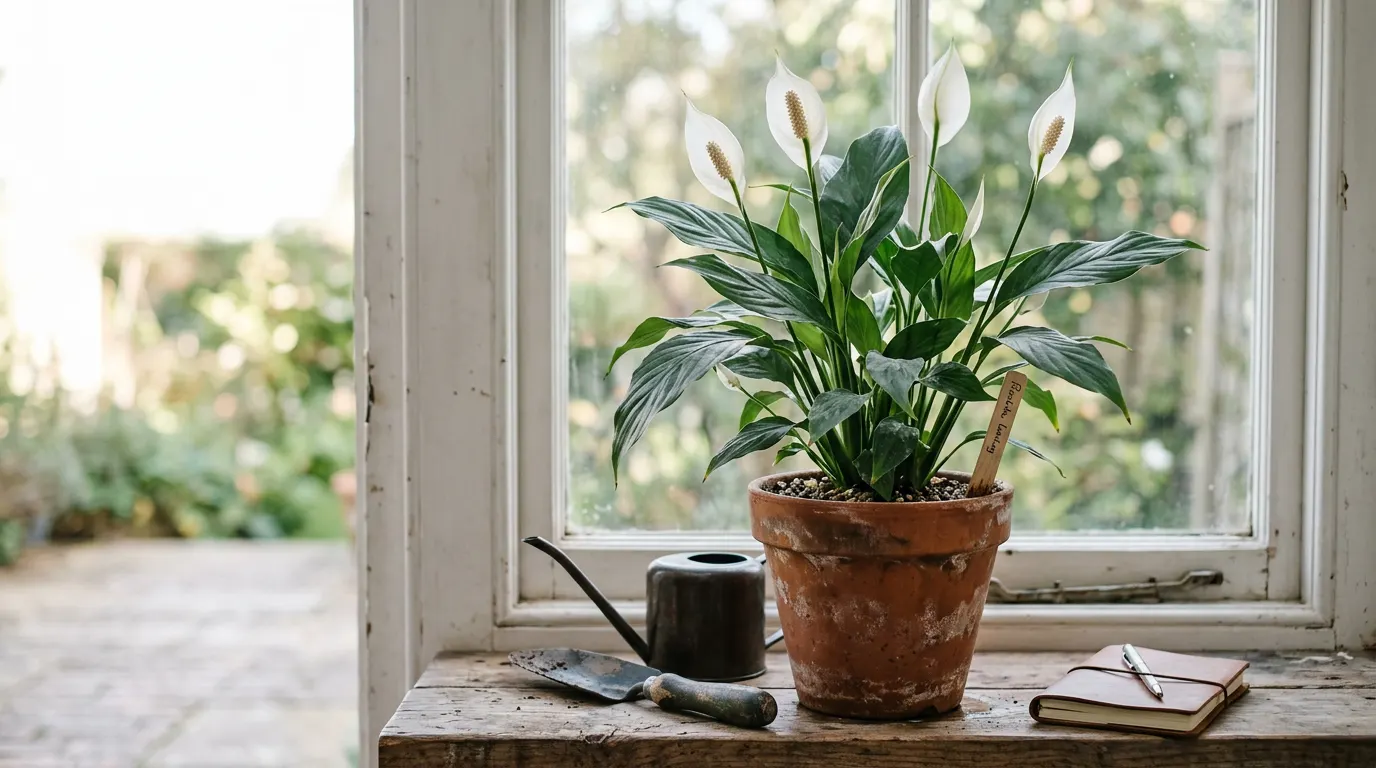
Give your peace lily bright, indirect light and water it when the top inch of soil feels dry, usually about once a week. Keep it at 65-80°F (18-27°C) with moderate humidity, in a pot with drainage holes. Drooping usually means thirst, and yellow leaves usually mean overwatering. Repot every 1-2 years in spring.
Peace lily care is simple once you can read the plant. It tells you what it needs through its leaves, and most problems come down to water, light or a crowded pot. This guide covers each of those, plus a step-by-step way to tell a thirsty droop from a rotting droop.
Quick Facts for Peace Lily Care
A peace lily (Spathiphyllum) is a rainforest understory plant in the Araceae family. That origin explains its preferences: filtered light, steady moisture and warm, humid air.
| Factor | What it wants |
|---|---|
| Light | Bright, indirect; tolerates lower light |
| Water | When the top inch of soil is dry |
| Temperature | 65-80°F (18-27°C) |
| Humidity | Moderate to high |
| Soil | Airy mix with perlite or bark, pH about 5.8-6.5 |
| Repotting | Every 1-2 years, in spring |
| Pets | Toxic to cats and dogs |
What Light Does a Peace Lily Need Indoors?
Peace lilies grow best in bright, indirect light, such as a spot near a north- or east-facing window (south-facing in the Southern Hemisphere's equivalent: north-facing gets the strongest light there). They tolerate lower light but bloom less. Direct sun scorches and yellows the leaves.
A practical test: hold your hand a foot above the plant at midday. A soft, blurry shadow means good indirect light. A sharp, dark shadow means too much direct sun. No visible shadow means it is too dim.
- Best spots: a few feet back from a bright window, or behind a sheer curtain.
- Too much sun: bleached or yellow patches, crisp brown edges.
- Too little light: dark green but sparse leaves, long stalks, no flowers.
Sources disagree on low light. Some call it fine, others say avoid it. Our view: a peace lily will survive in low light for years, but it will not flower and it grows weak. Treat low light as survival, not thriving.
Tip: In the Northern Hemisphere, a south-facing window needs a sheer curtain or a spot several feet back. In Australia and New Zealand, the same applies to a north-facing window.
How Often Should You Water a Peace Lily?
Water when the top inch of soil feels dry, which is often about once a week. Soak until water drains out, then empty the saucer. Soil should stay evenly moist, never soggy. Chronic overwatering is a bigger risk than occasional dryness.
Use the finger test rather than a calendar. Push a finger an inch into the soil. If it is dry, water. If it is damp, wait a day or two.
- Take the plant to the sink.
- Water slowly until it flows from the drainage holes.
- Let it drain fully for 10-15 minutes.
- Empty the saucer and return the plant.
Watering frequency changes with the seasons:
- Warm, bright months: roughly every 5-8 days.
- Cool, dim months: roughly every 8-14 days, since growth slows.
For more on technique, see our houseplant watering guide.
Why Are My Peace Lily Leaves Turning Yellow?
Overwatering is the most common cause. Other causes include natural aging of the oldest outer leaves, too much direct sun, a root-bound pot, transplant shock and nutrient problems. Check the soil and roots first. If only the oldest leaves are yellow, it is normal.
The pattern of yellowing points to the cause.
| Pattern | Likely cause | Fix |
|---|---|---|
| One or two oldest outer leaves | Natural aging | Do nothing; trim once brown |
| Many leaves, wet soil, drooping | Overwatering or root rot | Let soil dry; check roots |
| Bleached or scorched patches | Direct sun | Move to indirect light |
| Yellowing with roots at the holes | Root-bound | Repot |
| Yellowing 1-3 weeks after a move or repot | Transplant shock | Keep care steady |
| Pale leaves overall, slow growth | Low nutrients | Feed lightly in the growing season |
Should you cut yellow leaves off? Wait until they are fully brown. The plant pulls nutrients back from a fading leaf. Then cut the stalk at the base with clean scissors.
For wider diagnosis, see yellow leaves on houseplants or the Plant Clinic yellow leaves page.
Why Is My Peace Lily Drooping and How Do I Fix It?
Drooping is usually thirst, and a good soak should perk the plant up within hours. If the soil is wet, suspect overwatering or root rot. Other causes are heat, drafts, a root-bound pot and recent repotting.
Work through this decision tree in order:
- Check the soil. Dry an inch down? Water thoroughly. Expect recovery within hours, or by the next morning.
- Lift the pot. A very light pot means thirst. A heavy pot means too much water.
- Check drainage. Are the holes clear, and is the pot sitting in water? Empty the saucer.
- Check the roots. Slide the plant out. Healthy roots are firm and pale. Mushy, brown, foul-smelling roots mean rot.
If the droop follows repotting or a move, it is likely transplant shock. Droop appears in 1-2 days, and yellowing can follow within 1-3 weeks. It is usually temporary.
How to treat root rot
- Remove the plant and wash off the old soil.
- Cut away all mushy, dark roots with clean scissors.
- Repot in fresh, airy mix in a clean pot with drainage.
- Water lightly, then let the top inch dry before watering again.
Our root rot guide covers recovery in more detail, and the Plant Clinic wilting page can help if the cause is unclear.
Warning: Do not water a drooping plant with wet soil. It will not help and can speed up rot.
When and How Do You Repot a Peace Lily?
Repot every 1-2 years, or when roots poke from the drainage holes or water runs straight through. Do it in spring (March to May in the Northern Hemisphere, September to November in the Southern). Choose a pot 1-2 inches wider with drainage, and keep the crown at the same depth.
Some sources say peace lilies like being slightly pot-bound, while others say repot every 1-2 years. Both are partly right. A snug pot is fine and can encourage flowers, but a fully packed root ball dries out fast and wilts often. Repot when you see the warning signs, not by the calendar alone.
What you need: a pot 1-2 inches wider, airy potting mix with perlite or bark, and clean scissors.
- Water the plant the day before to reduce shock.
- Tip the plant out and loosen the outer roots gently.
- Trim any dead or mushy roots.
- Add mix to the new pot so the crown sits at the same depth as before.
- Fill around the roots, firm lightly and water well.
- Keep light and watering steady. Skip fertilizer for 2-3 weeks.
Not sure which container? See the best pots for indoor plants.
Humidity, Temperature, Fertilizer and Pruning
Aim for 65-80°F and moderate to high humidity, and avoid drafts. Feed lightly, about every two months in the growing season. Cut fully brown leaves and spent blooms at the base. Leave yellow leaves until they brown.
- Temperature: keep it away from cold windows, air conditioners and heating vents.
- Humidity: group plants, use a pebble tray or run a humidifier. Dry winter air from heating often causes brown tips.
- Fertilizer: use a balanced liquid feed at half strength every two months from spring to summer. Pause in the cool, low-light months.
- Water quality: if tips brown despite good care, tap water minerals such as fluoride or chlorine may be the cause. Letting water sit overnight or using filtered water can help.
- Pests: check for spider mites and mealybugs on leaf undersides. See houseplant pests and diseases.
Brown tips can also come from dry soil or low humidity. The Plant Clinic brown tips page walks through causes.
Expert Tips for a Healthier Peace Lily
- Rotate the pot a quarter turn each week for even growth.
- Wipe the leaves with a damp cloth to keep them clean and able to absorb light.
- Use the same watering routine each time so you can spot changes.
- Let a drooping, dry plant recover for a full day before deciding it needs more help.
- If it will not bloom, increase bright indirect light first, then feed lightly.
Peace Lily FAQ
How do I know if my peace lily is overwatered or underwatered?
Check the soil an inch down and lift the pot. Dry soil and a light pot mean thirst. Wet soil, a heavy pot, yellowing leaves and a drooping plant point to overwatering or root rot. Underwatered plants usually perk up within hours of a soak.
How long does it take for a drooping peace lily to recover?
A thirsty peace lily usually recovers within a few hours of a thorough soak, or by the next morning. A plant with root rot will not bounce back that fast and may take weeks after trimming roots and repotting. Transplant shock often settles within 1-3 weeks.
Should I cut yellow leaves off a peace lily?
Wait until the leaf is fully brown, since the plant draws nutrients back from it as it fades. Then cut the stalk at the base with clean scissors. Remove leaves earlier only if they look diseased or mushy. Yellowing of only the oldest outer leaves is normal.
Can peace lilies survive in low light?
Yes, they survive in low light, but they grow weaker and rarely flower. For healthy growth and blooms, give bright, indirect light. If your room is dim, move the plant closer to a window, but keep it out of direct sun, which scorches the leaves.
Why does my peace lily have brown leaf tips?
Brown tips usually come from dry air, uneven watering, or minerals in tap water. Keep the soil evenly moist, raise humidity and try filtered water or tap water left to sit overnight. Trim the brown tips with clean scissors, following the leaf shape.
Why won't my peace lily bloom?
The most common reason is too little light. Move it to a brighter spot with indirect light. A mature plant, light feeding in the growing season and a slightly snug pot also help. Blooms usually appear from spring to early summer.
Are peace lilies poisonous to pets?
Yes. Peace lilies contain calcium oxalate crystals that can irritate the mouth and stomach of cats and dogs, causing drooling, vomiting and pawing at the mouth. Keep the plant out of reach and call your vet if your pet chews it.
Is it normal for a peace lily to droop after repotting?
Yes. Drooping within 1-2 days of repotting is common transplant shock. Keep light and watering steady, avoid fertilizer for 2-3 weeks and be patient. Yellowing can appear within 1-3 weeks. If the plant is still drooping after that, check the roots and soil moisture.
Summary and Next Steps
Key takeaways
- Bright, indirect light keeps peace lilies healthy and encourages blooms.
- Water when the top inch of soil is dry, and always empty the saucer.
- Drooping with dry soil is thirst; drooping with wet soil points to overwatering or root rot.
- Yellowing of only the oldest leaves is normal aging.
- Repot in spring every 1-2 years, or when roots are crowded, into a pot 1-2 inches wider.
- Peace lily care also means keeping it warm, away from drafts and out of reach of pets.
Do these next
- Do the finger test and lift the pot today to see where your plant stands.
- Check the position: move it out of direct sun and away from vents.
- Slide the plant out and check the roots if it droops with wet soil or has yellowing leaves.