
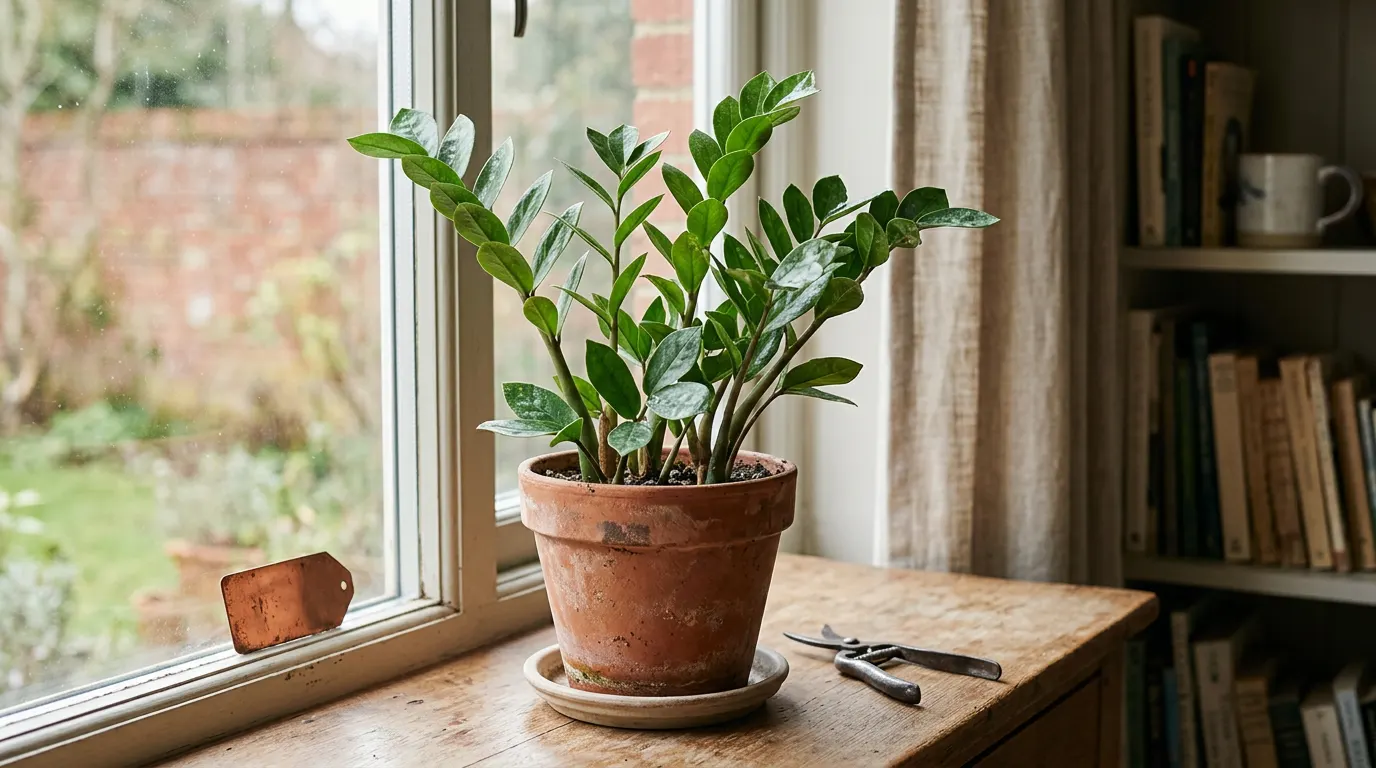
Give a ZZ plant bright, indirect light, though it tolerates low light with slower growth. Water only when the soil is completely dry, usually every 2-3 weeks and every 4-6 weeks in winter. Use a pot with drainage holes and well-draining mix, and repot only when root-bound. Yellow leaves usually mean overwatering.
The ZZ plant (Zamioculcas zamiifolia) has a reputation as unkillable, and it mostly earns it. The one thing that reliably kills it is too much water. This guide teaches you to read your plant and your setup rather than follow a fixed calendar, and covers light, watering, yellow leaves, winter care, repotting and root rot rescue.
How Much Light Does a ZZ Plant Need Indoors?
ZZ plants grow best in bright, indirect light and tolerate low light, including fluorescent office lighting, but growth slows. Long exposure to direct sun scorches the leaves. Curling or yellowing leaves, or a plant leaning hard toward a window, can signal too much or too little light.
Here is how different light levels play out in a typical home:
- Bright, indirect light: A spot a metre or two from a bright window, or near a window with a sheer curtain. This gives the fastest, glossiest growth.
- Medium light: A well-lit room away from the window. Growth is steady but slower, and watering intervals stretch out.
- Low light: A dim corner or office with fluorescent lights. The plant survives and stays green, but may produce only a few new stems a year.
- Direct sun: Several hours of unfiltered sun, especially through glass in summer, can bleach or scorch the leaflets.
A windowless room will not work long term unless you add a grow light. Plants need some light to photosynthesise, even tough ones.
Tip: Rotate the pot a quarter turn every few weeks so the plant grows evenly rather than leaning toward the light.
How Often Should You Water a ZZ Plant?
Water when the top 2 inches (5 cm) of soil are completely dry, typically every 2-3 weeks. Water less in low light. The thick underground rhizomes store water, so too little is far safer than too much. Wrinkled, wilting leaves mean the plant needs a drink.
The rhizomes are the key to everything. They are fleshy, potato-like structures that hold moisture, which is why ZZ plants shrug off missed waterings but rot quickly in constantly damp soil.
Read the setup, not the calendar
A fixed schedule fails because the interval depends on your conditions:
| Condition | Typical watering interval |
|---|---|
| Bright indirect light, warm season | Every 2 weeks |
| Medium light, average room | Every 2-3 weeks |
| Low light | Every 3-4 weeks |
| Winter, cool room | Every 4-6 weeks |
| Oversized pot | Longer, as soil stays wet |
Treat these as starting points and confirm with a dryness test.
Three ways to test soil dryness
- Finger test: Push a finger 2 inches into the soil. If it feels cool or damp, wait.
- Skewer test: Push a wooden skewer to the bottom of the pot and pull it out. Dark, damp soil clinging to it means wait.
- Pot weight: Lift the pot right after a thorough watering, then again when dry. A very light pot is ready for water.
When you do water, soak the soil until water runs from the drainage holes, then empty the saucer. For more technique, see our houseplant watering guide.
Why Are My ZZ Plant Leaves Turning Yellow?
Rapid, widespread yellowing usually means overwatering or root rot. One or two old lower leaves yellowing over months is normal ageing. Other causes include cold damage, too much direct light and underfeeding. Check soil moisture and rhizome firmness before changing anything else.
Use this table to narrow down the cause:
| Symptom | Likely cause | What to check | Fix |
|---|---|---|---|
| Many leaves yellow quickly, soil damp | Overwatering | Soil wet days after watering; soft base | Stop watering, check drainage, inspect rhizomes |
| Stems mushy, foul smell | Root rot | Soft, dark rhizomes | Follow the rescue steps below |
| One or two lower leaves yellow over months | Normal ageing | Rest of plant healthy | Remove the leaf, change nothing |
| Wrinkled, wilting, dropping leaves, dry soil | Underwatering | Soil dry through the pot | Water thoroughly |
| Curling, scorched or bleached leaves | Too much light | Plant near a sunny window | Move back from the glass |
| Dark, water-soaked patches, yellowing | Cold damage | Draught or cold windowsill | Move somewhere warmer |
Note that both overwatering and underwatering can cause leaf drop. The deciding clue is the soil: wet soil points to too much water, bone-dry soil points to too little.
Our broader yellow leaves on houseplants guide and the Plant Clinic yellow leaves page can help if the ZZ-specific causes do not fit.
Warning: Do not respond to yellow leaves by watering more. On a ZZ plant, this makes the usual cause worse.
How Do You Care for a ZZ Plant in Winter?
ZZ plants are semi-dormant in winter. Stretch watering to every 4-6 weeks, skip fertiliser and keep the plant near bright light. Keep it away from cold drafts, as cold damage appears below roughly 8°C (46°F). No new growth during this period is normal.
Winter is when most ZZ plants get into trouble, because lower light and cooler air mean the soil dries far more slowly. Northern Hemisphere readers will see this from roughly November to February. In Australia and New Zealand, the same slowdown happens from about June to August.
Winter checklist:
- Water only after the soil is fully dry, even if that takes six weeks.
- Do not fertilise until growth restarts in spring.
- Move the plant off cold windowsills. Glass can be much colder than the room, especially overnight.
- Keep it away from heaters and air-conditioning vents, which dry and stress the leaves.
- Aim for 65-80°F (18-27°C), the range where ZZ plants are happiest.
Different growers report slightly different winter intervals, from three to six weeks. That is why the soil test matters more than any number.
When and How Do You Repot a ZZ Plant?
Repot only when the plant is root-bound, the soil is collapsing, or it has outgrown its pot, ideally in spring or summer. Choose a pot with drainage holes about 1-2 inches wider and use fresh, well-draining mix. Water lightly afterward.
ZZ plants like being snug, so do not repot on a schedule. Signs it is time:
- Rhizomes pushing up out of the soil or bulging the pot sides.
- Roots circling out of the drainage holes.
- Water running straight through without soaking in.
- Top-heavy stems tipping the pot over.
When not to repot: if the plant is healthy and simply slow, or during winter dormancy, leave it. The exception is root rot, which needs action at any time of year.
How to repot a ZZ plant
- Choose a pot 1-2 inches wider with drainage holes. An oversized pot holds wet soil for too long.
- Mix cactus or succulent mix, or standard potting mix with about one-third perlite.
- Tip the plant out gently, loosen the outer roots and check the rhizomes are firm.
- Set it at the same depth as before and fill around the rhizomes.
- Water lightly, then return to your normal routine once the soil dries.
Wear gloves, as the sap can irritate skin. If you are choosing a container, our guide to the best pots for indoor plants compares terracotta and plastic. Terracotta dries faster and suits overwaterers.
How Do You Fix a ZZ Plant With Root Rot?
Unpot the plant, cut away soft, dark, foul-smelling rhizomes and roots, and keep the healthy firm ones. Repot in fresh, dry, well-draining mix in a pot with drainage. Hold off watering for about 2-3 weeks.
- Remove the plant from its pot and shake off the wet soil.
- Rinse the rhizomes gently so you can see their condition.
- Cut off every soft, brown or black, smelly section with clean, sterilised pruners. Healthy rhizomes are firm and pale.
- Let the cut surfaces air-dry for a few hours.
- Repot in fresh dry mix, in a clean pot with drainage holes.
- Wait 2-3 weeks before the first watering, then resume only when the soil is dry.
If only a few rhizomes are firm, the plant can still regrow, but slowly. For wider diagnosis, see our root rot guide.
Tools and Supplies
- Pot with drainage holes and a saucer
- Cactus or succulent mix, or potting mix plus perlite
- Wooden skewer or moisture meter
- Clean, sterilised pruners
- Room thermometer
- Soft cloth for dusting leaves
- Diluted balanced liquid fertiliser for spring and summer
- Gloves
Expert Tips and Common Problems
Why is my ZZ plant not growing?
Slow growth is normal in low light and winter. ZZ plants often put out just a few new stems per year. Move it to brighter indirect light and feed lightly in the growing season. The Plant Clinic no growth page covers other causes.
Why are the leaves drooping after repotting?
Some drooping is transplant stress. Keep the plant out of direct sun, water lightly and give it a few weeks.
Extra tips
- Dust the leaves with a soft damp cloth every month or two so they absorb more light.
- Fertilise at half strength once a month in spring and summer only.
- Avoid self-watering pots and decorative pots without drainage, which are a common cause of rot.
- Propagate by dividing the rhizomes at repotting, or by rooting leaf or stem cuttings, which is slow but works.
FAQ
How often should I water a ZZ plant in winter?
Roughly every 4-6 weeks, but only once the soil is fully dry. Cool, dim conditions slow evaporation and the plant is semi-dormant. If you are unsure, wait another week. A ZZ plant recovers from dryness far more easily than from soggy soil.
Can a ZZ plant survive in a room with no windows?
Not for long. It tolerates very low light, but it still needs some. In a windowless room, use a grow light for 8-10 hours daily, or rotate the plant between that room and a brighter spot every few weeks.
Should I cut off yellow ZZ plant leaves?
Yes, once a stem is fully yellow, cut it at the base with clean pruners. The plant will not recover that stem. If many stems yellow at once, investigate overwatering rather than just trimming.
Why is my ZZ plant dropping leaves?
Leaf drop comes from either extremes of water. Dry soil and wrinkled leaflets mean thirst, while wet soil and yellowing mean overwatering. Cold drafts and moving the plant suddenly can also trigger it.
Do ZZ plants like to be root-bound?
They tolerate it well and often grow best slightly snug. Repot only when rhizomes crowd the pot, roots escape through drainage holes or the pot distorts. Going up one size is enough.
What soil is best for a ZZ plant?
A fast-draining mix. Cactus or succulent mix works well, or use regular potting mix blended with about one-third perlite. Avoid heavy mixes that stay wet for days, as they raise the risk of rhizome rot.
Is a ZZ plant poisonous to pets?
Yes. All parts contain calcium oxalate crystals, which can irritate the mouth and stomach of cats, dogs and people if chewed. Keep it out of reach, wear gloves when handling it and contact a vet if your pet eats any.
How fast does a ZZ plant grow?
Slowly. In bright indirect light, expect several new stems a year during the warm months. In low light, growth can be minimal. Patience matters, and more water will not speed it up.
Summary and Next Steps
Caring for a ZZ plant indoors comes down to restraint. Give it decent light, let the soil dry out completely and resist the urge to fuss.
Key takeaways:
- Bright, indirect light gives the best growth, though low light is tolerated.
- Water when the top 2 inches of soil are fully dry, roughly every 2-3 weeks, and every 4-6 weeks in winter.
- Widespread yellow leaves with damp soil usually mean overwatering or root rot.
- Repot only when root-bound, in spring or summer, into a pot 1-2 inches wider.
- Keep it above 8°C (46°F) and away from cold windowsills and drafts.
- Pets and people should not eat any part of it.
Immediate actions:
- Push a finger or skewer into the soil today and water only if it is dry through the top 2 inches.
- Check the pot has drainage holes and empty any water sitting in the saucer.
- Move the plant away from cold glass or direct midday sun if it is sitting there.
If you grow other tough plants, our snake plant care guide uses a similar dry-out approach.