
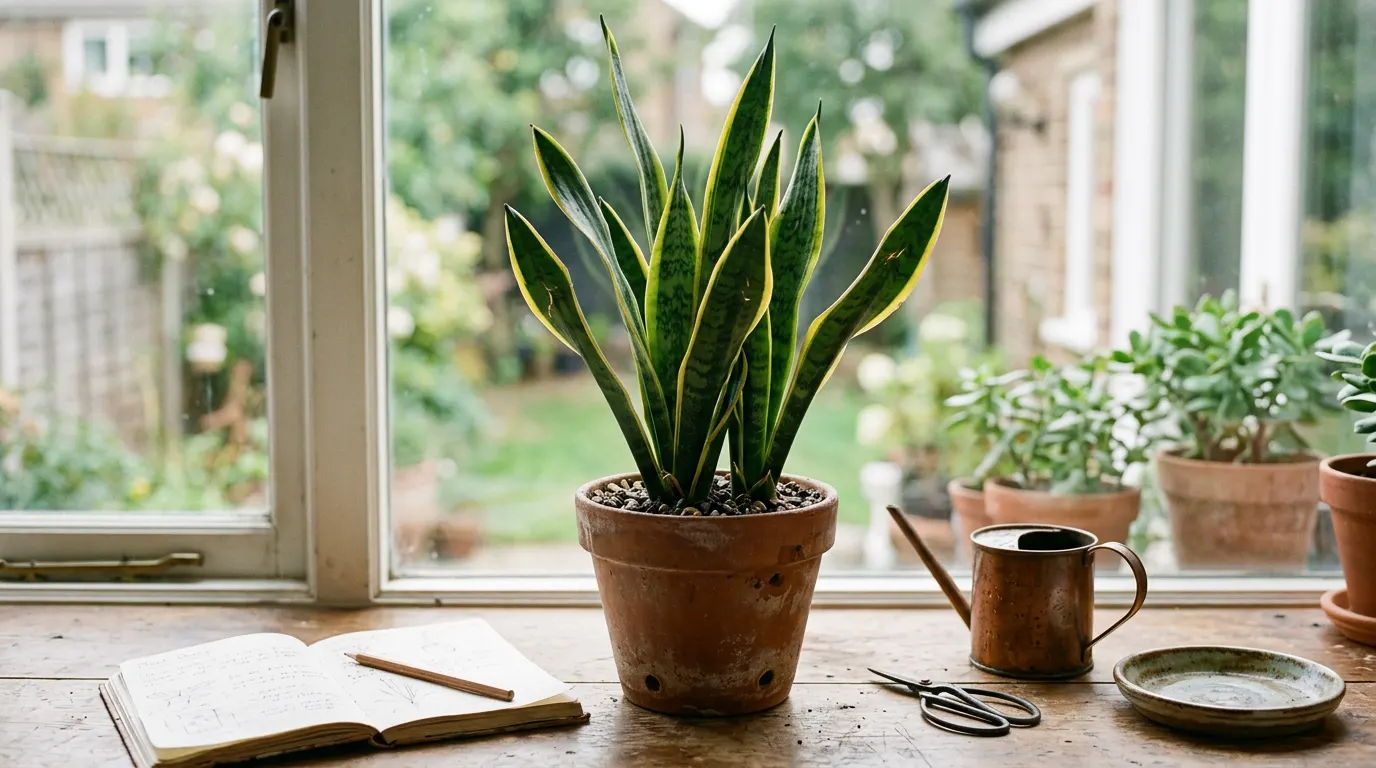
Give your snake plant bright, indirect light, though it tolerates low light with slower growth. Water only when the soil is completely dry, roughly every 2-4 weeks in warm months and less in winter. Use a fast-draining mix in a pot with drainage holes. Repot every 2-3 years, or when roots crowd the pot, ideally in spring.
Snake plant care indoors is simple, but the plant is not indestructible. Nearly every problem traces back to too much water, too little light, or a pot that holds moisture. This guide gives you a clear watering rule, a diagnosis for soft and drooping leaves, and a step-by-step repotting method.
Snake plants (Dracaena trifasciata, formerly Sansevieria) store water in thick leaves and rhizomes. That is why they forgive missed waterings but not soggy soil.
Snake Plant Care at a Glance
The short version: bright indirect light, water when fully dry, gritty soil, and a pot that drains. Use the ranges below as a starting point, then let your own soil, light and pot set the real schedule.
| Factor | Best practice |
|---|---|
| Light | Bright, indirect; tolerates low light |
| Watering | When soil is dry throughout; about 2-4 weeks in warm months, 4-8 weeks in winter |
| Soil | Cactus or succulent mix with perlite or pumice |
| Pot | Heavy, with drainage holes |
| Temperature | About 60-85°F (15-29°C); damage begins near 50°F (10°C) |
| Repotting | Every 2-3 years, in spring |
| Fertilizer | Light feeding in spring and summer only |
How Much Light Does a Snake Plant Need Indoors?
Bright, indirect light is best for growth. Snake plants tolerate low light but grow slowly and may lose their variegation. They cannot live in total darkness. Avoid harsh direct afternoon sun, which can scorch leaves.
An east-facing window is ideal, and a north-facing window (south-facing in the Southern Hemisphere) also works well. Place the plant a metre or so back from a sunny window if the sun is strong in the afternoon.
In a bedroom or bathroom with a small window, the plant will survive but grow slowly, and it will use far less water. Light and watering are linked: the dimmer the spot, the longer the soil stays wet.
- Bright indirect light: steady growth, strong colour and markings.
- Low light: slow growth, paler or plainer leaves, much less water needed.
- No light: the plant declines over weeks to months.
Tip: In a windowless room, a full-spectrum LED grow light on for 8-10 hours a day keeps a snake plant healthy. Treat it like a bright spot for watering purposes.
How Often Should You Water a Snake Plant?
Water only when the soil is dry throughout the pot. That is typically every 2-4 weeks in warm months and every 4-8 weeks in winter. Lower light means slower drying, so water less. Soak until water drains, then empty the saucer.
The pot decides the schedule, not the calendar. Published advice varies on intervals because homes vary so much, so treat any number as a guide.
The check-the-soil rule
- Push a wooden chopstick to the bottom of the pot and pull it out.
- If it comes out clean and dry, the plant is ready for water.
- If soil clings or the stick looks dark, wait another week and check again.
- When it is time, water slowly until it runs out the drainage holes.
- Empty the saucer after about 15 minutes.
You can also lift the pot. A dry pot feels noticeably lighter than a freshly watered one.
What changes the interval
- Low light: add weeks between waterings.
- Terracotta: dries faster than glazed ceramic or plastic.
- Large pot: holds more moisture than a snug one.
- Winter or cool rooms: growth slows, so water far less.
- Heating or sunny rooms: soil dries faster.
For more on technique across all your plants, see our houseplant watering guide.
Why Are My Snake Plant Leaves Soft or Mushy?
Soft, mushy leaves, especially at the base, usually mean overwatering and root rot. Stop watering, unpot the plant, trim black or slimy roots with sterilized tools, and repot into fresh, dry, well-draining soil. Remove leaves that are too far gone.
Healthy roots are firm and pale orange or cream. Rotted roots are brown or black, soft, and often smell sour. A leaf that is squishy at the soil line and pulls away easily has usually lost its roots.
Rescue steps
- Slide the plant out of its pot and shake off the wet soil.
- Cut away every soft, black or slimy root with clean scissors.
- Remove leaves that are mushy at the base. Firm upper leaf sections can sometimes be propagated.
- Let the plant sit out of the pot for a day so cut surfaces dry.
- Repot into fresh cactus mix in a pot with drainage.
- Wait about a week before watering, then return to the dry-soil rule.
If only a few roots are affected, recovery is likely. If the rhizome itself is mushy, divide off any firm, healthy section and start it fresh. Our guide to root rot in houseplants covers the process in more depth.
Warning: Dark, water-soaked spots with yellow halos on leaves can signal bacterial leaf spot. Remove affected leaves with sterilized scissors, avoid wetting the foliage, and improve airflow.
Why Is My Snake Plant Drooping or Wrinkled?
Drooping or wrinkled leaves can mean underwatering, a rootbound pot, or too little light. Check the roots first. If the soil is dry, soak it thoroughly and let it drain. If the soil is wet and soft, treat it as rot instead.
Soft and drooping are not the same problem. Use this diagnosis:
| Symptom | Likely cause | Fix |
|---|---|---|
| Soft, mushy base, wet soil | Overwatering, root rot | Unpot, trim roots, repot dry |
| Wrinkled, thin leaves, dry soil | Underwatering | Soak thoroughly, let drain |
| Curling or drooping, roots packed | Rootbound | Repot one size up or divide |
| Floppy, pale leaves in dim spot | Too little light | Move closer to a window |
| Limp or damaged leaves after a cold night | Cold or draft | Move somewhere above 60°F (15°C) |
The root-check test
Lift the plant out of the pot. Pale, firm roots in dry soil point to thirst. Tight circling roots point to a rootbound plant. Brown, soft roots in damp soil mean rot. This single check removes most of the guesswork.
Wrinkled leaves from thirst plump up within a few days of a good soak. For other leaf colour problems, see our guide to yellow leaves on houseplants.
When and How Do You Repot a Snake Plant?
Repot every 2-3 years, or when roots circle, pups crowd the surface, or the pot bulges. Do it in spring. Choose a pot 1-2 inches wider with drainage, use cactus mix with perlite, and wait about a week before the first thorough watering.
Snake plants like being snug, so do not upsize early. Spring means March to May in the Northern Hemisphere and September to November in the Southern Hemisphere. Avoid repotting in late autumn or winter unless you are treating rot.
Sources differ on timing, from 2-3 to 2-4 years. Let the plant tell you: roots poking from drainage holes, a cracked or bulging pot, or water running straight through all mean it is time.
Repotting steps
- Gather a pot 1-2 inches wider, fresh cactus mix, perlite or pumice, and gloves.
- Let the soil dry for a few days so the plant slides out easily.
- Loosen the root ball and trim any dead or mushy roots.
- Add a layer of mix, set the plant at its previous depth, and fill around it.
- Press the soil gently and keep leaves upright.
- Wait 5-7 days, then water thoroughly and let it drain.
To divide a crowded plant, cut through the rhizome with a clean knife so each section has roots and at least one leaf. Pot each section separately. Learn more about propagation in our sustainable propagation guide.
What Soil and Pot Are Best for a Snake Plant?
Use a fast-draining cactus or succulent mix, amended with perlite or pumice. Choose a heavy pot with drainage holes, since tall leaves can tip a light pot. Terracotta dries faster and helps if you tend to overwatering.
A good mix is about two parts cactus mix to one part perlite or pumice. Water should run through quickly and the mix should not stay soggy.
- Terracotta: breathable and heavy, best for heavy-handed waterers.
- Glazed ceramic: attractive and stable, but dries slowly.
- Plastic: light and cheap, so tall plants may tip; use a decorative outer pot for weight.
- No drainage hole: avoid, or keep the plant in a nursery pot inside it.
Our guide to indoor plant pots compares materials in more detail.
Why Is My Snake Plant Falling Over?
A snake plant usually falls over because of heavy leaves in a light pot, weak roots from overwatering, or crowding. Improve drainage, divide crowded plants, use a heavier pot, and give it more light.
Check the base first. If it is soft, treat it as rot. If the roots are healthy, repot into a heavier pot and bury the plant to its original depth. Tall leaves leaning toward a window can be corrected by rotating the pot regularly.
Tools and Supplies
- Pot with drainage holes (terracotta or heavy ceramic)
- Cactus or succulent mix plus perlite or pumice
- Wooden chopstick or moisture meter
- Sterilized scissors or pruning shears
- Sharp, clean knife for dividing rhizomes
- Narrow-spout watering can
- Gloves
- Optional full-spectrum LED grow light for dim rooms
Expert Tips
- Keep a simple log of the date you water and how many days the soil took to dry. After a few rounds you will have a schedule that fits your home.
- Water less after you move a plant to a dimmer spot.
- Fertilize lightly in spring and summer only, and skip it in winter.
- Wipe dust from leaves with a damp cloth so they absorb more light.
- Keep plants away from cold windows, drafts and heaters.
- Check for pests such as mealybugs in leaf bases. Our houseplant pest guide shows what to look for.
Snake Plant FAQ
Can a snake plant survive in low light?
Yes. Snake plants tolerate low light better than most houseplants, but they grow slowly and may lose some variegation. In low light the soil stays wet longer, so water much less often. Move the plant closer to a window or add a grow light if growth stalls entirely.
Can a snake plant live in a room with no windows?
Not without help. A snake plant needs some light to survive and will slowly decline in a dark room. A full-spectrum LED grow light for 8-10 hours a day can keep it healthy in a windowless bathroom or office.
How do I know if my snake plant is overwatered?
Signs include soft or mushy leaf bases, yellowing leaves, soil that stays wet for weeks, and a sour smell from the pot. Unpot the plant to check the roots. Firm, pale roots are healthy, while brown or black mushy roots confirm overwatering.
Can a snake plant recover from root rot?
Often, yes, if caught early. Cut away all rotted roots with sterilized tools, remove mushy leaves, and repot into fresh, dry, fast-draining mix. Wait about a week before watering. If the whole rhizome is mushy, save firm sections and propagate them.
Do snake plants like to be rootbound?
They tolerate it and even do well when slightly snug. Repot when roots circle heavily, push out of drainage holes, or bulge the pot. Move up only 1-2 inches in pot width, since oversized pots hold excess moisture.
Should I mist a snake plant?
No. Snake plants do not need extra humidity, and wet leaves and crowns can encourage rot or leaf spot. Normal household humidity is fine. Wipe the leaves with a damp cloth if they get dusty.
How often should I fertilize a snake plant?
Very little. Feed lightly once or twice during the growing season, spring and summer, with a diluted balanced houseplant fertilizer. Skip feeding in autumn and winter when growth slows. Over-fertilizing can burn roots.
What temperature is too cold for a snake plant?
Damage begins near 50°F (10°C), and cold drafts can leave leaves limp or mushy. The comfortable range is about 60-85°F (15-29°C). Keep the plant away from cold glass, air conditioning vents and open doors in winter.
Are snake plants toxic to cats and dogs?
Yes, snake plants are considered mildly toxic to pets if chewed, and can cause drooling, vomiting or nausea. Keep them out of reach of curious cats and dogs, and contact your vet if your pet eats some.
Summary and Next Steps
Snake plant care indoors comes down to light, a dry-down between waterings, and good drainage. Most problems are fixed by watering less, not more.
- Give bright, indirect light; low light works but slows growth.
- Water only when the soil is dry throughout, and use the chopstick test.
- Soft, mushy leaves point to rot; wrinkled, drooping leaves with dry soil point to thirst.
- Use a gritty cactus mix and a heavy pot with drainage holes.
- Repot in spring every 2-3 years, or when roots crowd the pot.
- Keep the plant above 60°F (15°C) and away from drafts.
Immediate actions:
- Push a chopstick into your pot today to check the soil before you water.
- Confirm the pot has drainage holes and empty any standing water from the saucer.
- If leaves are soft or drooping, lift the plant and check the roots before changing anything else.
If the symptoms do not match anything here, our Plant Clinic page on wilting can help narrow it down.