
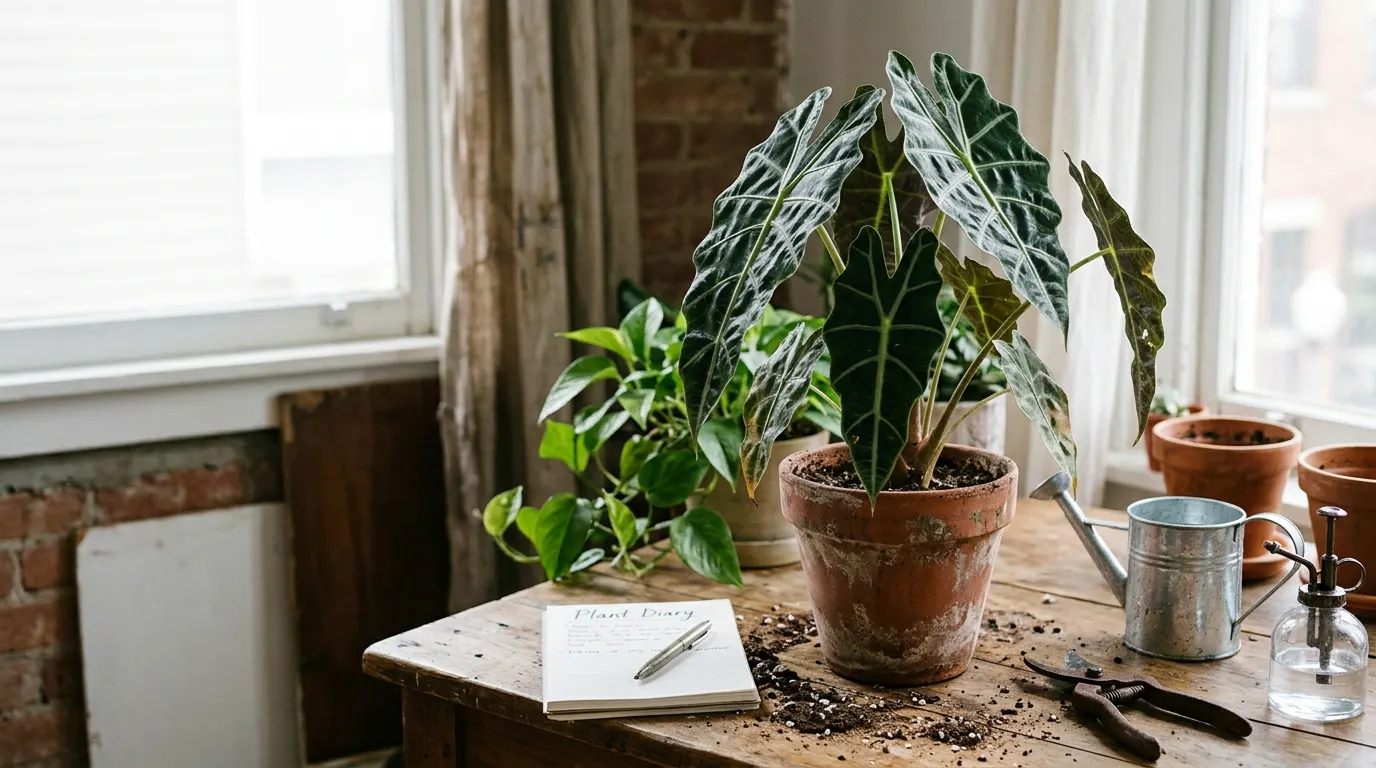
To care for an alocasia plant indoors, give it bright, indirect light, keep temperatures between 18°C and 27°C (65°F to 80°F), and hold humidity near 60% or higher. Water thoroughly when the top 2.5 to 5 cm (1 to 2 inches) of chunky, well-draining soil feels dry. Cut back water in winter, repot every 1 to 2 years, and keep it away from pets.
Alocasia has a reputation for being fussy, and it is true that it reacts fast when something is off. Leaves droop, yellow or drop within days. The good news is that most problems trace back to a short list of causes: too much water, too little light, dry air or cold. This guide gives exact numbers, window advice for both hemispheres, a dormancy checklist and a pet safety section so you can sort out problems quickly.
Where Should You Put an Alocasia for the Right Light?
Alocasia grows best in bright, indirect light. Place it near an east-facing window, or set it back from a brighter window so the sun never lands directly on the leaves. Direct midday sun scorches the leaves, while a dim room causes weak, leggy growth and yellowing.
The sun sits in a different part of the sky depending on where you live, so the same window name means different things in each hemisphere.
- Northern Hemisphere (US, UK, Canada, Europe): The south-facing window is the brightest, and west is hot in the afternoon. East is the safest choice. Keep the plant 1 to 2 metres (3 to 6 feet) back from south or west glass in summer, or filter it with a sheer curtain.
- Southern Hemisphere (Australia, New Zealand, South Africa, South America): The north-facing window is the brightest, and west is hot in the afternoon. East is again the safest. Shield north glass with a sheer curtain in summer, or sit the plant 1 to 2 metres (3 to 6 feet) back.
In winter the sun is lower and weaker, so you can move the plant closer to the brightest window. In the Northern Hemisphere that means a south or west window from October to February. In the Southern Hemisphere it means a north window from April to August.
Tip: If your shadow is sharp and dark where the plant sits, the light is probably too strong. A soft, fuzzy shadow is about right.
If a room is too dim, a full-spectrum grow light placed 30 to 45 cm (12 to 18 inches) above the plant for 10 to 12 hours a day makes up the difference.
How Often Should You Water an Alocasia?
Water an alocasia when the top 2.5 to 5 cm (1 to 2 inches) of soil feels dry. Soak the root ball until water runs freely from the drainage holes, then empty the saucer. Never leave the pot standing in water, because the roots and corm rot quickly.
A fixed schedule does not work well, because pot size, light and temperature all change how fast soil dries. Use your finger or a wooden skewer instead.
- Push a finger into the soil to the second knuckle.
- If it feels dry, water slowly until water drains from the base.
- Wait 10 to 15 minutes, then tip out any water in the saucer.
- If it feels damp, check again in two or three days.
In active growth, many plants need water every 7 to 10 days. In winter that stretches to every 2 to 4 weeks. Use room-temperature water, as cold water can shock the roots.
Bottom watering works well if you let the pot soak for 15 to 20 minutes, then drain fully. Top watering is fine too and helps flush built-up salts from the soil. The key is good drainage either way.
What Humidity and Temperature Does an Alocasia Need?
Keep humidity between 60% and 80% and temperatures between 18°C and 27°C (65°F to 80°F). Below 15°C (60°F), alocasia suffers cold stress and drops leaves. Dry air causes crisp brown edges and invites spider mites.
Most homes sit at 30% to 50% humidity, so a little help is usually needed.
- Run a small humidifier near the plant, which is the most reliable fix.
- Group the plant with others so they share moisture.
- Keep it in a bright bathroom or kitchen if the light is good.
- Use a digital hygrometer so you are measuring rather than guessing.
Keep the plant away from heaters, air conditioners, cold glass and draughty doors. A sudden temperature swing is a common reason for leaf loss. Pebble trays add very little humidity and are not worth relying on.
If you grow other moisture-loving plants, the calathea care guide covers similar humidity strategies.
How Do You Handle Alocasia Winter Dormancy?
In winter, many alocasia slow down or lose most of their leaves. This is dormancy, not death. If the underground corm is firm, the plant is alive. Halve your watering, stop fertilizing, keep it above 15°C (60°F), and wait for new shoots when the weather warms.
Shorter days and cooler rooms trigger dormancy. Timing depends on where you live.
- Northern Hemisphere: Active growth runs April to September. Slow watering and stop feeding from October to February.
- Southern Hemisphere: Active growth runs October to March. Slow watering and stop feeding from April to August.
How to check the corm:
- Tip the plant out gently and look at the base.
- Squeeze the corm lightly. A healthy one is firm and solid, like a raw potato.
- A soft, mushy, smelly corm is rotting. Cut away any soft tissue with clean shears and let the cut surface dry for a day before repotting in fresh mix.
If the corm is healthy, put it back in its pot and keep it at about 18°C (65°F). Water lightly every 3 to 4 weeks so the soil never turns bone dry. Raise warmth, light and watering gradually when new growth shows, usually in spring.
Warning: Do not throw out a leafless alocasia until you have checked the corm. Many viable plants are discarded too early.
Why Is Your Alocasia Drooping or Turning Yellow?
Drooping usually means thirst or root rot. Yellow leaves point to a moisture imbalance, low light, or the natural loss of an old leaf. Check the soil first: dry soil and limp stems mean thirst, while wet soil and drooping mean the roots are struggling.
Use this quick diagnosis.
- Drooping with dry soil: Water thoroughly. Plants often perk up within hours.
- Drooping with wet soil: Suspect root rot. Unpot the plant, trim black or mushy roots, and repot into fresh, airy mix with drainage holes.
- One old lower leaf yellowing: Normal. The plant is recycling nutrients to feed new growth. Remove the leaf once it is fully yellow.
- Many leaves yellowing at once: Usually overwatering or too little light. Let the soil dry further and move the plant to brighter, indirect light.
- Brown crispy edges: Low humidity or inconsistent watering.
- Water droplets on leaf tips in the morning: Usually guttation, a harmless release of excess moisture. It only becomes a concern if the soil is constantly soggy.
- Fine webbing and speckled leaves: Spider mites. Wipe the leaves, raise humidity and see the pest identification guide.
For more general help, the Plant Clinic pages on yellow leaves and wilting walk through other causes.
Small flying insects around the pot suggest constantly wet soil. See how to get rid of fungus gnats if you notice them.
How Do You Repot an Alocasia Step by Step?
Repot every 12 to 24 months at the start of active growth. Choose a pot only 2.5 to 5 cm (1 to 2 inches) wider than the current one, and use a chunky mix of 40% potting soil, 30% perlite or pumice, and 30% orchid bark.
The best timing is April or May in the Northern Hemisphere and October or November in the Southern Hemisphere. Avoid repotting a dormant plant unless you are rescuing it from rot.
- Water the plant a day before so the roots are hydrated.
- Choose a pot with drainage holes. Our pot guide helps with the choice.
- Slide the plant out and loosen the outer roots gently.
- Trim any black, mushy or foul-smelling roots with clean shears.
- Add a layer of mix, set the plant so the corm sits at the same depth as before, and fill around it.
- Water lightly, then keep the plant out of direct sun for a week.
Oversized pots hold too much moisture and are a leading cause of rot, so go up only a little. Fertilize with a half-strength balanced liquid feed every 2 to 4 weeks during active growth only.
Is Alocasia Safe for Cats, Dogs and Children?
No. Alocasia is toxic to cats, dogs and people. Every part of the plant contains insoluble calcium oxalate crystals. Chewing causes mouth pain, drooling, vomiting and, in serious cases, swelling that affects breathing. Keep it out of reach of pets and children.
- Place the plant on a high shelf or in a room pets cannot enter.
- Wear gloves when pruning, as sap can irritate skin and eyes.
- Wash your hands after handling it.
- If a pet chews a leaf, rinse the mouth with water, offer a small amount of water to drink, and call a vet promptly. Take a photo of the plant.
Warning: Never wait for symptoms to worsen. Swelling in the mouth or throat is an emergency.
If you want a pet-friendlier look, the Boston fern guide covers a lush alternative.
What Tools Do You Need?
A few simple items make alocasia care far easier.
- Digital hygrometer and thermometer
- Chunky aroid mix with bark, perlite or pumice, and potting soil
- Pot with drainage holes
- Moisture meter or wooden skewer
- Clean, sharp pruning shears
- Small humidifier
Expert Tips for Healthier Alocasia
- Rotate the pot a quarter turn weekly so growth stays even.
- Wipe leaves with a damp cloth every few weeks to improve light capture and spot pests.
- Expect leaves to be replaced often. Dropping one old leaf as a new one unfurls is normal.
- Use a clear plastic pot inside a decorative one so you can see root health.
- Keep a note of watering dates to learn how fast your soil dries.
Frequently Asked Questions
Can an alocasia regrow if it loses all its leaves in winter?
Yes, if the corm is firm. Keep the pot at about 18°C (65°F), water lightly every 3 to 4 weeks, and wait. New shoots usually appear when temperatures and light increase in spring. A soft, mushy corm will not recover.
How do I know if my alocasia has root rot or is just thirsty?
Check the soil. Dry soil and limp stems mean thirst, and the plant should recover after watering. Damp soil with drooping leaves, a sour smell or black, mushy roots means root rot. Unpot, trim the damaged roots and repot in fresh mix.
Why are there water drops on my alocasia leaves in the morning?
This is usually guttation, where the plant pushes excess water out through leaf tips. It is normal and harmless. If it happens daily and the soil stays wet, water less often and improve drainage.
What should I do if my cat or dog chews an alocasia leaf?
Rinse the animal's mouth with water, offer a little water to drink, and contact a vet promptly. Calcium oxalate crystals cause pain, drooling and vomiting, and swelling can be dangerous. Keep a photo or piece of the plant to show the vet.
Should I bottom-water or top-water my alocasia?
Either works. Top watering flushes salts from the soil, while bottom watering gives an even soak. Whichever you choose, let the pot drain completely and never leave it sitting in water.
How often should I water an alocasia in winter?
Usually every 2 to 4 weeks, only when the top 2.5 to 5 cm (1 to 2 inches) of soil is dry. A dormant plant with no leaves needs even less, just enough to stop the soil turning completely dry.
Summary and Next Steps
Indoor alocasia care comes down to balance: bright indirect light, steady warmth, high humidity and soil that dries a little between waterings.
Key takeaways:
- Use bright, indirect light, and choose windows by hemisphere.
- Keep temperatures at 18°C to 27°C (65°F to 80°F) and humidity at 60% or higher.
- Water when the top 2.5 to 5 cm (1 to 2 inches) is dry.
- A leafless winter plant is dormant if the corm is firm.
- Repot every 1 to 2 years in a chunky aroid mix.
- All parts are toxic to pets and people.
Immediate actions:
- Push a finger into the soil today and check how dry it is before watering.
- Move the plant out of any direct midday sun and away from draughts.
- Place a hygrometer nearby and aim for 60% humidity.
With these habits, your alocasia care indoors becomes routine, and the plant rewards you with large, striking leaves.