
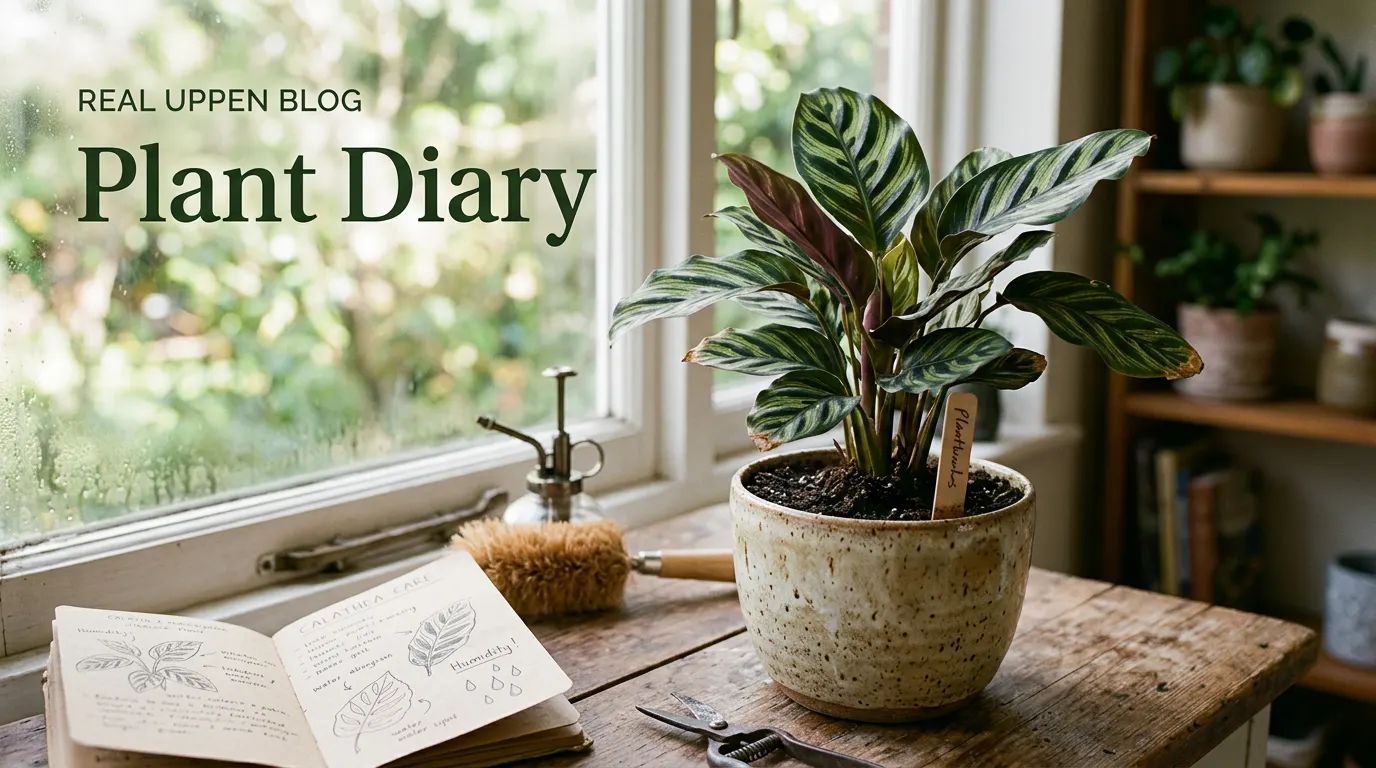
To care for a calathea indoors, give it bright, indirect light, keep the soil evenly moist but never soggy, hold humidity near 50% or higher, and water with distilled, filtered or rain water. Curling usually means thirst or dry air, yellowing points to overwatering or old leaves, and crispy brown edges come from minerals or low humidity.
Calatheas (now botanically placed in the genus Goeppertia, in the Marantaceae family) have a reputation for being fussy. They are not difficult so much as predictable. They react quickly to dry air, hard water and uneven moisture, and the leaves show you exactly which one is the problem. This guide covers the care routine first, then a diagnostic section so you can match what you see on the leaf to a fix.
What are the ideal light conditions for indoor Calathea?
Calatheas do best in bright, indirect light, such as a spot near an east-facing window or a few metres back from a brighter one, filtered through a sheer curtain. Direct sun scorches the leaves, leaving pale or brown patches and fading the patterns.
The patterned leaves are thin and built for the shaded floor of a tropical forest. Too much light bleaches the colour and can make leaves curl in on themselves to reduce exposure. Too little light slows growth and dulls the purple undersides and bold stripes.
A few practical placement rules:
- In the Northern Hemisphere, an east or north-facing window is usually ideal. A south-facing window needs a sheer curtain or a position well back from the glass.
- In the Southern Hemisphere (Australia and New Zealand), the sun sits in the north, so swap that: south or east-facing windows are gentler, and north-facing glass needs a curtain or distance.
- A good test is your hand shadow. A soft, blurry shadow means the light is about right. A sharp, dark shadow means it is too strong.
- Rotate the pot a quarter turn each week so leaves grow evenly rather than stretching towards the window.
Tip: Calatheas fold their leaves upward at night and open them again in the morning. This movement (called nyctinasty) is normal and is not a sign of stress.
If your home is dim, a basic LED grow light on a timer for 10 to 12 hours a day can keep a calathea healthy. Keep it at a gentle distance so the leaves are not heated.
How should you water a Calathea to prevent leaf browning?
Water when the top inch (2.5 cm) of soil feels slightly dry, aiming for soil that stays as damp as a wrung-out sponge. Use distilled, rain or reverse-osmosis water where you can, because tap water minerals, fluoride and chlorine build up and burn the leaf tips.
Calatheas dislike both extremes. Let the root ball dry out and the leaves curl. Keep it waterlogged and the fine roots suffocate and rot. The goal is steady, even moisture with air still reaching the roots.
A simple watering routine
- Push a finger or a wooden skewer 2.5 cm into the soil. If it feels cool and damp, wait a day or two.
- If the top layer feels barely damp or dry, take the plant to a sink.
- Pour room-temperature water slowly over the soil until it runs freely from the drainage holes.
- Let it drain fully for 10 to 15 minutes.
- Empty the saucer so the pot never sits in water.
In a warm room in summer this might be every 5 to 7 days. In winter, growth slows and evaporation drops, so the gap often stretches to 10 days or more. Go by the soil, not the calendar. For a deeper look at technique, see our houseplant watering guide.
Which water is best?
- Rainwater is excellent and free. Collect it in a clean container.
- Distilled or reverse-osmosis water is the safest choice if you have hard water.
- Filtered water helps, but basic jug filters do not remove fluoride or all dissolved minerals.
- Tap water left out overnight lets chlorine escape but does not remove fluoride or salts.
Tip: If you only have tap water, flush the pot thoroughly every month or two by running water through the soil for a minute, and let it drain completely. This washes out accumulated salts.
The pot matters too. Choose one with drainage holes and a loose, peat or coir-based mix with perlite or bark for air. Our guide to the best pots for indoor plants explains how pot material changes how fast soil dries.
How do you maintain 50%+ humidity for Calathea plants?
Keep humidity above 50% with a cool-mist humidifier near the plant, by grouping tropical plants together, and by keeping it away from heaters, vents and air conditioners. A small digital hygrometer tells you what the air is really doing.
Most homes sit between 30% and 45% humidity, especially when heating or air conditioning runs. That is dry enough to crisp calathea edges even if watering is perfect.
What works best, in order of effectiveness:
- Humidifier. A cool-mist unit placed a metre or so away is the most reliable fix. Run it on a timer or humidistat.
- Grouping plants. Plants release moisture through their leaves (transpiration), so a cluster creates a slightly more humid pocket.
- Bathroom or kitchen placement. Works if there is enough light, which many bathrooms lack.
- Pebble trays. A modest help at best. Keep the pot base above the water line so roots do not sit in it.
Misting gives only a short spike and can leave water spots or encourage fungal leaf spots in poorly ventilated rooms, so it is not a reliable fix.
Tip: Place the hygrometer at leaf height next to the plant, not on a wall across the room. Humidity near the plant can differ a lot from the room average.
In winter, heating dries indoor air sharply. Move the plant away from cold windows and drafts, keep it clear of heating vents, and run the humidifier more often. Temperatures between about 18 and 24 C (65 to 75 F) suit it well, and sudden drops below about 15 C (60 F) can cause leaf damage.
How do you fix curling, brown, or yellow Calathea leaves?
Fix curling by deeply watering and raising humidity. Fix yellowing by easing off watering and checking the roots for rot. Fix brown tips by switching to purified water and raising humidity, then trim the damage with clean shears, leaving a thin brown margin.
Use this quick diagnostic table in words first, then the detail below.
- Leaves rolled into tight tubes, soil dry: underwatering or very dry air.
- Crispy brown edges and tips, soil fine: tap water minerals or low humidity.
- Brown patches in the middle of the leaf, faded colour: sun scorch.
- Yellow leaves, limp stems, wet soil: overwatering or root rot.
- A single old lower leaf turning yellow: natural ageing.
Leaf curling
Curling is the plant reducing its surface area to save water. Check the soil first. If it is dry, give it a thorough soak. If the soil is damp, the air is the likely culprit, so raise humidity. Curling can also follow cold drafts or strong light. Leaves that were only recently curled usually relax within a few days of correction.
Brown crispy edges and tips
Two causes look similar, so separate them:
- Mineral or chemical burn: browning that is dark, thin and follows the very tip or edge, building slowly over weeks. It often appears after repeated tap water use.
- Dry air browning: broader crispiness that appears alongside curling, often worse in winter or near a vent.
If you are unsure, fix both: switch the water and raise humidity. Our general guide to brown and crispy indoor plant leaves and the brown tips clinic can help you cross-check.
Yellow leaves
If the soil stays wet for days and the stems feel soft, suspect overwatering. Slide the plant from its pot and look at the roots. Healthy roots are firm and pale. Rotted roots are dark, mushy and smell sour.
- Trim all soft, dark roots with sanitised scissors.
- Repot into fresh, airy mix in a pot with drainage.
- Water lightly, then wait until the top inch dries before watering again.
See our guides on root rot in houseplants and yellow leaves on houseplants for more detail.
Pruning damaged leaves
- Wipe shears with rubbing alcohol.
- Cut off a fully brown or yellow leaf at the base of its stem.
- For partly damaged leaves, trim along the leaf shape, leaving a very thin brown margin so you do not cut into healthy tissue.
Damaged tissue will not turn green again, so trimming is cosmetic. New growth shows whether your fix worked.
What tools and supplies do you need?
A few inexpensive tools make calathea care far easier, mostly by taking the guesswork out of moisture and humidity.
- A digital hygrometer to track leaf-level humidity.
- A cool-mist humidifier.
- A moisture meter or wooden skewer.
- Sanitised, sharp scissors or pruning shears.
- Distilled, reverse-osmosis or rain water.
- A pot with drainage holes and a well-aerated potting mix.
Expert tips and advanced techniques
Small habits make the biggest difference over time.
- Check water quality. If your tap water leaves white crusts on kettles or taps, it is likely hard enough to affect calatheas.
- Feed lightly. Use a balanced liquid fertiliser at quarter to half strength once a month during the growing season (spring to early autumn), and skip it in winter. Salts from over-feeding cause tip burn too.
- Repot gently. Every 1 to 2 years in the growing season, move up one pot size at most. Calatheas dislike big pots that hold excess moisture.
- Watch for pests. Dry air invites spider mites. Look for fine webbing and speckled leaves, and see our houseplant pest guide.
- Be careful with self-watering pots. They can work if the mix stays airy, but they can also keep roots too wet. Check the soil regularly.
Frequently asked questions
Can Calatheas recover from completely curled or brown leaves?
Leaves that are curled from thirst or dry air often unroll within days once moisture and humidity improve. Brown, crispy tissue will not turn green again, so trim it for looks. The plant itself usually recovers well, producing fresh leaves within a few weeks if conditions stay stable.
Why does Calathea leaf folding happen at night?
Calatheas raise their leaves in the evening and lower them in the morning. This daily movement, called nyctinasty, is normal and is why they are known as prayer plants. It is not a sign of stress unless leaves stay curled tightly all day.
Is tap water safe for Calathea prayer plants?
Tap water is not ideal. Minerals, chlorine and fluoride can build up in the soil and burn leaf tips over time. If your water is soft, you may get away with it. Distilled, rain or reverse-osmosis water gives much more reliable results.
How do I tell the difference between overwatering and underwatering a Calathea?
Underwatered plants have dry soil, curled leaves and crispy edges. Overwatered plants have damp or soggy soil, yellowing leaves, soft limp stems and sometimes a sour smell from the roots. Always check the soil with your finger before deciding.
How often should I water a calathea indoors?
Water when the top inch of soil feels slightly dry, which is often every 5 to 7 days in warm months and every 10 days or longer in winter. Light, pot size and humidity all change the timing, so go by the soil rather than a fixed schedule.
Does calathea need high humidity to survive indoors?
It can survive at lower humidity, but it will not look good. Aim for 50% or more. Below that, expect crispy edges and curling, particularly during winter heating or air conditioning use. A humidifier is the most dependable fix.
Why are my calathea leaves turning yellow?
The most common cause is overwatering, which leads to root stress or rot. One or two old lower leaves yellowing now and then is normal ageing. Widespread yellowing with wet soil needs a root check and a lighter watering routine. Our yellow leaves clinic page can help narrow it down.
Summary and next steps
Caring for a calathea indoors comes down to steady conditions: gentle light, evenly moist soil, humid air and clean water. Most leaf problems trace back to one of those four things.
Key takeaways:
- Bright, indirect light prevents scorching and keeps patterns vivid.
- Keep soil like a wrung-out sponge, and always let excess water drain away.
- Use distilled, rain or reverse-osmosis water to prevent brown tips.
- Hold humidity at 50% or above, with a hygrometer to confirm.
- Curling signals thirst or dry air, yellowing signals too much water or age.
- Trim damaged leaves with clean shears and judge success by new growth.
Immediate actions:
- Check the soil moisture and the humidity at leaf level today.
- Switch to distilled or rain water for the next watering.
- Move the plant away from direct sun, vents and cold drafts.
With a few small adjustments, how to care for a calathea indoors becomes a simple routine rather than a puzzle.