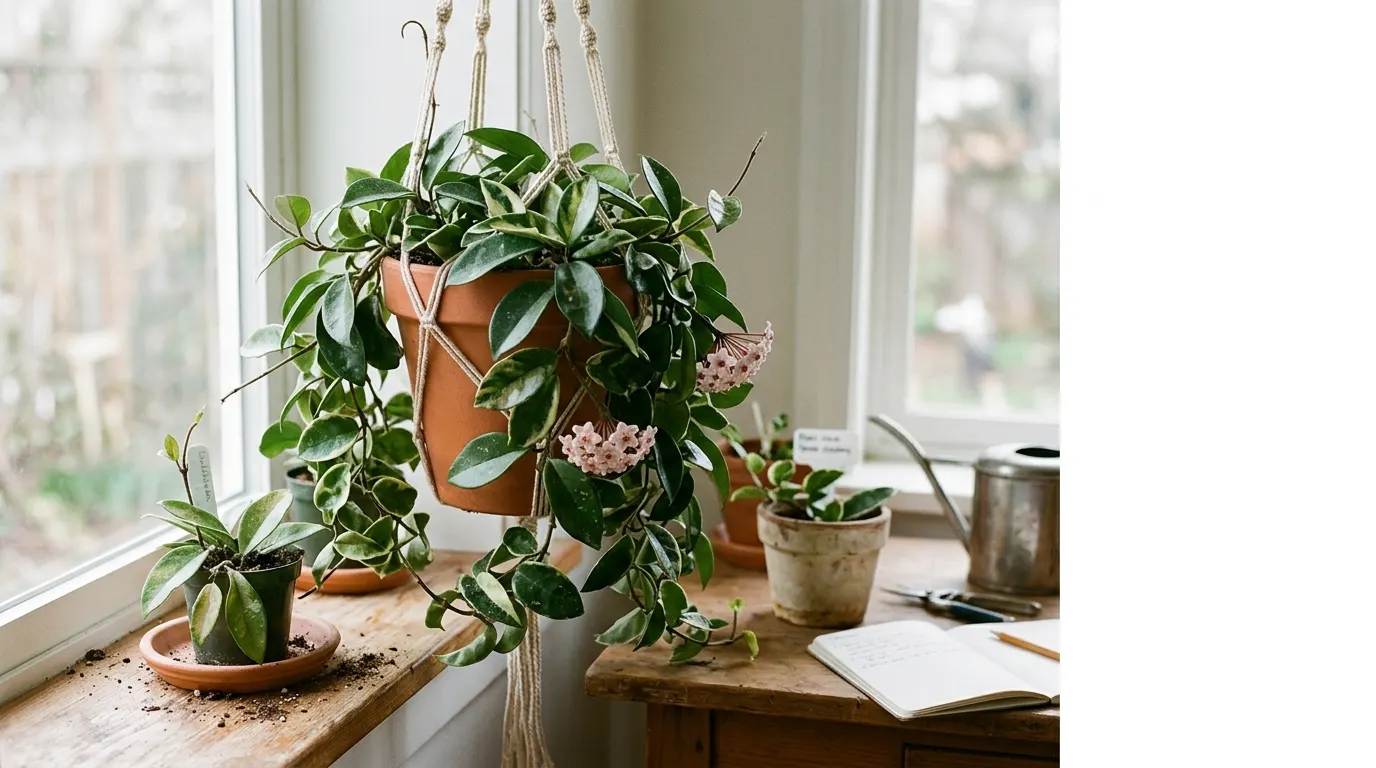
To care for a hoya plant indoors, give it bright indirect light, a chunky well-draining mix, and water only when the top half to two-thirds of the potting mix has dried out. Keep it between 65°F and 80°F (18°C to 27°C), leave old flower spurs intact, and let the roots stay snug.
Hoyas, also called wax plants, are semi-succulent climbers from the Apocynaceae family. In the wild many grow as epiphytes, clinging to trees, so their roots expect air as well as moisture. Most indoor problems, from wrinkled leaves to yellowing to no flowers, trace back to that one fact. This guide covers light, watering, flowering, leaf troubleshooting and repotting in plain steps.
What Indoor Lighting Do Hoya Plants Need to Thrive?
Hoyas do best in bright, indirect light for several hours a day. An east-facing window or a spot a short distance back from a brighter window works well. Too little light causes leggy growth and no flowers, while harsh afternoon sun can scorch the leaves.
A good test is your shadow. Hold your hand about 30 cm (1 foot) above the plant. A soft but clearly defined shadow means the light is about right. A faint, fuzzy shadow means the plant is probably too dim to flower.
Signs your hoya is getting the wrong light:
- Too little: long gaps between leaves, small pale leaves, no buds.
- Too much: bleached patches, crispy brown marks, or leaves turning reddish-yellow and stiff.
- About right: firm, evenly green leaves and steady new growth.
In winter at higher latitudes, move the plant closer to the window, as the sun is weaker and lower. In an Australian or New Zealand summer, pull it back from west-facing glass, where afternoon sun can burn leaves in an hour or two.
Tip: Rotate the pot a quarter turn every couple of weeks so vines grow evenly rather than stretching toward the glass.
If your home is dim, a full-spectrum LED grow light run for about 12 hours a day can fill the gap. Hoyas will survive in low light, but they will mostly sit still and rarely bloom.
How Often Should You Water an Indoor Hoya?
Water your hoya only when the top half to two-thirds of the potting mix has dried out. Soak the pot until water runs from the base, let it drain fully, and empty the saucer. In winter, stretch the gap to roughly every two to three weeks.
The thick, waxy leaves store water, so hoyas forgive a missed watering far more easily than a soggy one. Calendar schedules are unreliable because pot size, mix, light and temperature all change how fast the soil dries.
The pot-weight check
Surface dryness can be misleading, especially in a dense mix. Lift the pot right after a thorough watering and note how heavy it feels. Lift it again every few days. When it feels noticeably light, the mix has dried enough to water again. This habit prevents most cases of mistaken yellowing and wrinkling.
A simple watering routine
- Push a wooden skewer or finger into the mix to check dryness below the surface.
- If the top half to two-thirds is dry, water slowly around the whole pot.
- Keep going until water drains freely from the holes.
- Let it drain for 10 minutes, then discard any water in the saucer.
- Cut back by about half through the shorter days of autumn and winter.
Plants in terracotta dry faster than those in plastic. For more on matching watering to your setup, see our ultimate houseplant watering guide and our overview of the best pots for indoor plants.
Warning: Never leave a hoya standing in water. Constantly wet roots are the fastest way to lose one.
How to Get an Indoor Hoya Plant to Produce Blooms
To make a hoya flower, give it strong indirect light, keep its roots slightly snug in a small pot, and feed lightly in the growing season. Most importantly, never cut off the bare flower spurs, because the plant reblooms from the same spots year after year.
Hoya flowers appear in rounded clusters called umbels. After the blooms fade, a short woody stub (the peduncle) remains. New flowers form from that same stub, and removing it resets the process.
What encourages blooms:
- Light: the single biggest trigger. Move a non-flowering plant to a brighter spot before changing anything else.
- Maturity: many hoyas need to be a few years old, with long, well-established vines.
- Snug roots: a pot that is not too big pushes energy into flowers rather than roots.
- Feeding: a diluted liquid fertiliser with a higher phosphorus number in the growing season. A balanced feed also works for general growth.
- Stability: avoid moving the plant once buds form, as sudden changes can cause bud drop.
Do not prune the long, bare climbing stems either. These runners often produce leaves and flower spurs later, so trimming them removes future growth. If a vine is in the way, tuck it around a trellis or hoop instead.
If you want to feed with homemade options, our guide to DIY natural fertilizers has gentle ideas that suit most houseplants.
Why Are Hoya Leaves Wrinkled or Yellow? (Troubleshooting)
Wrinkled hoya leaves mean the leaf is short of water, either because the soil is too dry or because damaged roots cannot take water up. Yellow leaves usually point to overwatering, poor drainage or cold drafts. Check the roots and mix before changing anything.
Both overwatering and underwatering can leave leaves limp or puckered, which is why guessing causes so many losses. Use the checks below in order.
Wrinkled or puckered leaves
- Lift the pot and push a skewer into the mix.
- If the mix is bone-dry, bottom-soak the pot in a basin of water for about 30 minutes, then drain well. Leaves usually plump up within a few days.
- If the mix is wet and leaves are still wrinkled, slide the plant out and check the roots.
- Healthy roots are firm and pale. Brown, mushy or smelly roots mean rot.
- Trim rotted roots with clean shears and repot into fresh, airy mix in a clean pot.
Our root rot guide covers the recovery steps in more detail.
Yellow leaves
Yellowing that starts on lower leaves, sometimes with dark or soft stems, usually means the roots are suffocating in wet mix. Stop watering, check the drainage holes are clear, and let the mix dry thoroughly. Move the plant to brighter indirect light to help it use water faster.
Other causes to rule out:
- A cold draft or temperatures below 55°F (13°C).
- A pot that is far too large and stays wet in the middle.
- Pests such as mealybugs on stems and leaf joints. See our guide to identifying houseplant pests and diseases.
For wider causes and fixes, the yellow leaves on houseplants guide is a useful companion.
Tip: Fix one thing at a time and give the plant a few weeks. Hoyas are slow, and changing watering, light and pot all at once makes it hard to see what worked.
When and How to Repot a Hoya Plant
Repot a hoya only every two to four years, in spring or early summer, and choose a pot just 1 to 2 inches (2.5 to 5 cm) wider. Hoyas flower better when slightly root-bound, so use a chunky, airy mix and avoid oversizing.
In the Northern Hemisphere, aim for March to June. In Australia and New Zealand, September to December is ideal, when growth is picking up.
Signs it is time to repot:
- Roots circle the drainage holes or push out of the pot.
- The mix has broken down into dense, soggy soil.
- Water runs straight through without soaking in.
- The plant is top-heavy and keeps tipping over.
A chunky hoya mix
A reliable blend is roughly equal parts:
- Orchid bark
- Perlite or pumice
- Coarse, free-draining potting mix
The goal is a mix that drains in seconds and holds some moisture without staying wet.
Repotting steps
- Water lightly a day before so roots slip out easily.
- Tip the plant out and loosen the outer roots gently.
- Trim any dead or mushy roots with clean shears.
- Add a layer of mix to a pot with drainage holes.
- Set the plant at the same depth as before and fill around the roots.
- Wait about a week before watering thoroughly.
Tools and Supplies You Will Need
A few simple items cover almost everything a hoya needs:
- A pot with drainage holes, terracotta or plastic
- Orchid bark, perlite or pumice, and coarse potting mix
- A moisture meter or wooden skewer
- Clean bypass shears
- Diluted liquid fertiliser
- A small trellis or hoop for climbing vines
Expert Tips for Healthier Hoyas
- Keep temperatures steady: 65°F to 80°F (18°C to 27°C) suits most hoyas. Keep them away from heating vents and cold glass.
- Give moderate humidity: average home humidity is fine for most, so misting is not essential.
- Support the vines: a trellis encourages mature, flowering growth faster than letting stems trail.
- Go easy on pot size: a smaller pot is safer than a large one.
- Compare with similar plants: if you grow semi-succulents, the care logic is close to our string of pearls guide.
Frequently Asked Questions
Can hoyas tolerate low-light rooms?
Hoyas can survive in low light, but they grow slowly, stretch out, and rarely flower. For steady growth and blooms, choose a bright spot with indirect light. If your room is dim, a full-spectrum grow light for around 12 hours a day can make up the difference.
Why are my hoya's leaves soft and limp?
Soft, limp leaves mean the plant is short of water at leaf level. That can be genuine thirst or root damage from rot. Check the mix first. If it is dry, soak the pot. If it is wet, inspect the roots and repot into fresh, airy mix.
Should I cut off the long leafless tendrils on my hoya?
No, leave them. These bare vines are climbing runners that often produce leaves and flower spurs later. Train them around a trellis or hoop instead. Cutting them removes future growth and can delay flowering.
What is the best soil mix for indoor wax plants?
Use a chunky, fast-draining blend such as equal parts orchid bark, perlite or pumice, and coarse potting mix. This mimics the airy conditions hoyas enjoy as epiphytes and helps prevent the soggy roots that lead to rot.
How often should I water my hoya in winter?
Water about every two to three weeks, and only once the top half to two-thirds of the mix has dried. Growth slows in shorter days, so the plant uses less water. Always check the mix rather than following a fixed calendar.
When should I repot a wax plant?
Repot every two to four years, or when roots crowd the pot or the mix breaks down. Do it in spring or early summer, choosing a pot only 1 to 2 inches wider. A slightly snug pot helps flowering.
Why is my hoya not flowering?
The most common cause is not enough light. Other reasons include a young plant, an oversized pot, or removed flower spurs. Increase bright indirect light, keep roots snug, and never cut the old peduncles.
Summary and Next Steps
Caring for a hoya plant indoors comes down to light, restraint with water, and an airy mix.
Key takeaways:
- Give bright, indirect light for strong growth and blooms.
- Water thoroughly only when the top half to two-thirds of the mix is dry.
- Both overwatering and underwatering can cause wrinkled leaves, so check roots and mix first.
- Yellow leaves usually point to wet roots or poor drainage.
- Keep roots slightly snug and repot only every two to four years.
- Never cut old flower spurs or bare climbing vines.
Immediate actions:
- Lift your hoya's pot today and learn how heavy it feels when wet versus dry.
- Move it to the brightest spot that avoids harsh afternoon sun.
- Check that the pot drains freely and the mix is chunky, not dense.
With steady light, careful watering and a little patience, your indoor hoya plant care routine will pay off with glossy leaves and fragrant flower clusters.