
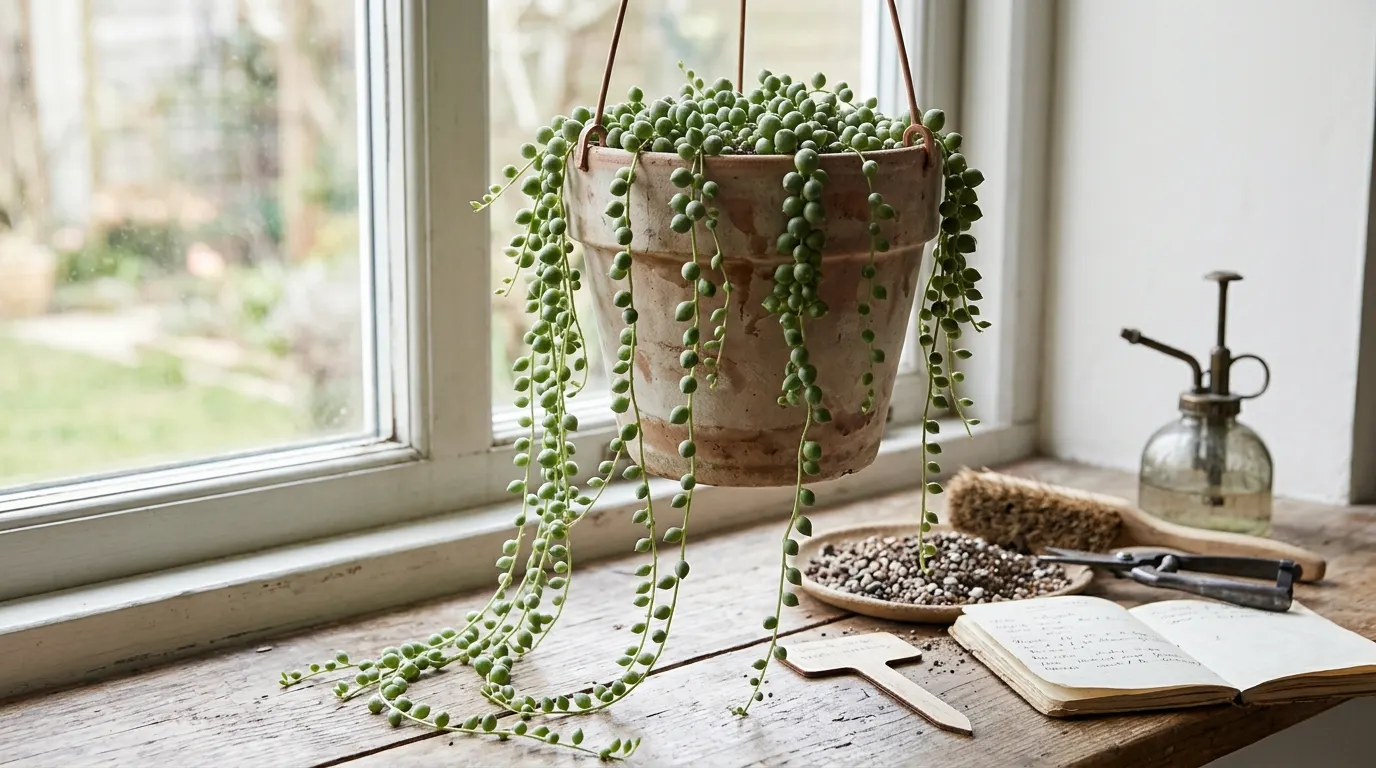
String of pearls needs bright, indirect light with a few hours of gentle direct sun, and deep watering only when the soil is completely dry. Plant it in gritty, fast-draining cactus mix in a shallow pot with drainage holes, keep it at 65-80°F (18-27°C), and water far less in winter.
String of pearls (Curio rowleyanus, formerly Senecio rowleyanus) is a trailing succulent from arid southwest Africa. It has a reputation for being fussy indoors, and most deaths come down to two things: too much water and too little light. This guide covers light, watering, soil, propagation and how to tell thirst from rot.
It is easy to confuse with string of hearts, string of dolphins and string of bananas. Those cousins have different leaf shapes and slightly different needs. If your plant has round, pea-sized green beads on thin strands, the advice below applies.
How Much Light Does a String of Pearls Need Indoors?
It needs about 6 or more hours of bright light daily. An east window, or a south or west window softened by a sheer curtain, works best. Under grow lights, hold a full-spectrum bulb 6-12 inches away for 10-12 hours. Too little light gives sparse, leggy strands.
In the wild this plant sprawls across open ground, so it is built for brightness. Indoors, the most common mistake is placing it a few metres from a window and hoping for the best.
- East window: gentle morning sun, the easiest placement.
- South window (Northern Hemisphere) or north window (Southern Hemisphere): the brightest spot. Filter midday sun with a sheer curtain or pull the plant back from hot glass.
- West window: strong afternoon heat. Filter it in summer.
- Grow light: use a full-spectrum LED on a timer, 6-12 inches above the strands.
Tip: Turn the pot a quarter turn each week. The side facing the window grows fuller, and rotating keeps the plant even.
Signs of too little light include widely spaced pearls, pale or thin strands, and growth that stretches toward the window. Brown or crispy pearls usually mean scorch from hot glass.
How Often Should You Water a String of Pearls?
Water when the soil is fully dry and the pearls feel slightly soft, roughly every 1-2 weeks in the growing season and every 3-4 weeks in winter. Soak thoroughly, drain completely, and never let the pot sit in water.
A fixed calendar is a poor guide, because pot size, light and temperature change how fast the soil dries. Use the soil and the pearls as your signal instead.
The pearl squeeze test
Gently squeeze one pearl between finger and thumb.
- Firm and plump: the plant is fine. Wait.
- Slightly soft, a little wrinkled, soil dry: it is time to water.
- Translucent, mushy or squashed flat, soil damp: stop watering and check the roots.
Push a chopstick to the bottom of the pot. If it comes out clean and dry, water. If soil clings to it, wait.
How to water
- Pour water slowly around the pot until it runs from the drainage holes.
- Let it drain for 10-15 minutes.
- Empty the saucer so the roots never sit wet.
Bottom watering also works. Stand the pot in a shallow dish for 10-15 minutes, then lift it out and drain. For general technique, see our houseplant watering guide.
In winter, growth slows and soil stays damp longer. Most homes need watering only every 3-4 weeks, and sometimes less in a cool room. Do not mist; wet strands invite rot and the plant does not need humidity.
What Is the Best Soil and Pot for String of Pearls?
Use a mix of roughly 2 parts cactus soil to 1 part perlite or pumice. Choose a shallow, wide terracotta pot with drainage holes, since the roots are shallow and clay speeds drying. Repot only every 2-3 years.
The roots sit close to the surface and rot quickly in dense, wet mix. Grit lets water pass through fast and air reach the roots.
- Soil: 2 parts cactus mix, 1 part perlite or pumice.
- Pot: shallow and wide, only 1-2 inches wider than the root ball.
- Material: terracotta dries faster than glazed ceramic or plastic.
- Drainage: at least one large hole, no exceptions.
An oversized pot holds a mass of wet soil around a few small roots, which is a common cause of rot. Our guide to the best pots for indoor plants covers sizing in more detail.
Feed lightly in the growing season with a diluted, low-nitrogen succulent fertilizer, about once a month. Skip feeding in winter. Growing season is roughly April to September in the Northern Hemisphere and October to March in the Southern Hemisphere.
Why Are My String of Pearls Shriveling?
Wrinkled, deflated pearls with dry soil mean thirst. Wrinkled or translucent pearls with damp soil point to root rot. Check the soil moisture and the roots before watering, because the two causes need opposite fixes.
Most guides blur these together. Use this side-by-side check.
| Sign | Underwatered | Overwatered or rotting |
|---|---|---|
| Soil | Dry through the pot | Damp or wet |
| Pearl feel | Soft, wrinkled, still opaque | Mushy, translucent, may burst |
| Pearl colour | Dull green, sometimes pale | Yellow, tan or black |
| Stem base | Firm | Soft or dark |
| Roots | Pale and firm | Brown or black, smelly |
| Fix | Soak and drain | Unpot, trim, repot dry |
Other causes of flat pearls
If watering seems right but pearls are still flat, check three things:
- Roots: rot can start below the surface while the top looks fine.
- Pot size: a large pot stays wet for too long.
- Light: pearls flatten and thin when light is poor.
Brown or crispy pearls
These are usually sun scorch or severe dehydration. Move the plant back from hot glass, filter midday sun, and water properly. For other browning causes, see why indoor plant leaves go brown and crispy.
An underwatered plant should plump within several days of a good soak. If nothing improves in a week, suspect the roots.
How Do You Save a Dying String of Pearls?
Remove the plant from its pot, trim black or mushy roots and dead strands, and let it air-dry for a day. Repot in fresh gritty mix, wait about a week before watering, and root healthy cuttings as backup.
Root rot is the main killer, so rescue work centres on getting the roots dry and clean. For the wider picture, read our root rot guide.
- Unpot gently. Slide the plant out and shake off the wet soil.
- Inspect the roots. Healthy roots are pale and firm. Rotted roots are brown or black and soft.
- Cut away damage. Use clean, sharp scissors. Remove rotten roots and any mushy or bare strands.
- Dry it out. Leave the plant on a paper towel in bright, indirect light for a day.
- Repot. Use fresh, gritty mix in a clean, shallow pot with drainage.
- Wait. Do not water for about a week, then water lightly.
- Take cuttings. Root any healthy strands as insurance.
A rough timeline: on day 0 you repot, at day 7 you give the first light watering, and by day 30 you should see firm pearls and possibly new growth at the tips. If strands keep collapsing, the root system may be too far gone, and your cuttings become the new plant.
Warning: Do not water a freshly repotted plant straight away. Trimmed roots need time to seal before they meet moisture.
How Do You Propagate String of Pearls?
Cut 3-4 inch healthy strands, remove the pearls from the bottom 1 inch, and lay or pin the strands on moist, gritty soil. Roots form in 2-4 weeks. Keep cuttings in bright indirect light and water lightly.
Propagation is the easiest way to get a fuller plant, and it is the best backup if your original is struggling. For a wider look at methods, see rooting mediums beyond soil and water.
Propagating in soil
- Cut several strands 3-4 inches long just below a pearl.
- Strip the bottom 1 inch of pearls.
- Let the cut ends callus for a day.
- Fill a shallow pot with gritty mix and moisten it lightly.
- Lay the strands on top, or press the bare ends in and pin the rest down with bent wire.
- Place in bright, indirect light and mist or water sparingly only when the surface dries.
Pinning cuttings around the top of an existing pot is the quickest way to fill gaps. Layering, where a strand is pinned to soil while still attached to the plant, is the most reliable method because the strand keeps its supply until roots form.
Propagating in water
Water rooting is possible but gives weaker roots that often struggle when moved to soil. Soil and layering are the better choices.
If cuttings will not root
- Let the cut ends callus before placing them.
- Keep the bare stem in contact with the soil.
- Give bright light.
- Avoid soaking the mix.
Rooting hormone is optional and can help, though many cuttings root without it.
How Do You Keep String of Pearls Full and Healthy?
Give consistent bright light, feed lightly with diluted succulent fertilizer in the growing season, rotate the pot, and pin cuttings back into the top. Trim bare strands to encourage new growth.
Bare tops and thin strands almost always trace back to light.
- Increase light first. Add a grow light if the room is dim.
- Trim bare, leggy sections and pin the trimmings onto the soil.
- Rotate the pot weekly.
- Feed about monthly in the growing season at diluted strength.
- Keep it away from heaters and cold drafts.
If you notice cottony white clusters or tiny sap-sucking insects, you may have mealybugs or aphids. Isolate the plant, dab pests with rubbing alcohol on a cotton swab, and repeat weekly. Use insecticidal soap for heavier infestations. Our guide to identifying houseplant pests and diseases shows what to look for.
Prepare for winter
- Move the plant away from cold glass and heater vents.
- Cut watering back to every 3-4 weeks, or when fully dry.
- Stop feeding.
- Add a grow light if days are short.
Northern Hemisphere readers should do this from October, and Southern Hemisphere readers from April.
Is String of Pearls Toxic to Pets?
Yes. It is considered mildly toxic to cats, dogs and people if eaten, and can cause vomiting, drooling or skin irritation. Hang it out of reach and contact a vet if your pet eats it.
The sap can also irritate skin, so wear gloves when trimming if you have sensitive hands. A high hanging basket or a shelf out of jumping range is the safest setup.
Tools and Supplies
- Shallow terracotta pot with drainage holes
- Cactus mix plus perlite or pumice
- Sharp, clean scissors
- Chopstick for moisture checks
- Full-spectrum LED grow light with timer
- Narrow-spout watering can
- Rubbing alcohol and cotton swabs
- Diluted low-nitrogen succulent fertilizer
If you grow other drought-tolerant plants, our succulent care guide covers similar principles.
Frequently Asked Questions
Is string of pearls hard to keep alive indoors?
It is moderately difficult. Most beginners lose their first plant to overwatering or low light. With a bright spot, gritty soil, a shallow pot and a habit of checking dryness before watering, it becomes manageable. Expect some losses at first, and keep cuttings as backup.
How do I know if I am overwatering or underwatering?
Check the soil and the pearls together. Dry soil with soft, wrinkled but opaque pearls means thirst. Damp soil with translucent, mushy pearls means overwatering or rot. Squeeze a pearl and push a chopstick into the pot before you decide.
Can a string of pearls recover from root rot?
Sometimes. If some roots are still firm and pale, trim the rotten parts, repot in dry gritty mix and wait a week to water. If the stem base is mushy, take cuttings from healthy strands and start again.
Should I mist my string of pearls?
No. It is a desert succulent and does not need extra humidity. Misting leaves strands damp and can encourage rot. Water the soil deeply and infrequently instead.
Why is my string of pearls turning brown or yellow?
Brown, crispy pearls usually mean sun scorch or severe dehydration. Yellow, mushy pearls usually mean overwatering. Check the soil moisture, move the plant back from hot glass if needed, and adjust watering to match.
When should I repot a string of pearls?
Repot every 2-3 years, or when roots fill the pot. Do it in the growing season, spring to early summer in the Northern Hemisphere or spring to early summer in the Southern Hemisphere from October. Choose a pot only slightly larger than the old one.
How do I stop it from getting bare at the top?
Increase light, trim bare strands and pin healthy cuttings into the top of the pot. Rotate the pot weekly so all sides get sun. Bare crowns usually point to low light or old, tired strands.
Summary and Next Steps
Good string of pearls care indoors comes down to bright light, gritty soil, a shallow pot and restrained watering.
Key takeaways
- Give 6+ hours of bright light, with gentle direct sun and a sheer curtain against hot glass.
- Water only when the soil is fully dry and pearls feel slightly soft.
- Use 2 parts cactus mix to 1 part perlite or pumice in a shallow terracotta pot.
- Dry soil with wrinkled pearls means thirst; damp soil with mushy pearls means rot.
- Propagate cuttings on soil to fill the pot or save a failing plant.
- Keep it away from pets, as it is mildly toxic.
Do these next
- Squeeze a pearl and test the soil with a chopstick today.
- Check that the pot has drainage and the plant is in your brightest spot.
- Take two or three cuttings and pin them on the soil as backup.
With this routine, your string of pearls care should stay simple and your strands should fill out steadily.