
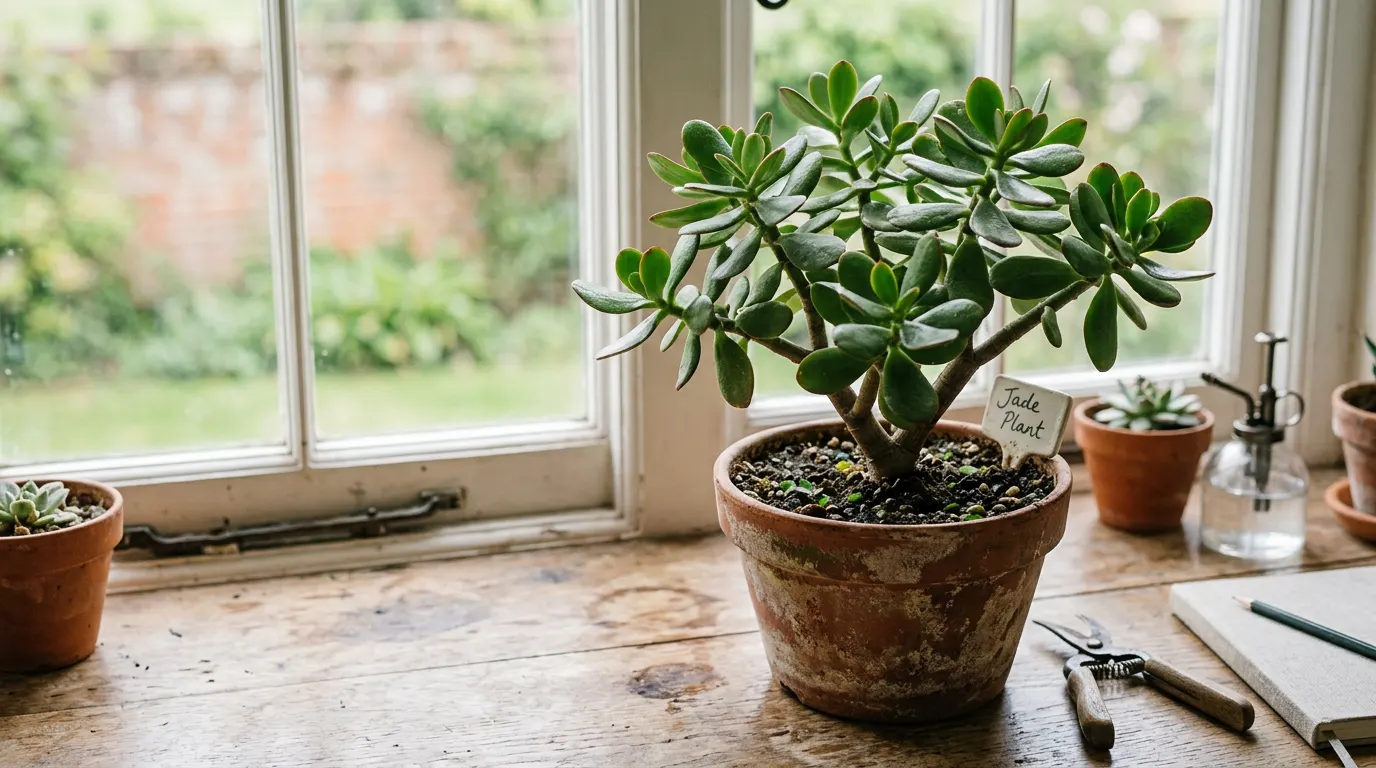
To care for a jade plant indoors, give it 4 to 6 hours of direct sun a day, ideally from a south- or west-facing window (north-facing in the Southern Hemisphere is the sunny side). Plant it in a terracotta pot with gritty succulent mix, water deeply only when the soil is completely dry, and cut watering back hard in winter.
Jade plants (Crassula ovata) are forgiving, but they punish one habit above all others: watering on a schedule. Most jade problems, including dropped leaves, droopy stems and yellowing, trace back to water or light. This guide covers the full routine and a symptom-by-symptom diagnosis so you can work out what your plant is telling you.
Light Requirements: Where to Place Your Jade Indoors
Jade plants need 4 to 6 hours of direct sunlight daily. An unobstructed south- or west-facing window is best in the Northern Hemisphere; use north- or west-facing in the Southern Hemisphere. Too little light causes stretched, weak stems, while good sun brings out red leaf edges.
Indoors, aim for roughly 500 to 1,000 foot-candles or more at leaf level. A simple test: if you can read comfortably without a lamp but the plant never sees a patch of direct sun, it is probably too dim. East windows work only if the plant sits right at the glass; expect slower, slightly leaner growth.
- Good signs: compact, thick stems, plump glossy green leaves, red rims on the leaf edges.
- Low-light signs: long gaps between leaf pairs (etiolation), pale leaves, stems leaning toward the window.
- Too much sun, too fast: pale bleached or brown patches. This happens when a plant raised in shade is moved straight into hot afternoon sun.
Tip: Move a jade toward brighter light over 1 to 2 weeks. Sudden changes cause leaf drop and scorch.
Rotate the pot a quarter turn every week or two so growth stays even. In dim winter months, a grow light placed 30 cm (12 in) above the plant for 10 to 12 hours a day can make up the shortfall.
Watering Indoors: The Soak-and-Dry Method
Water your jade plant thoroughly until water runs from the drainage hole, then empty the saucer. Do not water again until the soil is dry all the way through. Firm, plump leaves mean the plant is hydrated; wrinkled leaves mean it is thirsty.
Jade stores water in its thick leaves and stems, so it handles dry spells far better than wet feet. Jades also use CAM photosynthesis, opening their leaf pores mostly at night. Constantly damp soil and heavy misting work against how the plant is built.
How to tell when it is time to water
- Push a wooden chopstick to the bottom of the pot. If it comes out clean and dry, the pot is ready.
- Gently pinch a leaf in the middle of the plant. A slight softness or give means thirst; a rock-firm leaf means it still has reserves.
- Lift the pot. A dry pot feels noticeably lighter.
In a warm, bright room, that usually works out to every 2 to 3 weeks in summer, but let the soil decide, not the calendar. For more on the technique, see our houseplant watering guide.
Warning: Never leave a jade sitting in a saucer of water. Standing water is the fastest route to root rot.
Best Soil and Pot Type for Potted Jade Plants
Use a heavy terracotta pot with a drainage hole and a gritty, fast-draining mix. A reliable recipe is 2 parts succulent potting mix, 1 part perlite or pumice, and 1 part coarse sand, aiming for a slightly acidic to neutral pH of about 6.0 to 6.8.
Terracotta is porous, so it wicks moisture out of the mix and dries faster than glazed ceramic or plastic. It is also heavy, which matters because mature jades become top-heavy and tip easily. If you prefer a decorative ceramic pot, keep the plant in a plain pot with drainage inside it and remove it to water. Our guide to the best pots for indoor plants compares materials in more detail.
- Size: snug is fine. Jades flower and grow better slightly root-bound.
- Drainage: at least one unblocked hole. Skip gravel layers at the bottom, as they do not improve drainage.
- Mix test: squeeze a damp handful. It should crumble apart, not hold a muddy ball.
Winter Dormancy Care: Adjusting Water and Light
Jade plants slow down in winter. Keep them away from cold glass and heating vents, hold temperatures around 55 to 65°F (13 to 18°C), stop fertilising, and cut watering roughly in half, often to once every 3 to 5 weeks.
Temperatures below 50°F (10°C) can cause rapid leaf drop, so pull the plant back from windows on frosty nights. Equally, a spot directly above a heater dries the air and stresses the plant. In the Southern Hemisphere, this rest period falls from roughly May to August; in the Northern Hemisphere, from November to February.
Cool nights of 50 to 55°F (10 to 13°C) with bright days can encourage small white or pink star-shaped flowers on mature plants. Keep it dry and bright, and be patient.
Tip: In winter, check the soil with a chopstick before every watering. A pot that took 2 weeks to dry in summer can take 5 in winter.
Step-by-Step Repotting: When and How to Pot Up
Repot every 2 to 3 years, in early spring (March to April in the Northern Hemisphere, September to October in the Southern). Choose a heavy pot only 1 to 2 inches wider than the root ball, start with dry soil, and wait about a week before watering.
How to repot a top-heavy jade plant
- Let the soil dry fully so roots come out cleanly and any damage heals faster.
- Tip the pot sideways and slide the plant out, supporting the base of the main trunk.
- Shake off old mix and inspect the roots. Healthy roots are firm and pale; rotten ones are black, brown and mushy.
- Trim any bad roots with clean, sharp shears.
- Add a few inches of gritty mix to the new pot and set the plant at the same depth it grew before.
- Fill around the roots, tapping the pot to settle the mix. Do not bury the trunk deeper.
- Place in bright light, not full midday sun, and hold off watering for 7 days.
If the plant is very large, add a few stones on top of the mix or choose a wider, lower pot to stop it tipping. Gloves help, because jade stems snap easily.
Diagnostic Guide: Why Leaves Drop, Droop, or Turn Yellow
Yellow, translucent, mushy leaves that fall at a touch mean overwatering and likely root rot. Wrinkled, drooping, leathery leaves with dry soil mean underwatering. Leaves that drop without changing colour usually point to cold drafts, low light or a sudden move.
Symptom guide
- Yellow, soft, translucent leaves, falling easily: overwatering. Stop watering and check roots.
- Wrinkled, puckered, drooping leaves, bone-dry soil: underwatering. Soak and recover.
- Green leaves dropping suddenly: cold draft, temperature swing or relocation shock.
- Long, thin, leaning stems and lower leaf drop: not enough light.
- White cottony clusters in leaf joints, yellowing growth: mealybugs.
- A few older lower leaves yellowing and dropping, plant otherwise firm: normal ageing.
How to fix an overwatered jade with root rot
- Stop watering and take the plant out of the pot.
- Cut away black or mushy roots with sterilised shears.
- Let the plant sit out of direct sun for about 24 hours so cuts callus.
- Repot in dry, perlite-rich succulent mix and wait a week before a light watering.
For more depth, see our guides on root rot in houseplants and yellow leaves on houseplants.
How to fix an underwatered jade
Stand the pot in water up to about two-thirds of its height for 30 to 45 minutes, until the top of the soil feels damp. Let it drain fully. Leaves usually plump back up within several days.
How to fix a leggy jade
Prune stretched stems just above a leaf node, then move the plant gradually to a brighter window. Each cut usually produces two new branches, giving a fuller shape over time. Cuttings can be left to callus for a few days, then rooted in dry gritty mix.
How to treat mealybugs
Touch each white cluster with a cotton swab dipped in 70% isopropyl alcohol. Repeat every few days until gone. Avoid soap or oil sprays on jade leaves, as the waxy coating can be damaged and leave marks. If the infestation is heavy, see how to identify houseplant pests and diseases.
Tools and Supplies Checklist
- Terracotta pot with a drainage hole
- Succulent mix, plus perlite or pumice and coarse sand
- Clean bypass pruners or snips
- Wooden chopstick or moisture probe
- 70% isopropyl alcohol and cotton swabs
- Saucer you can empty after watering
Expert Tips and Advanced Techniques
To train a jade into a tree shape, remove lower side branches gradually and prune the top to thicken the trunk. Do this in spring or summer when growth is active, and never remove more than a third of the plant at once.
- Fertiliser: feed diluted succulent fertiliser once every 4 to 6 weeks in the growing season only. See our succulent care guide for comparable routines.
- Red edges: more direct light brings them out; do not push it with sunburn.
- Dust: wipe leaves with a dry or barely damp cloth instead of misting.
- Pets: jade is toxic to cats and dogs, so keep it out of reach.
Frequently Asked Questions
Can jade plants survive in low light rooms?
They can survive for a while, but they will not thrive. In low light, jades stretch, lose leaves and become weak and prone to rot because the soil stays damp longer. If your room is dim, add a grow light or move the plant to the brightest window you have.
How do I know if my jade plant is overwatered or underwatered?
Overwatered leaves are yellow, translucent, soft and drop easily, often with damp soil. Underwatered leaves are wrinkled, thin and drooping, with dry soil. Use the pinch test: a firm leaf is hydrated, a puckered one needs water, and a squishy one has had too much.
Why are my jade plant stems bending or drooping?
Stems bend from low light, thirst or weight. Pale, stretched stems leaning to a window need more sun. Wrinkled leaves on drooping stems need a soak. Heavy, mature branches may need pruning or a stake, and a heavier pot gives better support.
Are jade plants toxic to cats and dogs?
Yes. Jade plant is listed as toxic to cats and dogs, and can cause vomiting, lethargy and loss of coordination if chewed. Keep it on a high shelf or in a room pets cannot enter, and contact a vet if you suspect your pet has eaten any.
How do I get my indoor jade plant to bloom?
Mature jades bloom after a cool, bright, dry rest in autumn and winter. Give them nights around 50 to 55°F (10 to 13°C), plenty of light and very little water. Young or low-light plants rarely flower, so patience and brightness matter most.
How often should I water a jade plant in winter?
Usually once every 3 to 5 weeks, but check the soil first. Water only when the mix is dry to the bottom of the pot and the leaves have lost a little firmness. Cool rooms and low light make the soil dry much more slowly.
Can a jade plant get too much direct sun indoors?
Yes, if it is moved suddenly from shade into strong afternoon sun, especially behind hot glass. Pale or brown scorched patches appear. Acclimate gradually over 1 to 2 weeks and the plant will usually tolerate several hours of direct light happily.
Summary and Next Steps
Good jade plant care indoors comes down to bright light, gritty soil, a terracotta pot and a firm refusal to water on a schedule. Most problems are reversible if you catch them early.
Key takeaways
- Give jade 4 to 6 hours of direct sun daily.
- Water deeply, then wait until the soil is dry all the way through.
- Use terracotta and a gritty mix with perlite or pumice and coarse sand.
- In winter, keep it cool, bright and nearly dry, with no fertiliser.
- Yellow and mushy means too wet; wrinkled and drooping means too dry.
- Repot every 2 to 3 years in early spring, and wait a week to water.
Do these next
- Push a chopstick into your jade's pot today and check whether it is truly dry.
- Check that the drainage hole is clear and the saucer is empty.
- Move the plant to the brightest window you have, shifting it gradually over a couple of weeks.