
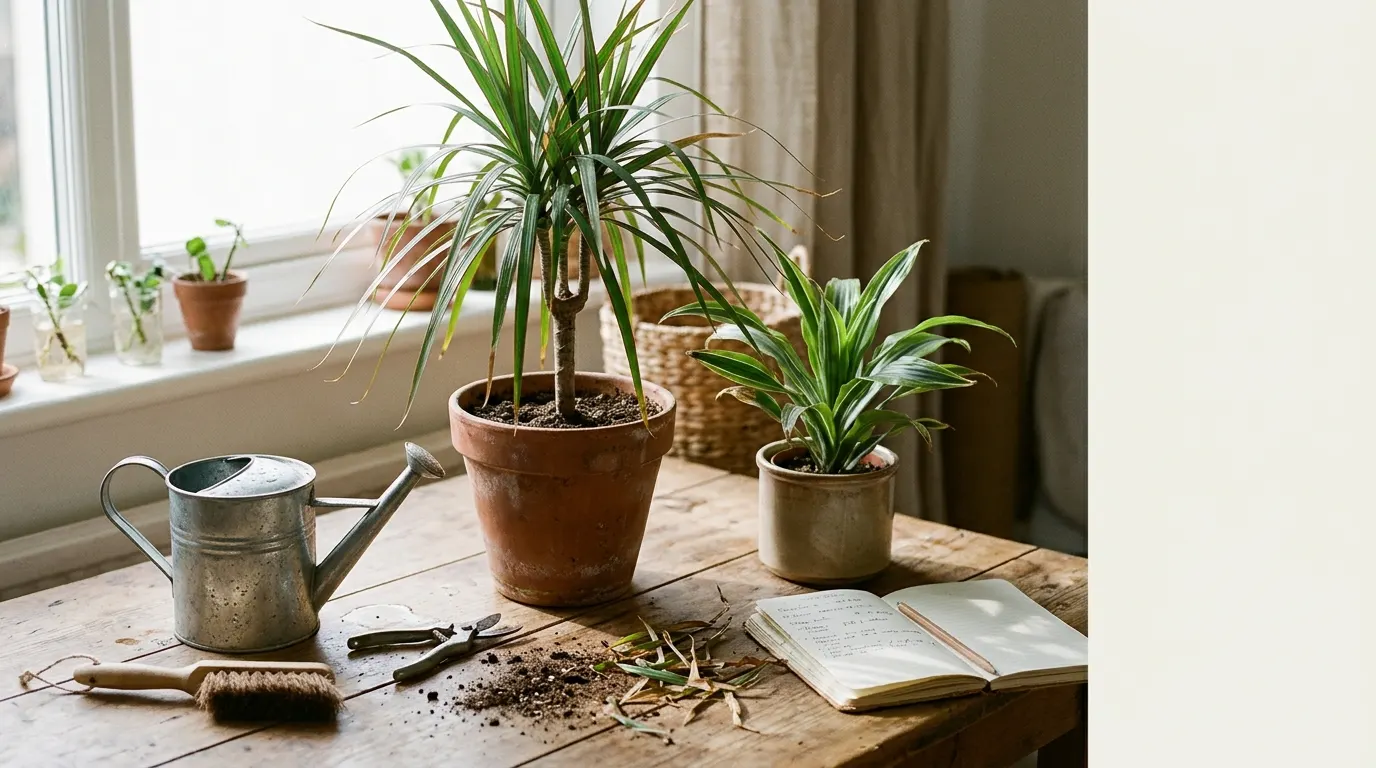
To care for a dracaena plant indoors, give it bright, indirect light and keep the room between 18°C and 27°C (65°F to 80°F). Water thoroughly only when the top half of the soil has dried out, and use filtered, rain or distilled water to avoid brown leaf tips. Repot every two to three years in spring.
Dracaenas are forgiving, but they fail in predictable ways: crispy tips, yellow leaves and soggy roots. This guide covers light, watering, troubleshooting and repotting for both Dracaena marginata (dragon tree) and Dracaena fragrans (corn plant), so you can fix problems and prevent them.
How Much Light and Which Window Does a Dracaena Need?
Dracaenas grow best in medium to bright, indirect light. An east-facing window suits both hemispheres. For the brightest spot, use a south-facing window in the Northern Hemisphere or a north-facing window in the Southern Hemisphere, filtered by a sheer curtain.
The sun's path differs by hemisphere, so the same window direction gives very different light. Use this as a quick guide:
- East-facing (both hemispheres): gentle morning sun, ideal for most dracaenas placed close to the glass.
- Sunniest window, Northern Hemisphere: south-facing. Place the plant 1 to 2 metres (3 to 6 feet) back or behind a sheer curtain.
- Sunniest window, Southern Hemisphere: north-facing. Apply the same distance or curtain rule.
- Dimmer windows: west-facing gets strong afternoon heat, so pull the plant back. The shadier side of the house (north in the Northern Hemisphere, south in the Southern) tolerates dracaenas but slows growth.
Dracaenas survive in low light, but growth becomes slow and sparse, and variegated types lose their colour. Bleached or papery patches mean the sun is too harsh.
Tip: Rotate the pot a quarter turn every couple of weeks so the canes grow upright rather than leaning toward the glass.
How Often Should You Water a Dracaena?
Water a dracaena only when the top 50% to 75% of the soil has dried out. Then soak until water drains from the base and empty the saucer. Dracaenas tolerate dry spells far better than wet soil, which leads to root rot.
A calendar schedule is unreliable, so check the soil instead. Push a finger or a wooden skewer deep into the pot. If it comes out damp or dark, wait.
- Check the soil every 7 to 10 days in the growing season.
- When the top half to three quarters is dry, water slowly until it runs from the drainage holes.
- Let the pot drain fully and discard standing water.
- In cooler months, let the soil dry further between waterings and stop fertilising.
Water quality matters as much as quantity. Dracaenas are sensitive to fluoride and chlorine, which build up in the soil and burn leaf tips. Rainwater, distilled water or filtered water is safer than tap water. For a deeper look at technique, see our ultimate houseplant watering guide.
Why Do Dracaena Leaf Tips Turn Brown?
Brown dracaena leaf tips are mostly caused by fluoride or chlorine in tap water, mineral salt build-up, low humidity or underwatering. Switch to filtered, rain or distilled water, flush the soil, and trim the damaged tips.
Brown tips on dracaenas often appear on several leaves at once and creep slowly inward. Work through these causes in order:
- Water chemistry: the most common cause. Switch water sources permanently.
- Salt build-up: white crust on the soil surface or pot rim signals accumulated minerals or fertiliser.
- Dry air: very low humidity, especially near heaters or air conditioners, dries the tips.
- Underwatering: soil that stays bone dry for long periods stresses the leaf ends.
To flush the soil, take the plant to a sink and slowly run distilled or rainwater through the pot for a few minutes, letting it drain freely. Repeat every few months if you cannot avoid tap water.
To trim, use clean scissors and cut along the natural leaf shape, leaving a thin brown margin so you do not cut into healthy tissue. Damage that has already happened will not turn green again. Our brown and crispy leaves guide and the Plant Clinic page on brown leaf tips cover other houseplants with the same symptom.
Why Are My Dracaena Leaves Turning Yellow?
Widespread yellowing, especially with soft or limp canes, usually means overwatering and early root rot. Yellowing of only the lowest, oldest leaves one at a time is normal ageing as the plant grows taller.
Tell the two apart by looking at the pattern:
- One or two lower leaves yellow and drop slowly: natural. Remove them once they pull away easily.
- Many leaves yellow at once, soil stays wet, stem feels soft: overwatering or root rot.
- Yellow patches facing the window: possible sun stress.
If you suspect rot, act quickly:
- Stop watering and slide the plant out of its pot.
- Check the roots. Healthy roots are firm and pale to orange; rotten roots are dark, mushy and smell sour.
- Cut away rotted roots with clean, sterilised shears.
- Repot in fresh, free-draining mix in a pot with drainage holes.
- Water only when the top half of the soil is dry.
A soft, mushy stem base is a serious sign. If the cane itself is soft, cut above the rot into firm tissue and root the healthy top. Read our root rot guide for a fuller walkthrough.
What Is the Difference Between Dracaena Marginata and Fragrans Care?
Dracaena marginata has narrow, arching leaves with reddish margins and prefers drier soil. Dracaena fragrans has broad, strap-like leaves that show scorch and fluoride damage more visibly. Both need bright, indirect light and well-draining soil.
The core routine is the same, but a few differences help:
- Dracaena marginata (dragon tree): slender canes topped with spiky foliage. It copes well with drying out and dislikes sitting wet, so favour a very free-draining mix. Tip browning shows up on the thin leaf ends.
- Dracaena fragrans (corn plant): thick canes with wide, glossy leaves, often with a pale or yellow central stripe. Broad leaves have more surface to scorch, so keep them out of direct sun. They also collect dust, so wipe them with a damp cloth every month or so.
Both tolerate average household humidity, though extra humidity helps if tips keep browning. Both are also toxic to cats and dogs if chewed, so keep them out of reach of pets.
How Do You Repot a Dracaena Step by Step?
Repot a dracaena every two to three years in spring (March to May in the Northern Hemisphere, September to November in the Southern). Choose a pot 5 cm (2 inches) wider with drainage holes and a well-aerated mix containing about 30% perlite or pumice.
Signs it is time include roots circling the surface or poking from the holes, water running straight through, or slow growth during the growing season.
What you need:
- A pot with drainage holes, 5 cm (2 inches) larger than the current one
- Free-draining indoor potting mix plus perlite or pumice
- Sterilised pruning shears
- Filtered or rain water
Steps:
- Water lightly a day before so the root ball slips out easily.
- Tip the pot sideways and ease the plant out, supporting the base of the cane.
- Loosen circling roots gently and trim any dark or mushy ones.
- Add a layer of mix to the new pot so the plant sits at the same depth as before.
- Fill around the roots, firm lightly and water until it drains.
- Keep the plant in bright, indirect light and hold off fertiliser for about a month.
Pot choice matters, so see our guide to the best pots for indoor plants.
Warning: Avoid jumping to a much bigger pot. Excess soil stays wet for too long and encourages rot.
What Temperature and Humidity Suit a Dracaena?
Dracaenas thrive between 18°C and 27°C (65°F to 80°F). Keep them above about 13°C (55°F) and away from cold drafts, heating vents and air conditioner outlets. Average household humidity is fine, but drier air can contribute to brown tips.
Seasonal habits help:
- Growing season (spring and summer): check soil every 7 to 10 days and feed lightly if you wish.
- Cooler months: water less, let the soil dry further and skip fertiliser.
- Placement: keep plants clear of cold glass on winter nights and hot glass on summer afternoons.
Tools and Supplies Checklist
A few simple items make dracaena care easier:
- Wooden skewer or moisture meter for checking soil
- Sterilised bypass pruning shears
- Rain, filtered or distilled water
- Free-draining potting mix with perlite or pumice
- Pots with drainage holes
- A hygrometer if you want to track humidity
Expert Tips for a Healthier Dracaena
- Collect rainwater in a clean container for easy fluoride-free watering.
- Use a half-strength houseplant fertiliser only in the growing season, as heavy feeding adds salts.
- Wipe leaves regularly so they can absorb light efficiently.
- If the plant gets leggy, cut the cane back in spring; new shoots usually sprout below the cut.
- Inspect leaf undersides occasionally for pests; see our houseplant pest identification guide.
Frequently Asked Questions
Can dracaena plants tolerate low light indoors?
Yes, dracaenas survive in low light, but they grow slowly and may become sparse. Variegated types lose colour contrast. For best results, place them in an east-facing window or a bright room away from direct sun, and water less often in dim spots because the soil dries slowly.
What is the ideal indoor temperature range for dracaena?
The ideal range is 18°C to 27°C (65°F to 80°F). Dracaenas can handle brief dips, but try to keep them above 13°C (55°F). Avoid cold drafts, heating vents and air conditioner airflow, which stress the leaves and can cause browning or leaf drop.
Should I cut off brown tips on my dracaena leaves?
Yes, you can trim brown tips for appearance, but it will not cure the cause. Cut along the natural leaf shape with clean scissors, leaving a thin brown edge. Then switch to filtered or rainwater so new growth stays clean.
Why is my dracaena stem becoming soft or mushy?
A soft or mushy stem usually means rot from overwatering or poor drainage. Remove the plant from the pot, check the roots and cut away anything dark or smelly. If the cane is soft, cut above the damage into firm tissue and root the healthy top in fresh mix.
Is dracaena toxic to household pets?
Yes, dracaenas are considered toxic to cats and dogs if chewed or eaten, and can cause drooling, vomiting and a loss of appetite. Keep them on high shelves or in rooms pets cannot enter, and contact a vet if your pet has nibbled the leaves.
How do I know when to water my dracaena?
Push a finger or skewer deep into the pot. If the top half to three quarters of the soil feels dry, it is time to water. If it is still damp, wait a few more days. The pot should also feel noticeably lighter when dry.
Can I use tap water on my dracaena?
You can, but tap water often contains fluoride and chlorine, which cause brown tips over time. If you must use it, let it sit out overnight and flush the soil every few months. Rain, filtered or distilled water is a better long-term choice.
Summary and Next Steps
Caring for a dracaena plant indoors comes down to light, careful watering and good drainage. Key takeaways:
- Provide bright, indirect light; east-facing suits both hemispheres, and the sunniest window is south-facing in the Northern Hemisphere and north-facing in the Southern.
- Keep temperatures between 18°C and 27°C (65°F to 80°F).
- Water only when the top 50% to 75% of the soil is dry.
- Use rain, filtered or distilled water to prevent brown tips.
- Yellowing of many leaves points to overwatering; losing the odd lower leaf is normal.
- Repot every two to three years in spring into a mix with about 30% perlite or pumice.
Immediate actions:
- Check your soil moisture today with a skewer before watering.
- Switch to rain, filtered or distilled water and flush the pot.
- Move the plant to a bright spot with indirect light and trim any brown tips.
For related plants with similar needs, try our guides to snake plants and ZZ plants.