
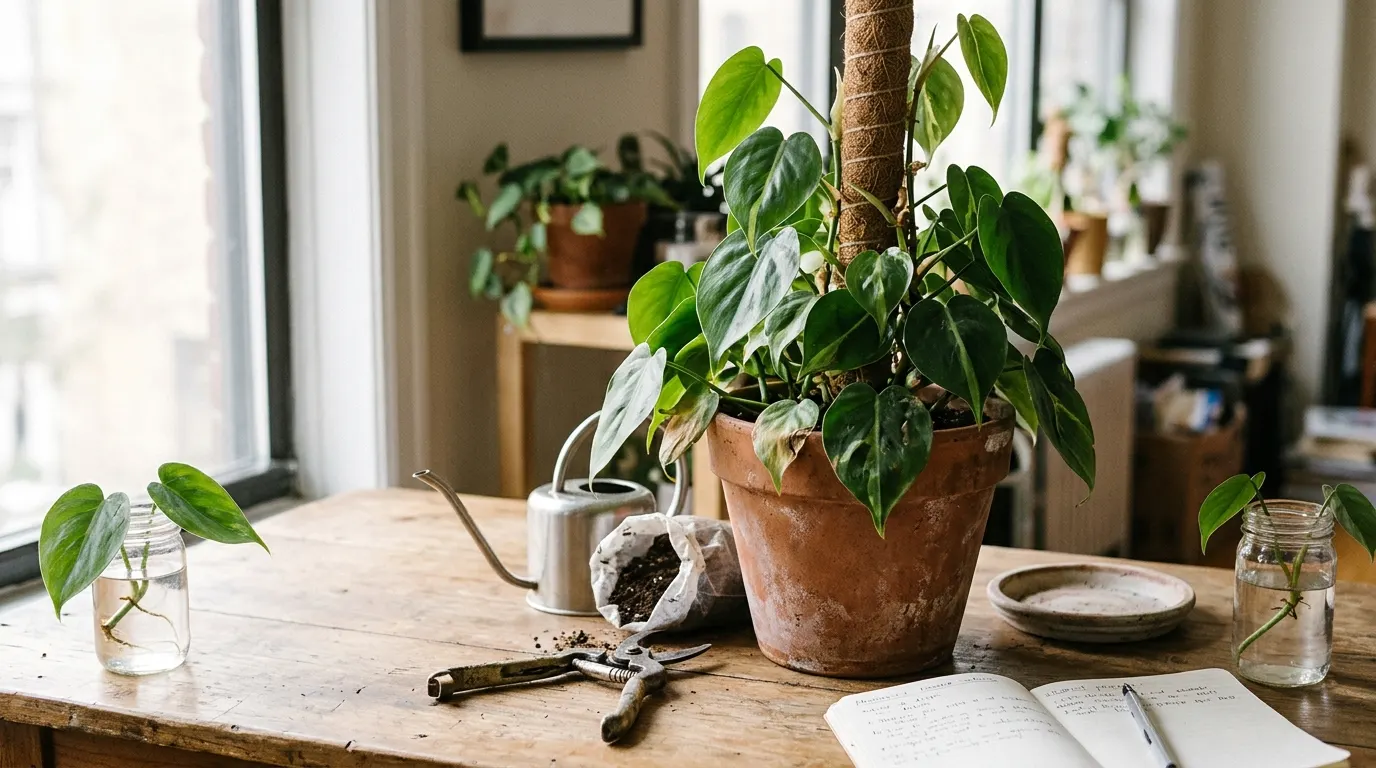
To care for a philodendron indoors, give it bright indirect light, water thoroughly only when the top half of the potting mix has dried out, and plant it in a chunky, well-draining aroid mix. Keep temperatures between 65°F and 80°F (18°C to 27°C), aim for humidity above 50 percent, and give climbing types a damp moss pole.
Most philodendron problems come from three things: too little light, too much water, and soil that stays soggy. This guide covers each one, then shows you how to read yellow or drooping leaves, set up climbing support and propagate cuttings.
How Much Light Does a Philodendron Need?
Philodendrons grow best in medium to bright indirect light, roughly 200 to 500 foot-candles for 6 to 8 hours a day. Direct afternoon sun scorches the leaves, while dim corners produce small leaves and long, bare stems.
A simple test: at midday, hold your hand a foot above the leaves. A soft, fuzzy shadow means the light is about right. A sharp, dark shadow means it is too strong, and almost no shadow means it is too dim.
- Best spots: a few feet back from a bright window, or right beside an east-facing window.
- Acceptable: a north-facing window in the Northern Hemisphere, or a south-facing window in the Southern Hemisphere, where light is gentler.
- Avoid: unfiltered west-facing glass in summer, where leaves can bleach or burn.
If the plant is stretching, with small leaves and wide gaps between them, it wants more light. Move it closer to the window, or add a full-spectrum LED grow light for around 12 hours a day.
Tip: Rotate the pot a quarter turn each time you water so growth stays even and does not lean towards the glass.
How Often Should You Water an Indoor Philodendron?
Water thoroughly, until liquid runs out of the drainage holes, once the top 50 percent of the soil is completely dry. Empty the drip tray within about 15 minutes so the roots never sit in standing water.
There is no fixed schedule that works for every home. In a warm, bright room you might water weekly in summer. In a cool room in winter, it may be every two to three weeks. Let the soil decide, not the calendar.
- Push a wooden dowel or your finger several inches into the mix.
- If it comes out damp or with soil clinging to it, wait a few more days.
- If it is dry through the top half, water slowly around the whole surface.
- Let it drain fully, then tip out the saucer.
A pot that feels light when lifted is a reliable second check. Our ultimate houseplant watering guide goes deeper on bottom watering, pot weight and water quality.
Warning: Pots without drainage holes are the most common cause of philodendron root rot. Use a nursery pot with holes inside a decorative cover pot if you want the look.
What Is the Best Soil, Temperature and Humidity?
Use an airy aroid mix of orchid bark, perlite or pumice, and coco coir, with a little charcoal if you like. Keep the plant between 65°F and 80°F (18°C to 27°C) with humidity above 50 percent.
Philodendrons are in the Araceae family and many are hemiepiphytes, meaning their roots are used to air movement and quick drainage. Dense potting soil holds water around the roots and starves them of oxygen.
A reliable mix:
- 2 parts orchid bark
- 1 part perlite or pumice
- 1 part coco coir or good-quality potting mix
- A handful of horticultural charcoal (optional)
Choose a pot only 1 to 2 inches wider than the root ball. An oversized pot stays wet far too long. If you are unsure which material suits you, see our guide to the best pots for indoor plants.
For comfort and humidity:
- Keep the plant away from cold drafts, air-conditioning vents and heaters.
- Group plants together or use a pebble tray to lift humidity slightly.
- Wipe the leaves with a damp cloth every few weeks so they can absorb light efficiently.
Why Are My Philodendron Leaves Turning Yellow?
Yellow leaves most often point to overwatering and poor drainage, which suffocate the roots. One older, lower leaf yellowing now and then is normal ageing. Widespread yellowing needs a closer look at watering, light and feeding.
Work through these clues:
- Whole leaves pale yellow with soft, limp stems: overwatering. Stop watering, check the roots and repot into a chunky mix.
- Single lower leaf yellow, rest healthy: natural ageing. Remove it once it is fully yellow.
- Patchy yellowing on upper leaves, dry soil: underwatering or salt build-up from tap water. Flush the pot with plenty of water.
- Overall pale, small new growth: low light or hunger. Move it brighter and begin feeding.
If you see black or mushy roots, trim them back to firm tissue with clean shears, then repot. Our root rot guide shows the full rescue process, and the broader yellow leaves on houseplants article helps with other causes.
Tip: Hold off on fertiliser while leaves are yellowing from wet soil. Feeding a stressed root system only adds to the problem.
Why Is My Philodendron Drooping?
Underwatered plants droop with dry, shrunken soil and perk up within hours of a good drink. Plants drooping in wet soil usually have root rot, with mushy brown stems and a sour smell, and need roots pruned and fresh mix.
This is the diagnosis people struggle with most, because both problems look similar from above. Check before you act:
- Lift the pot. Very light means thirsty; heavy means wet.
- Push a dowel in. Dry and dusty means underwatered; cold and damp means too wet.
- Look at the drainage holes for dark, soft roots poking out.
If underwatered: water thoroughly and let it drain. If the soil has shrunk away from the pot and water runs straight through, soak the pot in a bucket for 20 minutes.
If root rot is the cause:
- Slide the plant out of the pot and shake off the old mix.
- Cut away any black, mushy or foul-smelling roots with sterilised shears.
- Rinse the remaining roots and repot into fresh aroid mix in a clean pot with drainage.
- Water lightly and keep the plant in bright indirect light while it recovers.
Drooping can also follow repotting or a move to a new spot. Give the plant two to three weeks to settle before changing anything else. For other wilting causes, the Plant Clinic wilting page is a handy checklist.
How Do You Support a Climbing Philodendron?
Insert a sturdy moss pole at repotting and tie the stems to it loosely with soft ties, placing aerial roots against the surface. Keep the moss damp so the roots grip, which encourages larger, more mature leaves.
First, know which type you have. Climbing philodendrons, such as heartleaf, have long vining stems and benefit from a pole or trellis. Self-heading types grow in a rosette from a central crown and do not need support.
- Push the pole into the pot, close to the main stem, before or while repotting so you do not damage roots later.
- Position the stem against the pole with the aerial roots facing the moss.
- Tie the stem every 6 to 8 inches with soft velcro ties or twine, tight enough to hold but loose enough to allow thickening.
- Mist or water the pole every few days so it stays damp, not dripping.
- Keep tying new growth upward as it extends.
A pole that is allowed to dry out acts like a plain stake. The moisture is what draws aerial roots into the moss and signals the plant to produce bigger leaves. A sphagnum-filled wire mesh pole is easy to top up with water, and a coco coir pole also works if you keep it damp.
Tip: Never force a stiff stem against the pole. Bend gently, or take a cutting if a stem is too leggy to train.
How Do You Propagate a Philodendron from Stem Cuttings?
Take a 4 to 6 inch cutting just below a node, ideally one with an aerial root, using sterile shears. Place the node in clean water in indirect light, or in moist perlite, until roots reach about 2 inches long.
- Choose a healthy vine with at least two leaves and a visible node.
- Cut about half an inch below the node with clean shears.
- Remove the lowest leaf so no foliage sits underwater.
- Put the cutting in a clear glass of room-temperature water, with the node submerged.
- Place it in bright indirect light and change the water weekly.
- When roots are about 2 inches long, pot the cutting into aroid mix and keep the soil lightly moist for two weeks.
Cuttings usually root in a few weeks in warm conditions. For a stronger transition to soil, root directly in damp perlite, which avoids the shock of moving from water. Our guides on rooting mediums beyond soil and water and propagating monstera from cuttings cover very similar techniques.
Tip: Plant three or four cuttings in one pot for a fuller look.
Tools and Supplies You Need
You need only a few items to keep a philodendron thriving:
- Moisture meter or wooden dowel
- Chunky aroid mix (bark, perlite or pumice, coco coir, charcoal)
- Sterilised bypass pruning shears
- Sphagnum moss pole or wire mesh pole
- Soft velcro ties or garden twine
- Nursery pot with drainage holes
- Clear glass for propagation
Seasonal Care and Expert Tips
Philodendrons grow actively in spring and summer, which is roughly March to September in the Northern Hemisphere and September to March in the Southern Hemisphere. During those months, feed with a balanced liquid fertiliser at half strength every 2 to 4 weeks and expect to water more often.
In autumn and winter growth slows. Stop fertilising, halve your watering frequency and keep the plant away from cold windows and heating vents.
- Flush the pot with water every few months to wash out mineral salts.
- To get bigger leaves, combine bright light, a damp moss pole and regular feeding in the growing season.
- Check under leaves and along stems for pests regularly. Our guide to identifying houseplant pests and diseases shows what to look for.
- Prune leggy stems back to a node to encourage bushier growth.
Frequently Asked Questions
Can an indoor philodendron survive in low light?
Yes, philodendrons tolerate low light better than many houseplants, but growth slows and stems stretch with small, widely spaced leaves. They also dry out more slowly, so water less often. For fuller, healthier plants, place them in medium to bright indirect light or add a grow light.
Why are the tips of my philodendron leaves turning brown and crispy?
Brown, crispy tips usually come from dry air, irregular watering or salt build-up from tap water and fertiliser. Water thoroughly and consistently, flush the pot every few months, and keep the plant away from vents. Trim the brown edges with clean scissors. See our brown leaf tips page for more.
How fast do climbing philodendrons grow with a moss pole?
In good light and warm conditions, a climbing philodendron can add several new leaves a month during the growing season. A damp moss pole usually leads to larger leaves over time as aerial roots attach. Growth slows significantly in cooler, darker winter months.
Are philodendrons toxic to cats and dogs?
Yes. Philodendrons contain calcium oxalate crystals that can irritate the mouth and stomach if chewed, causing drooling, vomiting and swelling. Keep plants out of reach of pets and children, and contact a vet if you suspect your pet has eaten any.
How often should I fertilise a philodendron indoors?
Feed every 2 to 4 weeks in spring and summer with a balanced liquid fertiliser diluted to half strength. Skip feeding in autumn and winter when growth slows. Always water first so the roots are not burnt by concentrated fertiliser on dry soil.
How do you save an overwatered philodendron?
Stop watering, remove the plant from its pot and check the roots. Cut away any black or mushy roots, repot into fresh chunky aroid mix in a pot with drainage, and keep it in bright indirect light. Water only after the top half of the soil has dried.
Summary and Next Steps
Indoor philodendron care comes down to light, drainage and restraint with water. Get those right and most other problems disappear.
Key takeaways:
- Provide medium to bright indirect light, roughly 200 to 500 foot-candles.
- Water only when the top half of the soil is dry, and always empty the saucer.
- Use a chunky aroid mix in a pot with drainage holes.
- Yellow leaves with soft stems mean overwatering; drooping in dry soil means thirst.
- Keep moss poles damp so aerial roots can attach and leaves grow larger.
- Propagate 4 to 6 inch cuttings below a node in water or perlite.
Do these next:
- Check the soil with a dowel today and water only if the top half is dry.
- Confirm your pot has drainage holes and the saucer is empty.
- Move the plant to brighter indirect light, or add a moss pole if it is a climbing type.
With steady light, careful watering and good support, your indoor philodendron care routine will reward you with lush, full growth.