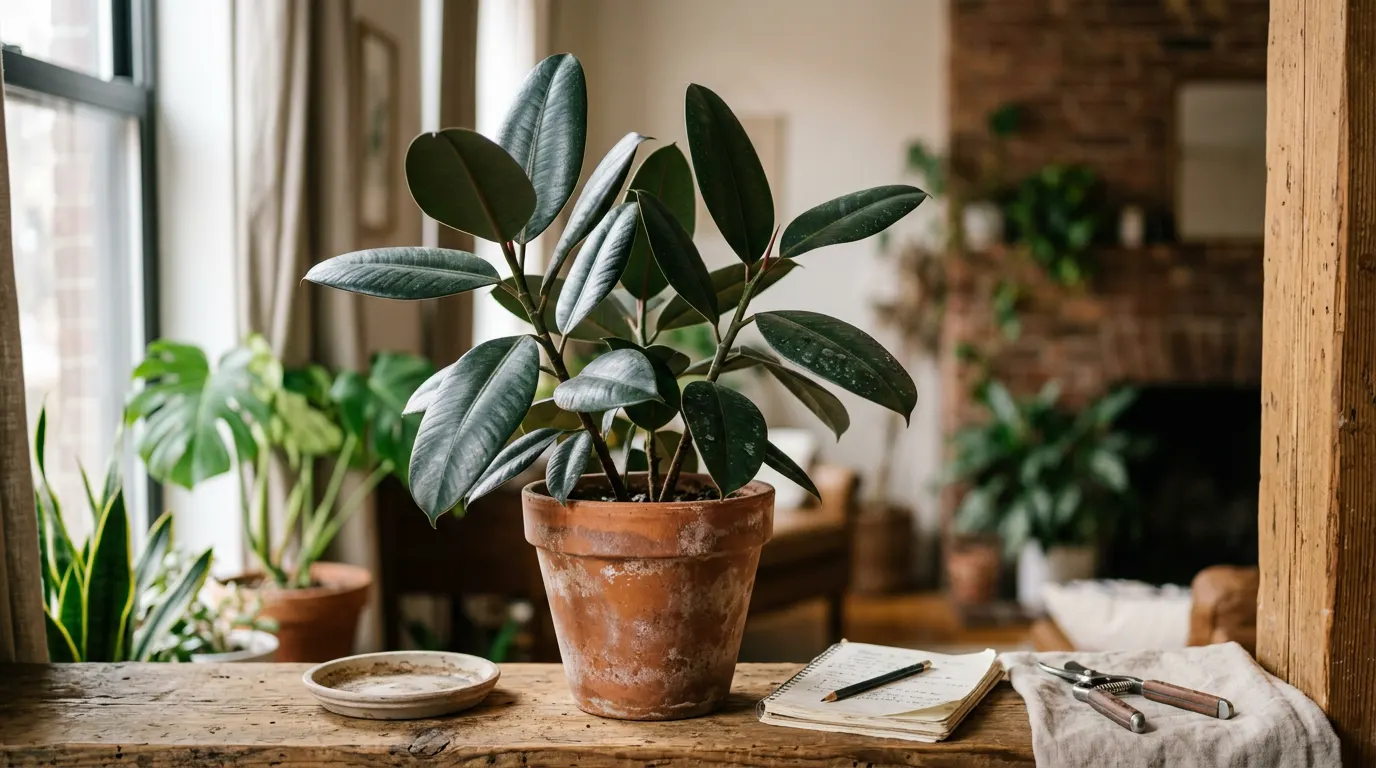
Give a rubber plant (Ficus elastica) bright, indirect light and water it thoroughly only when the top 2 inches of soil are dry. Keep it at 60–80°F (15–27°C) in a well-draining mix, away from cold drafts. Avoid moving it often, since relocation commonly triggers leaf drop. Prune in spring to encourage branching.
Rubber plants are forgiving, but they react quickly to change. Most problems, from drooping to dropped leaves, trace back to three things: water, light and sudden moves. This guide covers each one, with a soil-based diagnostic table, clear pruning cuts and step-by-step propagation.
Rubber Plant Care at a Glance
A rubber plant needs bright indirect light, a soak-and-dry watering rhythm, 60–80°F and a free-draining pot. Fertilise lightly in the growing season and leave it in one spot once it settles.
| Factor | What it needs |
|---|---|
| Light | Bright, indirect; roughly 2,000–5,000 lux at the leaves |
| Water | When the top 2 inches of soil are dry |
| Temperature | 60–80°F (15–27°C), no cold drafts |
| Humidity | 40–60% is ideal; average home air is fine |
| Soil | Well-draining mix with perlite |
| Feeding | Monthly in the growing season, none in winter |
| Pets | Mildly toxic |
What Light Does a Rubber Plant Need?
Rubber plants do best in bright, indirect light, such as beside an east-facing window or a few feet back from a bright window that gets afternoon sun. They tolerate medium light but grow slowly. Direct afternoon sun scorches the leaves.
Published lux figures vary (some say 1,000–3,000, others 2,000–5,000) because people measure at different distances and seasons. Treat the range as a guide. A free lux meter app on your phone helps you compare spots in your own home.
Window direction depends on your hemisphere:
- Northern Hemisphere: south and east windows are brightest. A south window is best with a sheer curtain or a few feet of distance.
- Southern Hemisphere (Australia, NZ): north-facing windows get the strongest light, so the same rule applies to them.
- Low light rooms: the plant survives, but growth slows, leaves space out and the stem stretches.
Variegated cultivars such as Tineke and Ruby need brighter light than plain green types to keep their colour. In low light, the pale or pink patterns fade and the plant reverts to duller foliage.
Tip: Rotate the pot a quarter turn every week or two so the plant grows evenly instead of leaning toward the window.
How Often Should You Water a Rubber Plant?
Water when the top 2 inches of soil are dry, which is usually every 7–14 days in the growing season. Soak until water drains out, then empty the saucer. Check the soil rather than following a fixed schedule.
Push a finger into the soil to the second knuckle. If it feels dry, water. If it feels damp, wait a few days and check again. A moisture meter works too, but the finger test is just as reliable.
- Water slowly with room-temperature water until it runs from the drainage holes.
- Let the pot drain for 10–15 minutes.
- Empty the saucer so the roots never sit in water.
- Check again in a few days, not on a calendar.
In winter, growth slows and the soil dries more slowly. Some plants in cool rooms go about three weeks between waterings, while warmer rooms may need water every 10–14 days. Use longer, soil-checked intervals instead of a set number. For more detail on technique, see our houseplant watering guide.
Why Is My Rubber Plant Drooping or Dropping Leaves?
Check the soil first. Dry soil with drooping leaves means underwatering. Wet soil means overwatering or root rot. Leaf drop also follows a move, a cold draft, low light or repotting. A few lower leaves yellowing is normal ageing.
Sources often disagree on whether drooping means thirst or too much water. The soil check settles it.
| Symptom | Soil condition | Likely cause | Fix |
|---|---|---|---|
| Drooping, soft leaves | Dry | Underwatering | Water thoroughly and let it drain |
| Drooping, yellowing lower leaves | Wet for days | Overwatering or root rot | Stop watering, inspect roots, repot in fresh mix |
| Sudden leaf drop | Any | Move, draft or temperature shock | Pick a stable spot and leave it |
| Leaves dropping after repotting | Any | Transplant stress | Keep conditions steady for 2–3 weeks |
| Few yellow lower leaves | Normal | Natural ageing | No action needed |
| Stretched stem, wide leaf gaps | Normal | Too little light | Move to brighter light |
| Curling leaves | Dry or very dry air | Water stress or low humidity | Water if dry, avoid heaters |
| Brown, crispy or bleached patches | Any | Sunburn | Filter the light and trim damaged leaves |
What to do if the soil is wet
- Tip the plant out of its pot.
- Look for black, mushy roots with a sour smell. Healthy roots are firm and pale.
- Cut off the rotted roots with clean shears.
- Repot in fresh, well-draining mix in a pot with drainage holes.
- Water lightly and wait for the top soil to dry before the next drink.
Our root rot guide covers the full rescue process.
The don't-move-it rule
Rubber plants dislike relocation. Moving one from a shop to your home, or from room to room, commonly causes a handful of leaves to drop over a couple of weeks. Choose a bright, stable spot away from vents and cold glass, then leave it there. New leaves usually follow once the plant settles.
Warning: Brown, dry patches from sunburn will not recover. Trim them off if they bother you, and move the plant out of direct sun.
For other causes of leaf discoloration, see yellow leaves on houseplants.
How Do You Prune a Rubber Plant to Make It Bushier?
Prune in spring or early summer with clean, sharp shears. Cut just above a node or leaf scar, and the plant will usually branch from below the cut. Wear gloves and wipe away the milky latex sap, which can irritate skin.
Spring in the Northern Hemisphere is March to May. In Australia and New Zealand, prune in September to November.
- Decide on the height you want. You can cut the top off and the plant will grow back.
- Wipe your shears with rubbing alcohol.
- Cut about a quarter inch above a node or leaf scar, at a slight angle.
- Dab the sap from the cut with a damp cloth. It stops flowing within minutes.
- Keep the plant in bright light and water normally.
Expect one or two new shoots to appear below the cut within a few weeks. A taller plant may need cuts at different heights for a fuller shape. Wide gaps between leaves point to low light, so brighten the spot as well as pruning.
Don't throw the trimmings away. They make good cuttings.
How Do You Propagate a Rubber Plant? (Step by Step)
Take a 6–8 inch cutting with at least one leaf and a node. Let the sap dry, then root it in water or moist soil in warm, bright, indirect light. Air layering is more reliable for large plants. Rooting usually takes several weeks.
Propagating from a stem cutting
- In spring or early summer, cut a 6–8 inch tip with at least one healthy leaf and a node.
- Wear gloves and rinse the milky sap from the cut end.
- Let the cut dry for an hour.
- Optional: dip the end in rooting hormone.
- Place it in a jar of room-temperature water, or in a pot of moist, airy mix with perlite.
- Set it in a warm spot with bright, indirect light.
- Change the water weekly, or keep the soil lightly moist.
- When roots are a couple of inches long, pot the cutting in fresh mix.
Rolling large leaves and tying them loosely can stop a cutting from toppling. For more on different options, see rooting mediums beyond soil and water.
Propagating by air layering
This suits a tall, leggy plant. It roots a section while it is still attached, so it keeps getting water.
- Choose a healthy stem and make an upward cut about one-third through, just below a node.
- Prop the cut open with a matchstick.
- Wrap a handful of damp sphagnum moss around the cut.
- Cover with plastic wrap and tape both ends to hold moisture in.
- Wait until roots show through the moss, usually several weeks.
- Cut below the new roots and pot up the new plant.
The parent plant then branches from the cut section.
What Soil, Humidity, Temperature and Feeding Does a Rubber Plant Need?
Use a well-draining potting mix with perlite, and keep humidity around 40–60% and temperatures at 60–80°F. Feed monthly in spring and summer with a balanced fertiliser. Wipe the leaves regularly so dust doesn't block light.
- Soil: a standard houseplant mix blended with perlite. The pot must have drainage holes. See our guide to the best pots for indoor plants.
- Temperature: keep it above 60°F and away from cold windows, air conditioners and heating vents.
- Humidity: average home air is fine. Misting does little and isn't needed. Wiping leaves helps more.
- Feeding: use a balanced liquid fertiliser at half strength monthly during active growth. Stop in winter.
- Repotting: move up one pot size when roots circle the base or poke from the holes, ideally in spring.
- Cleaning: wipe the leaves with a soft damp cloth every few weeks.
Are Rubber Plants Toxic to Cats and Dogs?
Yes, mildly. The latex sap can irritate skin, and chewing the leaves can cause drooling and stomach upset in pets. Keep the plant out of reach and wash your hands after pruning.
If sap gets on skin, wash it with soap and water. If a pet chews the plant, wipe its mouth, offer water and call your vet if symptoms continue. Wear gloves when pruning and cleaning up cuttings.
Tools and Supplies
- Pot with drainage holes and a saucer
- Well-draining potting mix and perlite
- Moisture meter or your finger
- Lux meter app
- Clean, sharp pruning shears
- Gloves for latex sap
- Rooting hormone (optional)
- Sphagnum moss and plastic wrap for air layering
- Rubbing alcohol, neem oil and insecticidal soap
- Soft cloth and balanced liquid fertiliser
Common Problems and Quick Fixes
What if the leaves are sticky or have brown bumps?
Sticky leaves with brown bumps point to scale. White cottony masses in leaf joints point to mealybugs. Isolate the plant, wipe pests with rubbing alcohol, then treat with neem oil or insecticidal soap. See how to identify houseplant pests.
What if the stem is leggy?
Move the plant to brighter indirect light, rotate it weekly and prune to encourage branching.
Expert Tips
- Move the plant to its brightest spot before winter, not in midwinter.
- Keep a simple log of when leaves drop and what changed. It shows patterns quickly.
- Use a pot only 1–2 inches wider than the root ball to avoid soggy soil.
- Check pot weight. A light pot usually means dry soil.
- Compare it with a fiddle leaf fig, which is fussier. A rubber plant is the easier statement tree.
FAQ
How often should I water my rubber plant in winter?
Water only when the top 2 inches of soil are dry. In cool rooms, that may be every two to three weeks, because growth slows and soil dries more slowly. Always check the soil rather than following a fixed schedule, and empty the saucer after watering.
Can a rubber plant survive in a north-facing window or low light?
It can survive, but it won't thrive. Growth slows, leaves space out and the stem stretches. In the Northern Hemisphere, a north window is the dimmest. Move it closer to the glass or add a grow light, and water less often.
Why does my rubber plant have yellow leaves?
Yellow lower leaves usually mean overwatering, especially if the soil stays wet for days. A few yellowing leaves at the base can also be normal ageing. Reduce watering, check the pot drains and make sure the plant gets enough light.
Why are the leaves on my rubber plant curling?
Curling signals water stress, temperature stress or very dry air. Check the soil first and water if it is dry. Then move the plant away from heaters and cold drafts. Curling from low humidity is common in winter.
Will my rubber plant grow back leaves after it drops them?
Yes, usually. Once light, water and temperature are steady, new leaves grow from the top and from nodes below any pruning cuts. Recovery after a move or repotting often takes a few weeks. Bare lower stems won't regrow leaves, but pruning can create new branches.
Should I mist my rubber plant?
Misting isn't necessary. It gives only a brief humidity lift and can leave water on leaves. Wiping the leaves with a damp cloth keeps them clean and helps the plant photosynthesise, which is more useful than misting.
When should I repot my rubber plant?
Repot every two years or when roots circle the pot or push from the drainage holes. Do it in spring, using a pot one size larger and fresh well-draining mix. Expect a few weeks of adjustment, so keep conditions steady afterward.
How tall will an indoor rubber plant get, and can I cut the top off?
Indoors, it can reach 6 feet or more over time. You can cut the top off at any point above a node. The plant will usually branch from below the cut, and the trimmed tip can be rooted as a cutting.
Summary and Next Steps
Rubber plant care comes down to steady conditions and watching the soil. These are the key points:
- Give bright, indirect light, and adjust for variegated types.
- Water when the top 2 inches of soil are dry, and drain the saucer.
- Check the soil before treating a drooping or dropping plant.
- Avoid moving the plant, and keep it away from drafts and vents.
- Prune above a node in spring or early summer, and use the cuttings.
- Wear gloves, as the sap irritates skin and is mildly toxic to pets.
Next steps:
- Push a finger into the soil today and decide whether to water.
- Check the pot drains and the plant sits in bright, indirect light.
- Pick one spot for the plant and leave it there for the season.
With steady light, careful watering and a few well-placed cuts, rubber plant care stays simple, and your plant will reward you with glossy new growth.