
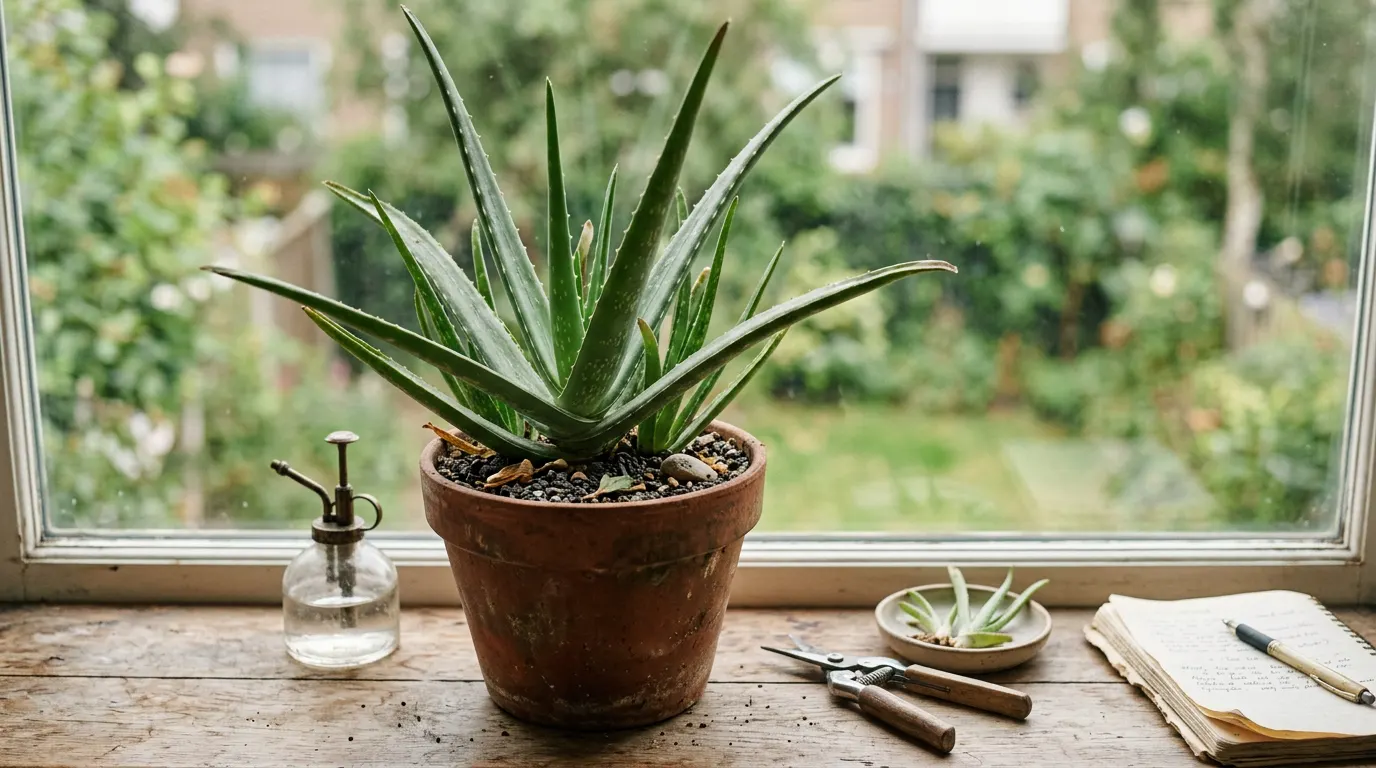
Indoor aloe vera care comes down to bright light, fast-draining soil and infrequent watering. Give your plant 6-8 hours of bright, indirect sun, water deeply only when the soil is completely dry (every 2-4 weeks), and use cactus mix in a terra cotta pot with drainage holes. Keep rooms above 50°F (10°C) and remove pups once they are large enough.
Most aloe vera plants that die indoors are loved to death with too much water and too little light. The plant stores water in its thick leaves, so it forgives neglect far better than attention. This guide covers light, watering, soil, pup removal and how to read the leaves when something goes wrong.
How Much Light Does an Indoor Aloe Vera Need?
Aloe vera needs 6-8 hours of bright, indirect sunlight daily. A south- or west-facing window is ideal in the Northern Hemisphere, and a north- or west-facing window works in the Southern Hemisphere. Too little light causes leggy, floppy growth, while sudden harsh sun scorches the leaves.
The best spot is right beside a bright window, or a few feet back if the glass gets intense afternoon sun. Turn the pot a quarter turn every week or two so the rosette grows evenly instead of leaning toward the glass.
Watch the leaf colour, because it tells you how the light is working:
- Healthy light: plump, upright, grey-green leaves with a slightly toothed edge.
- Too little light: thin, stretched leaves that bend outward and a rosette that looks open and sparse.
- Too much direct sun: bronze, reddish-brown or bleached patches.
The bronze or red tint is a sun-stress response. The plant produces protective pigments when it gets more light than it can handle. If you move it to bright, indirect light, new growth comes in green again. Old scorched patches with dry, tan, crispy tissue will not recover, but they are cosmetic.
Tip: If your home is dark in winter, a basic full-spectrum grow light placed above the plant for 10-12 hours a day can keep it compact and firm.
If you move an aloe outdoors for summer, introduce it to direct sun over a week or two. Going straight from a living room to full midday sun is the quickest way to burn it.
How Often Should You Water an Indoor Aloe Vera?
Water indoor aloe vera deeply every 2-4 weeks during active growth, only after the soil has dried out completely. In winter, stretch this to every 4-6 weeks. Always empty the saucer so the roots never sit in water.
The schedule is a guide, not a rule. The real test is dry soil all the way down. Push a finger or a wooden skewer to the bottom of the pot, and if anything feels damp or cool, wait.
Here is a reliable routine:
- Check that the soil is dry through the whole pot.
- Water slowly until it runs freely from the drainage holes.
- Let the pot drain for several minutes.
- Tip out any water left in the saucer or cachepot.
- Wait until the soil is fully dry again before repeating.
Avoid misting, and try not to leave water sitting in the centre of the rosette, where it can lead to rot. For a broader look at technique, see our houseplant watering guide.
Overwatered or underwatered?
Leaf texture is the fastest diagnostic:
| Leaf texture | Likely cause | Fix |
|---|---|---|
| Firm and plump | Healthy | Keep your routine |
| Soft, mushy, translucent, dark base | Overwatering and root rot | Unpot, trim rot, repot dry |
| Thin, wrinkled, curled or concave | Underwatering | Soak thoroughly, then let dry |
What Soil and Potting Mix Works Best for Aloe Vera?
Aloe vera grows best in a gritty, fast-draining cactus or succulent mix with a pH of about 6.0-7.0. To make your own, combine 1 part standard potting soil, 1 part perlite or pumice, and 1 part coarse sand. Plant it in a terra cotta pot with drainage holes.
Heavy, moisture-holding soil is the main reason aloes rot. A good mix feels loose and sandy, and water runs straight through it. Commercial cactus mix is fine on its own, but adding extra perlite makes it more forgiving indoors.
Terra cotta is a good partner for this plant because the clay wicks moisture from the soil and dries faster than plastic or glazed ceramic. Choose a pot only slightly wider than the root ball, since a large pot holds extra wet soil. Our guide to choosing the best pots for indoor plants goes into the trade-offs. Because aloe roots are shallow, a wide, stable pot also stops a top-heavy plant from tipping over.
Warning: Self-watering pots and decorative pots without holes keep the base of the soil wet. They are risky for aloes unless you use them only as an outer cover and remove the inner pot to drain.
Fertiliser is optional. A diluted balanced houseplant feed once or twice in the growing season is plenty, and none is needed in winter.
How to Remove and Propagate Aloe Vera Pups Step-by-Step
Separate aloe pups when they are about 3-4 inches tall or roughly one-fifth the size of the parent. Unpot the plant, cut the pup away at its connecting stem with a clean knife, let the cut callous for 24 hours, then pot it in dry cactus mix.
Pups that have their own small roots establish fastest. If a pup has leaves but no roots, it can still work, but it needs more time to settle. Spring and summer, the growing season, are the best times to do this. That means roughly March to August in the Northern Hemisphere and September to February in the Southern Hemisphere.
You will need a clean knife or pruners, rubbing alcohol, a small terra cotta pot, and fresh cactus mix.
- Let the soil dry out for a few days so the plant slides out easily.
- Tip the pot on its side and gently ease the whole plant out.
- Shake away loose soil to see where each pup joins the parent.
- Sterilise your blade with rubbing alcohol.
- Cut or pull the pup free, keeping as many of its roots as possible.
- Leave the pup on a dry surface for about 24 hours so the cut seals.
- Pot it in dry cactus mix, firming the soil around the base.
- Wait about a week before the first light watering, then return to the normal dry-out routine.
Repot the parent at the same time into fresh mix. For more on rooting options, see our guide to propagation and rooting mediums.
How to Fix Brown or Drooping Aloe Vera Leaves
Fix drooping or brown aloe leaves by first working out whether the cause is root rot (soft, mushy, dark base) or dehydration (thin, curled, wrinkled leaves). Rot needs trimming and dry repotting, dehydration needs a deep soak, and sun-stress needs gentler light.
Soft, pale or mushy leaves that droop
This is almost always overwatering. Remove the plant and inspect the roots. Healthy roots are pale and firm, while rotten ones are black or brown and mushy.
- Cut away all rotten roots and any mushy tissue with sterilised shears.
- Let the plant sit out of soil for about 24 hours.
- Repot into dry, fresh cactus mix in a terra cotta pot with drainage.
- Wait several days to a week before watering lightly.
If the stem base is entirely rotten, cut above the damage and treat the healthy top as a cutting, letting it callous before planting. Our root rot guide has more detail.
Thin, curled leaves with dry brown tips
This points to dehydration. Soak the pot until water runs freely from the bottom, then let it dry completely. The leaves plump up over days to a couple of weeks. Dry tips themselves will not turn green, so trim them with clean scissors if you like. See also why indoor plant leaves go brown and crispy.
Bronze, red or scorched leaves
This is light stress. Move the plant back from intense direct sun to bright, indirect light. Bronze or red leaves can return to green, but bleached or crispy scorch marks are permanent.
Leaning or falling over
A stretched, floppy plant usually needs more light. A plant that wobbles in the pot may have weak roots from rot, or it may simply be top-heavy in a pot that is too small. Check the roots, then repot deeper in a heavier pot.
Tools and Supplies You Need
You need very little to keep an aloe healthy:
- A terra cotta pot with a bottom drainage hole
- Commercial cactus or succulent mix
- Perlite, pumice or coarse horticultural sand
- Sterile pruning shears or a sharp knife
- Rubbing alcohol to sanitise tools
If you grow other drought-lovers, the same setup works for them. See how to care for succulents indoors.
Expert Tips for Healthier Aloe Vera
- Keep it away from cold glass and draughts in winter, and keep it above 50°F (10°C).
- Lift the pot before and after watering to learn what dry and wet feel like by weight.
- Remove the lowest dying leaves cleanly at the base so they do not hold moisture.
- If you harvest gel, take an outer, mature leaf and cut it close to the base, leaving the centre untouched.
- Repot every 2-3 years or when pups crowd the pot.
Frequently Asked Questions
Can brown aloe vera leaves turn green again?
It depends on the type of browning. Bronze or reddish leaves from sun stress can return to green when the plant moves to indirect light. Dry, crispy, scorched or rotten brown tissue is dead and will not recover, though the rest of the leaf can stay healthy.
Why is my indoor aloe vera falling over?
The usual causes are too little light, which stretches the leaves, and overwatering, which weakens the roots. A pot that is too light or too small can also let a heavy rosette tip. Move it somewhere brighter, check the roots, and use a sturdy terra cotta pot.
Should I trim the lower dying leaves of an aloe vera?
Yes. Once a lower leaf is fully yellow, brown or shrivelled, cut it off near the base with clean shears. This tidies the plant and removes a spot where moisture and pests can collect. Leave healthy green leaves, even if the tips are slightly dry.
How do I know if my aloe vera is overwatered or underwatered?
Check leaf texture and the soil. Overwatered leaves feel soft, mushy or translucent, and the soil stays damp. Underwatered leaves look thin, wrinkled or curled, and the soil is bone dry. Healthy leaves are firm and plump.
Can an overwatered aloe vera be saved?
Often yes, if some firm roots or healthy stem remain. Unpot it, cut off all black or mushy roots, let it dry for about 24 hours, and repot in dry cactus mix. Wait before watering. If the whole base is rotten, root the healthy top as a cutting.
How often should I water aloe vera in winter?
Usually every 4-6 weeks, and only when the soil is completely dry. Growth slows in cool, low-light months, so the soil stays wet longer. Cold, damp soil is a common cause of winter rot, so err on the dry side.
When can I separate aloe babies from the mother plant?
Wait until a pup is about 3-4 inches tall or around one-fifth the size of the parent, ideally with its own roots. Do it in the growing season, let the cut callous for 24 hours, then pot it in dry cactus mix.
Summary and Next Steps
The core of aloe vera plant care indoors is simple: strong indirect light, gritty soil, a pot that drains, and a patient watering hand.
- Give 6-8 hours of bright, indirect light daily.
- Water deeply only when the soil is completely dry, every 2-4 weeks, and less in winter.
- Use cactus mix or a 1:1:1 blend of potting soil, perlite and coarse sand.
- Separate pups at 3-4 inches or one-fifth the parent's size.
- Read the leaves: plump is healthy, mushy means rot, wrinkled means thirst.
Immediate actions:
- Push a skewer into your pot today and check whether the soil is fully dry before you water.
- Confirm the pot has a drainage hole and empty any standing water.
- Move the plant to the brightest indirect spot you have and check the roots if leaves feel soft.
For related plants with similar habits, see our guides to the snake plant and the ZZ plant.